Introduction
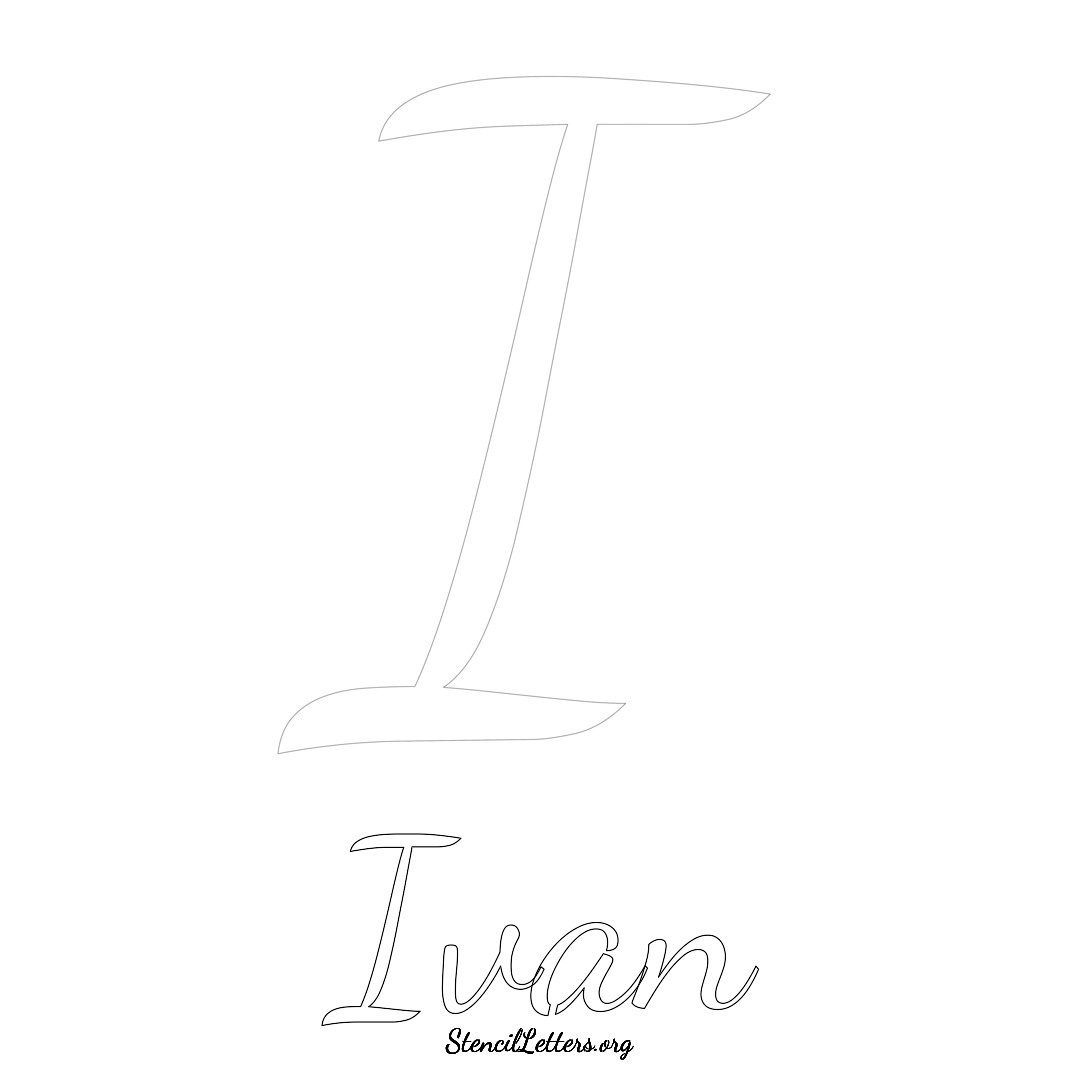
Mastering cursive script represents a significant milestone in childhood education, bridging foundational motor skills with fluid, efficient communication. The free printable worksheet “ivan in cursive writing” provides targeted practice for children learning to connect individual letters smoothly on paper. Educators frequently observe children gripping pencils with excessive tension when first encountering diagonal slants and continuous loops. Introducing a specific, meaningful name like Ivan offers an engaging context that keeps learners motivated through repetitive strokes. Navigating curved transitions requires precise bilateral hand coordination and visual-motor integration. Children often lean heavily over their desks during these initial attempts, highlighting the physical demands placed upon small hand muscles. Integrating structured Name Practice Worksheets into daily routines helps transform abstract letter shapes into familiar, personalized territory. Every successful loop reinforces muscle memory, building the stamina required for longer writing tasks.
💡 Educational Key Takeaways:
- Core Skill: Structured Ivan In Cursive Writing focused on developing pencil grip, stroke control, and early literacy/math confidence.
- Target Scope: Suited for homeschoolers, preschool, kindergarten, and elementary learners.
- Best Recommendation: Practice 10–15 minutes daily with ergonomic writing tools to reinforce muscle memory without hand fatigue.
What This Worksheet Covers
Targeted letter sequences form the core of this learning resource, focusing specifically on the continuous fluid motion required to spell and write the name Ivan. The layout guides students through initial pre-writing warm-ups, tracing greyed-out cursive models, and finally transitioning to independent freehand generation. Consistent sizing guidelines on the paper support spatial awareness, teaching young writers where to position ascenders and descenders relative to the baseline. Transitioning from print to connected script challenges children to maintain pencil contact across multiple letter segments. According to Reading Rockets, teaching cursive handwriting actively reinforces orthographic mapping and helps students struggling with dyslexia by establishing a distinct kinesthetic memory for words. Additional resources within Letter Writing Worksheets collections expand upon these foundational strokes. Precision matters deeply at this stage, as minor errors in slant can distort readability.
Key Learning Outcomes
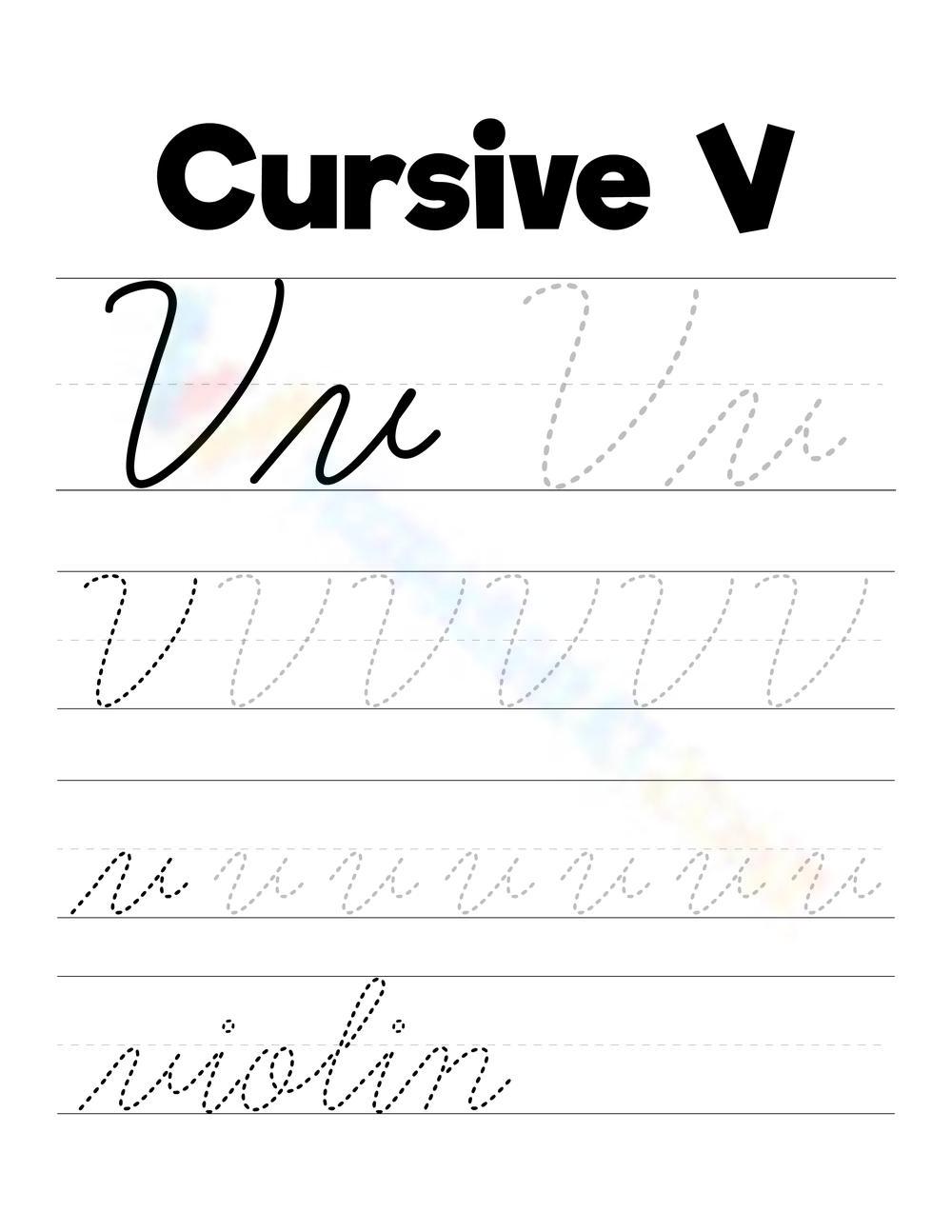
Learners using this targeted exercise systematically develop superior pencil control, correct letter sequencing, and enhanced motor planning capabilities. Developing muscle memory for lowercase connectors like ‘v’ flowing into ‘a’ and ‘n’ requires deliberate, slow-motion repetitions. Classrooms frequently reveal that children who master connected script early demonstrate greater fluidity during creative writing sessions later on. Educators can pair these cursive activities with complementary Tracing Worksheets to reinforce baseline stability and stroke accuracy. Confidence naturally blossoms once the child recognizes their own name rendered in elegant, connected handwriting. Success breeds willingness to tackle more complex linguistic challenges without frustration.
How to Use This Worksheet
Preparation involves printing the resource on standard heavyweight paper to prevent ink bleed-through and physical tearing during intense eraser use. Setting up an ergonomic workspace with a slanted writing board often improves wrist extension and reduces hand fatigue significantly. Adults should model the correct pencil grasp before letting the child touch the writing utensil to the page. Observing closely allows adults to catch improper thumb wraps or white-knuckle grips before bad habits solidify into permanent patterns. Exploring broader Worksheets provides supplemental practice that reinforces identical motor pathways in different contexts.
Practical Tips for Parents and Teachers
Breaking the practice down into manageable micro-sessions prevents cognitive overload and maintains high engagement levels throughout the exercise. Children benefit immensely from tracing the dotted letters with a finger or a dry paintbrush before introducing a heavy graphite pencil. It sounds simple, and that’s the point, but sensory priming wakes up the tactile receptors in the fingertips. Positive reinforcement should focus on effort and smooth flow rather than rigid perfection on the first try. Rotating through varied educational tools ensures that fine motor development remains an exciting, low-stress daily adventure.
Age-Appropriate Recommendations
Introducing cursive handwriting typically aligns with late second-grade milestones, though highly motivated younger children may experiment safely under careful supervision. According to the Common Core ELA standard L.2.1.a, students in second grade are expected to demonstrate command of the conventions of standard English capitalization, punctuation, and spelling, which increasingly incorporates legible manuscript and introductory cursive applications. Occupational therapists frequently note that children require a stable core and established hand dominance before attempting continuous cursive loops. For younger learners who are still developing fundamental hand strength, incorporating specialized Preschool Worksheets beforehand establishes vital prerequisite skills. Pushing children into complex script before their hand arches are fully matured often leads to avoidable physical discomfort and writing aversion.
According to the American Occupational Therapy Association (AOTA), proficient handwriting requires the integrated development of visual-motor integration, motor planning, tactile feedback, and intrinsic hand muscle strength. — AOTA Practice Guidelines for School-Based Occupational Therapy
Frequently Asked Questions
Answers to common inquiries regarding implementation and access ensure a smooth learning experience for all educators and families.
According to the National Association for the Education of Young Children (NAEYC), hands-on, developmentally appropriate practice materials significantly enhance early academic self-regulation and fine motor precision. — NAEYC Standards for Early Childhood Professional Preparation
Explore More Free Printable Worksheets
Expanding the child’s learning library with diverse resources ensures continuous skill progression across multiple developmental domains. Diversifying practice materials keeps curiosity alive and prevents the burnout associated with repetitive drills. Every printable asset serves as a stepping stone toward academic independence and physical confidence. Caregivers and educators can effortlessly curate comprehensive practice binders utilizing specialized foundational materials. Continued exploration of targeted handwriting resources unlocks long-term literacy success for every developing learner.
Developmental Milestone & Activity Table
| Development Stage | Recommended Daily Duration | Primary Learning Objective |
|---|---|---|
| Preschool & Pre-K | 10 – 15 Minutes | Pencil grip development & basic pre-stroke lines |
| Kindergarten | 15 – 20 Minutes | Letter/number formation & spatial line awareness |
| Early Elementary (Grade 1–2) | 20 – 30 Minutes | Fluency, sentence construction & neatness |
Images References