Introduction
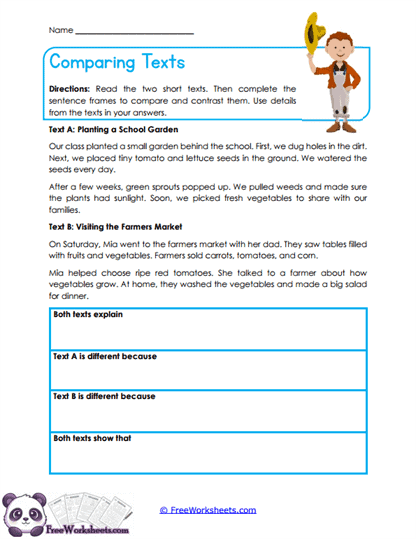
Bridging early literacy and physical writing demands a delicate balance of cognitive processing and fine motor control. Young learners often struggle to transition from oral storytelling to the physical act of committing structured comparisons onto paper. The free printable worksheet “good setence starters for comparing and differencing two texts” provides an essential scaffold that supports both analytical thinking and pencil dexterity. Mastering the art of textual comparison requires more than just comprehension; it requires the physical stamina to sustain proper pencil grip while organizing complex thoughts into written language. Educators frequently observe children gripping pencils with white knuckles when asked to synthesize information from two separate stories, a clear physical sign that cognitive overload is interfering with fine motor execution. Providing structured linguistic prompts removes the heavy lifting of sentence generation, allowing developing hands to focus on smooth letter formation, appropriate spacing, and legible stroke sequences. Utilizing targeted Letter Writing Worksheets alongside these comparative tools helps reinforce the muscle memory needed for fluent writing. It sounds simple, and that’s the point: minimizing the frustration of what to write frees up the neural bandwidth required for how to write.
💡 Educational Key Takeaways:
- Core Skill: Structured Good Setence Starters For Comparing And Differencing Two Texts focused on developing pencil grip, stroke control, and early literacy/math confidence.
- Target Scope: Suited for homeschoolers, preschool, kindergarten, and elementary learners.
- Best Recommendation: Practice 10–15 minutes daily with ergonomic writing tools to reinforce muscle memory without hand fatigue.
WhatThis Worksheet Covers
This specific printable targets the foundational analytical skills required by early elementary reading standards, specifically the ability to identify similarities and differences between two literary sources. Children learn to deploy precise transitional phrases such as “In contrast,” “Similarly,” and “On the other hand,” which elevate their writing from basic sentence structures to cohesive comparative paragraphs. Hand movement analysis during therapy sessions reveals that children benefit immensely when prompts are visually separated into distinct tracing or writing zones. This spatial organization prevents the visual fatigue that frequently leads to sloppy handwriting and poor baseline adherence. According to Reading Rockets, explicit instruction in comparative language significantly improves overall reading comprehension by forcing young minds to actively contrast characters, settings, and plots rather than passively absorbing text. Integrating foundational elements from Preschool Worksheets prior to tackling comparative writing ensures that foundational pencil control is already established.
Key Learning Outcomes
Working consistently with these sentence starters builds a robust bridge between verbal reasoning and physical literacy. Learners develop a stronger grasp of narrative structures while simultaneously practicing critical handwriting components like letter alignment, proportional sizing, and steady baseline control. Therapists note that when cognitive tasks are neatly scaffolded, children exhibit a much more relaxed tripod grasp, reducing hand cramping during extended writing sessions. Furthermore, repeated exposure to comparative terminology builds academic vocabulary that remains vital throughout primary education and beyond.
How to Use This Worksheet
Implementation requires a balance of guided reading and structured physical writing practice. Adults should first read two short texts aloud with the learner, discussing key themes, character traits, or plot points before introducing the worksheet. Once the verbal brainstorming concludes, guide the child toward selecting an appropriate sentence starter from the printable sheet to capture their observation. Encourage a dynamic, relaxed pencil grasp, ensuring fingers remain roughly one inch from the tip to maintain a clear line of sight. Here’s what makes this worksheet different: it treats physical handwriting development and critical literacy as interconnected partners rather than separate academic domains. Pairing these exercises with focused Tracing Worksheets beforehand can help warm up the intrinsic hand muscles.
Practical Tips for Parents and Teachers
Environmental setup plays a massive role in fine motor success during writing tasks. Ensure the child’s chair and table height permit both feet to rest flat on the floor, creating a stable core that supports steady distal arm and hand movements. Slanting the writing surface slightly upward using a binder or dedicated slant board can naturally encourage proper wrist extension, reducing fatigue. Model the writing process slowly, drawing attention to how words flow from left to right and how punctuation marks the conclusion of a comparative thought. Patience is paramount; building endurance for multi-sentence writing is a marathon, not a sprint.
Age-Appropriate Recommendations
Aligned with the Common Core ELA standard CCSS.ELA-LITERACY.RL.1.9—which outlines comparing and contrasting the adventures and experiences of characters in stories—this printable is ideally suited for late first-grade and second-grade learners. At this developmental stage, according to the American Occupational Therapy Association (AOTA), children possess the refined hand arches and visual-motor integration necessary to coordinate complex thoughts while executing controlled pencil strokes. Kindergarteners may require extensive verbal scaffolding and should focus primarily on dictating sentences for an adult to scribe, while older students can utilize the worksheet independently to organize structured paragraphs. For children who still require foundational motor skill reinforcement, exploring general Worksheets can provide the necessary preparatory steps.
Explicit instruction in comparative language and structured writing prompts significantly enhances reading comprehension and foundational motor stamina — Reading Rockets & AOTA
Frequently Asked Questions
Explore More Free Printable Worksheets
Expanding a child’s educational toolkit involves balancing analytical literacy exercises with targeted fine motor practice. Dive into our extensive collection of specialized printables designed to support every stage of early childhood development, from foundational pencil control to advanced writing mastery. Explore our repository of Name Practice Worksheets to build early confidence and letter sequencing skills seamlessly.
Developmental Milestone & Activity Table
| Development Stage | Recommended Daily Duration | Primary Learning Objective |
|---|---|---|
| Preschool & Pre-K | 10 – 15 Minutes | Pencil grip development & basic pre-stroke lines |
| Kindergarten | 15 – 20 Minutes | Letter/number formation & spatial line awareness |
| Early Elementary (Grade 1–2) | 20 – 30 Minutes | Fluency, sentence construction & neatness |
Images References