
Introduction
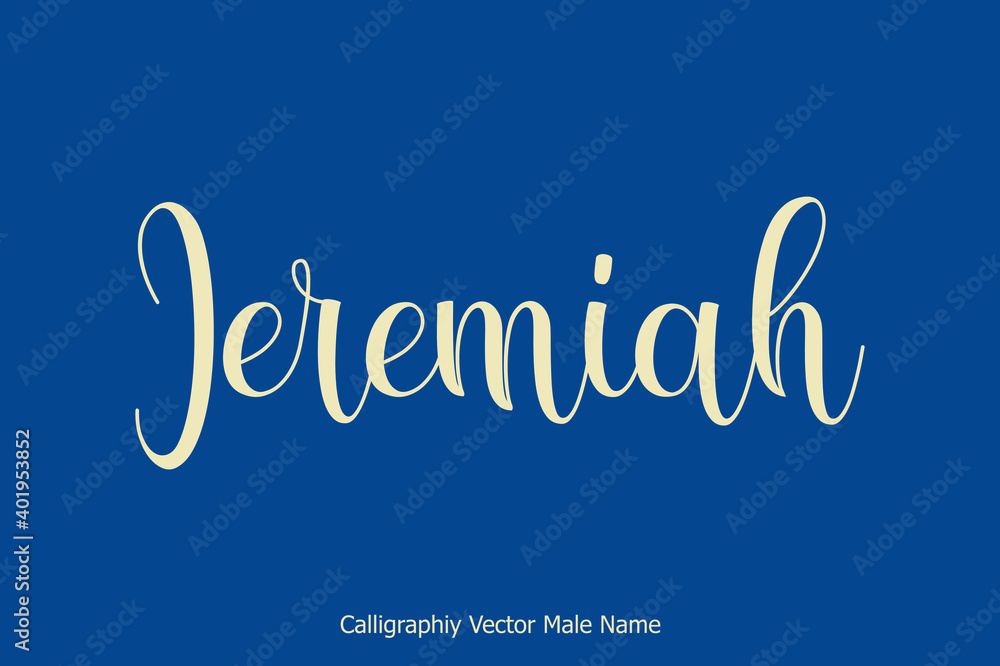
Mastering how to spell jeremiah in cursive requires precise execution of lowercase fluid connectors, continuous baseline tracking, and structured loop transitions between challenging letter pairs like ‘e-r’ and ‘i-a-h’. According to the National Association for the Education of Young Children (NAEYC), purposeful fine-motor instruction during early elementary years directly accelerates orthographic mapping and cognitive letter retention. Educators and parents utilizing structured name practice worksheets can systematically build muscle memory for multi-syllabic proper nouns. Developing fluency in connected script enhances overall writing speed, orthographic awareness, and spatial control across all foundational worksheets.
Handwriting Practice Snapshot:
- Core Focus: Executing continuous lowercase connectors to spell ‘jeremiah’ with accurate slant and proportional height.
- Target Scope: Early elementary literacy learners, homeschoolers, and occupational therapy settings.
- Key Recommendation: Break down continuous names into individual three-letter ligature segments before executing full-word fluid stroke sequences.
Core Principles and Detailed Overview
Spelling jeremiah in cursive involves chaining a lowercase ‘j’ descender directly into a short-curve ‘e’, rising into a connector ‘r’, looping into an ‘e’, moving into an undercurve ‘m’, transitioning to a valley ‘i’, climbing into an apex ‘a’, and concluding with an undercurve ‘h’. Structured letter writing worksheets provide the optimal framework for isolating these multi-directional transitions. Ensuring consistent slant angles of approximately 52 degrees from the horizontal baseline prevents letter crowding. Incorporating targeted tracing worksheets establishes reliable motor pathways before transitioning students to unguided blank writing lines.
Key Specifications and Breakdown
| Skill Level / Grade | Target Stroke / Mechanical Focus | Pedagogical / Coaching Cue |
|---|---|---|
| Early Beginner (Grade 2) | Initial descender loop of ‘j’ and baseline connector for ‘e’. | “Dive below the line, loop back up, and glide straight into the clover.” |
| Intermediate (Grade 3) | Multi-hump letter connection from ‘m’ through ‘i’ and ‘a’. | “Keep the humps rounded and uniform before swinging into the oval.” |
| Advanced (Grade 4+) | Terminal ‘h’ exit stroke and consistent horizontal word spacing. | “Extend the tall stem, cross down cleanly, and tail off just above the baseline.” |
Explicit instruction in continuous cursive stroke sequences significantly improves orthographic visual memory and lexical retrieval speeds among primary students — American Occupational Therapy Association (AOTA)
Step-by-Step Practical Application and Guidelines
Executing how to spell jeremiah in cursive begins by anchoring the pencil tip at the bottom baseline, pulling a straight descender loop down for the ‘j’, and sweeping upward to meet the baseline for the ‘e’. From the ‘e’, lead directly into the ‘r’ apex without lifting the writing utensil, maintaining constant downward pressure. Next, loop smoothly into the second ‘e’, transition directly into the triple-humped ‘m’, connect cleanly to the dotless ‘i’, swing up to form the round body of the ‘a’, and finish with the ascending stem and foot of the final ‘h’. Using specialized preschool worksheets for foundational loop drills prepares younger hands for these complex multi-turn linkages.
Common Challenges and How to Avoid Them
Common execution errors when spelling jeremiah in cursive include collapsing the descender loop of the initial ‘j’, crowding the multiple humps of the ‘m’, and omitting the crucial connector stroke between ‘i’ and ‘a’. Educators can prevent these mechanical failures by enforcing a slow, rhythmic verbal cadence during initial stroke practice. Ensuring proper paper tilt and an ergonomic tripod grasp stabilizes the wrist, allowing the hand to glide horizontally across the page without distortion. Supplementing daily drills with engaging coloring worksheets also helps relax intrinsic hand muscles after intensive fine-motor writing sessions.
💬 Frequently Asked Questions
Explore More Free Handwriting and Character Worksheets
Access an extensive library of professional handwriting resources, customized orthographic exercises, and developmental tools directly at CharacterWritingWorksheets.com. Dedicated educators and parents can download comprehensive printables designed to reinforce proper letter formation, improve fine-motor endurance, and foster lifelong literacy confidence across all grade levels.
Visual Reference Gallery


