Introduction
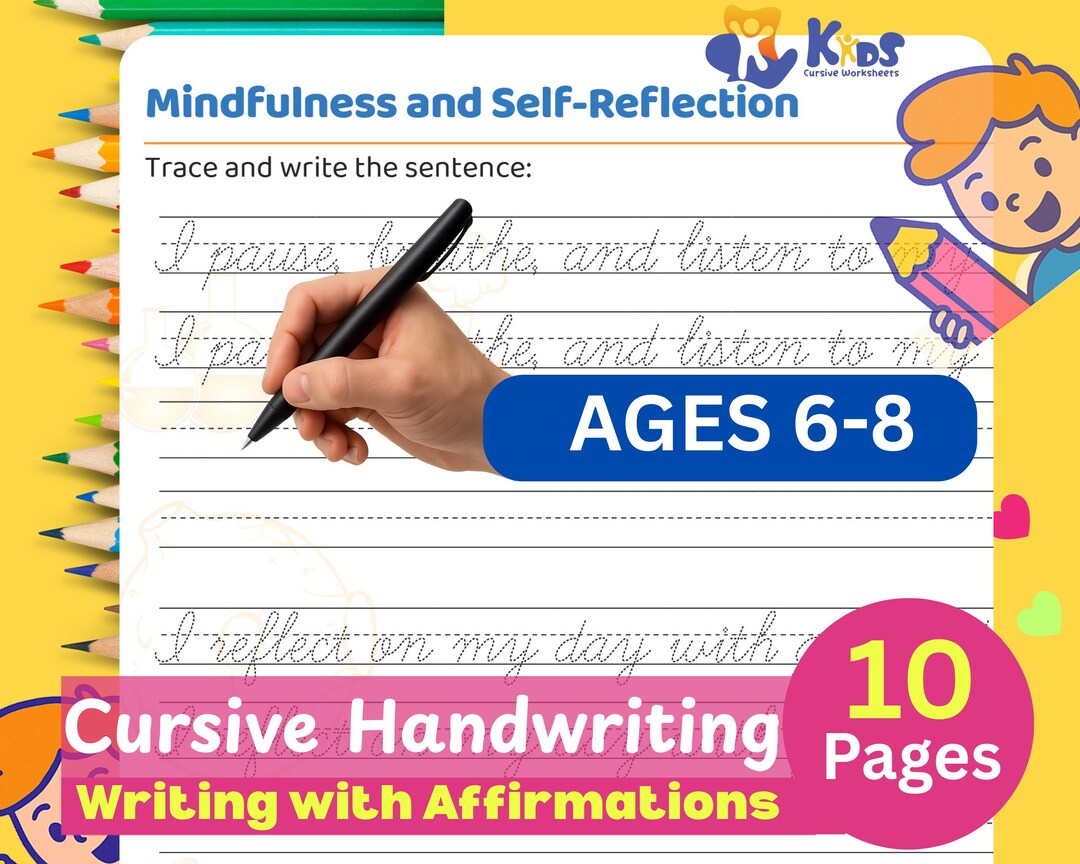
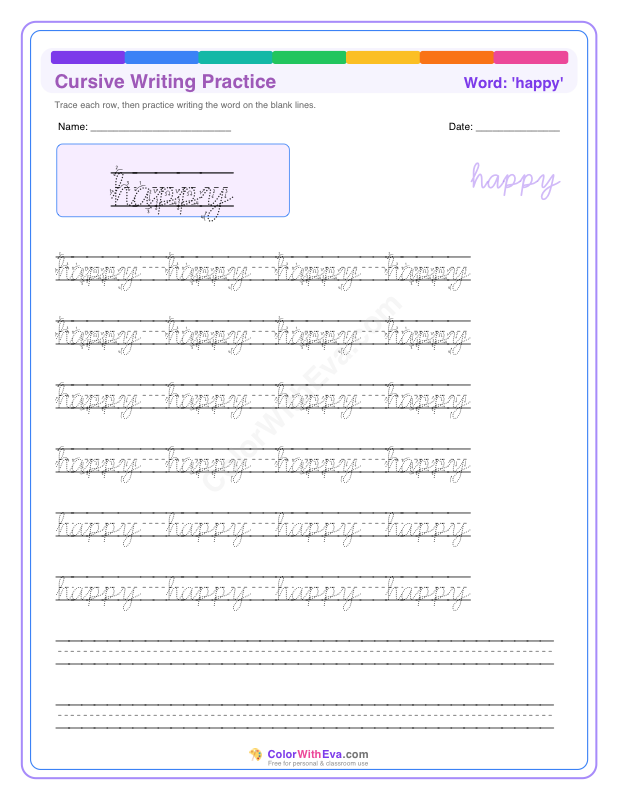
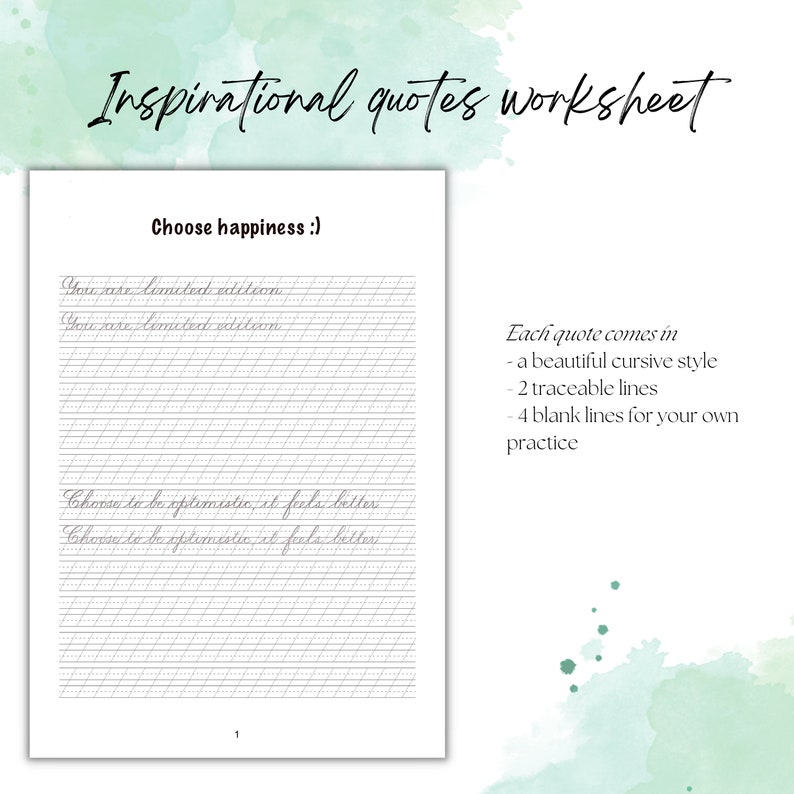
Developing fluid handwriting requires a careful blend of cognitive reflection and precise motor execution. Children transitioning into connected script often struggle to bridge the gap between simple manuscript letters and flowing cursive lines. The free printable worksheet “reflection on hapiness cursive writing” addresses this exact developmental juncture. By combining a positive thematic prompt with structured loops and connectors, learners engage both their minds and hands in meaningful literacy practice. It sounds simple, and that’s the point: intentional design removes unnecessary visual clutter so children can focus entirely on stroke order, continuous motion, and emotional literacy. Educators frequently observe that when a writing prompt carries personal relevance, children exhibit greater persistence and significantly improved pencil control.
💡 Educational Key Takeaways:
- Core Skill: Structured Reflection On Hapiness Cursive Writing focused on developing pencil grip, stroke control, and early literacy/math confidence.
- Target Scope: Suited for homeschoolers, preschool, kindergarten, and elementary learners.
- Best Recommendation: Practice 10–15 minutes daily with ergonomic writing tools to reinforce muscle memory without hand fatigue.
What This Worksheet Covers
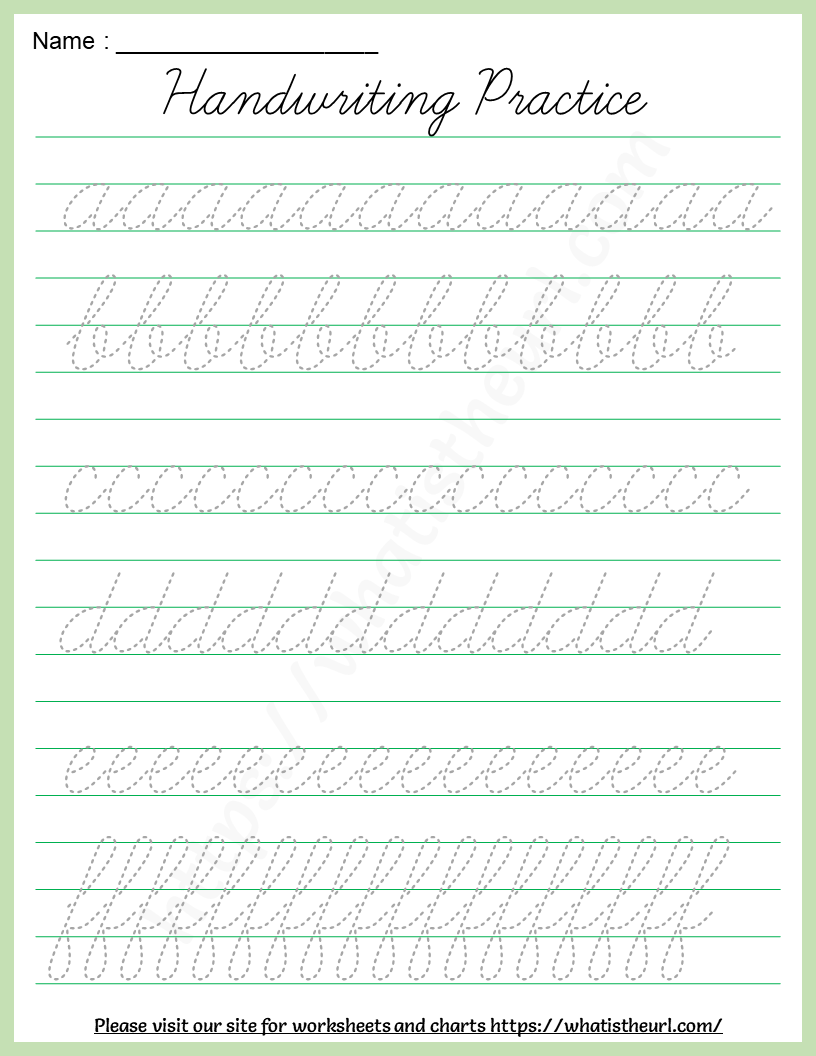
This specific learning tool focuses on letter formation, stroke order, and spacing within a cursive framework. Rather than forcing children to copy abstract strings of letters, the page invites them to contemplate a core emotional concept while practicing fluid hand movements. Continuous script demands consistent rhythm, slant, and pressure, all of which are cultivated through targeted guided practice. Here’s what makes this worksheet different: it treats handwriting not merely as a mechanical chore, but as a vehicle for personal expression and cognitive processing. Occupational therapy sessions often reveal that children who resist traditional drill-and-kill alphabet sheets respond much more favorably to prompts that encourage thoughtful reflection alongside motor skill refinement.
Key Learning Outcomes
Working through these exercises helps solidify motor memory for tricky lowercase transitions like ‘p’, ‘p’, ‘i’, ‘n’, ‘e’, and ‘s’. According to Reading Rockets, early writing instruction directly supports reading comprehension by reinforcing letter-sound relationships and visual word recognition. As learners trace and independently produce the targeted vocabulary, they build intrinsic hand strength and visual-spatial awareness. Educators seeking broader skill-building exercises often pair this resource with various Letter Writing Worksheets to ensure a comprehensive approach to early literacy. Mastery of these foundational curves lays the groundwork for legible, fatigue-free writing well into the upper elementary years.
How to Use This Worksheet
Preparation and environment dictate the success of any fine motor activity. Adults should begin by reviewing the correct tripod grasp, ensuring the writing instrument rests comfortably between the thumb and index finger while supported by the middle finger. Before touching pencil to paper, encourage the child air-trace the cursive loops to internalize the kinetic flow. The workspace needs proper lighting and a chair adjusted so the child’s feet rest flat on the floor, providing proximal stability for distal hand dexterity. For children needing extra pre-writing support, exploring supplementary Tracing Worksheets beforehand can help build the necessary line accuracy and confidence.
Practical Tips for Parents and Teachers
Patience remains the most critical tool during cursive instruction. Watch for white knuckles and excessive paper displacement, both classic signs of over-gripping that lead to rapid hand fatigue. Short, frequent sessions yield better neurological retention than lengthy, frustrating marathons. Adults can guide the child’s hand gently through the first few strokes to model the rhythmic cadence required for smooth connectors. Celebrating small victories, such as a well-formed upward slant or a properly proportioned loop, reinforces positive engagement and minimizes performance anxiety.
Age-Appropriate Recommendations
Introducing cursive typically aligns with late second to third-grade milestones, depending on individual fine motor maturity. According to the American Occupational Therapy Association (AOTA), functional handwriting proficiency relies on integrated visual-motor skills, bilateral coordination, and tactile processing. Educators utilizing the National Association for the Education of Young Children (NAEYC) Developmentally Appropriate Practice framework will find that connecting writing tasks to emotional themes honors the holistic needs of the developing child. For classrooms integrating diverse ability levels, providing foundational Preschool Worksheets ensures that younger or struggling learners can still participate in parallel fine motor centers.
Functional handwriting proficiency relies heavily on integrated visual-motor skills, bilateral coordination, and postural stability. — American Occupational Therapy Association (AOTA)
Frequently Asked Questions
How do adults access and print this cursive resource? Simply locate the download button on the main page, save the PDF file to a local device, and print directly onto standard letter-sized paper using any home or school printer. Does this activity improve handwriting? Yes, practicing guided cursive strokes enhances pencil control, spatial awareness, and fluid hand movements essential for legible script. What does the American Occupational Therapy Association state about writing readiness? According to the American Occupational Therapy Association, successful handwriting requires a mature grasp, strong postural stability, and well-developed visual-motor integration skills.
Explore More Free Printable Worksheets
Expanding a child’s fine motor toolkit requires access to diverse, engaging practice materials. Educators and parents can browse the complete directory of Worksheets to find targeted resources for every developmental stage. To further personalize learning and boost engagement, incorporating specialized Name Practice Worksheets provides children with immediate, personally meaningful writing opportunities that foster genuine pride and ownership.
Developmental Milestone & Activity Table
| Development Stage | Recommended Daily Duration | Primary Learning Objective |
|---|---|---|
| Preschool & Pre-K | 10 – 15 Minutes | Pencil grip development & basic pre-stroke lines |
| Kindergarten | 15 – 20 Minutes | Letter/number formation & spatial line awareness |
| Early Elementary (Grade 1–2) | 20 – 30 Minutes | Fluency, sentence construction & neatness |
Images References