Introduction
Learning literary devices often begins with abstract definitions that leave young learners staring blankly at a page. Giving inanimate objects human traits transforms grammar into a playful exercise, bridging the gap between imagination and structured writing. Introducing children to personification worksheets with answers provides the scaffolding needed to grasp how descriptive language brings stories alive. Educators frequently observe children lighting up when a clock starts ticking with attitude or a wind whispers secrets through the trees. Integrating targeted writing tasks with these conceptual tools supports early literacy while simultaneously developing essential pencil control and spatial awareness.
💡 Educational Key Takeaways:
- Core Skill: Structured Personification Worksheets With Answers focused on developing pencil grip, stroke control, and early literacy/math confidence.
- Target Scope: Suited for homeschoolers, preschool, kindergarten, and elementary learners.
- Best Recommendation: Practice 10–15 minutes daily with ergonomic writing tools to reinforce muscle memory without hand fatigue.
What This Worksheet Covers
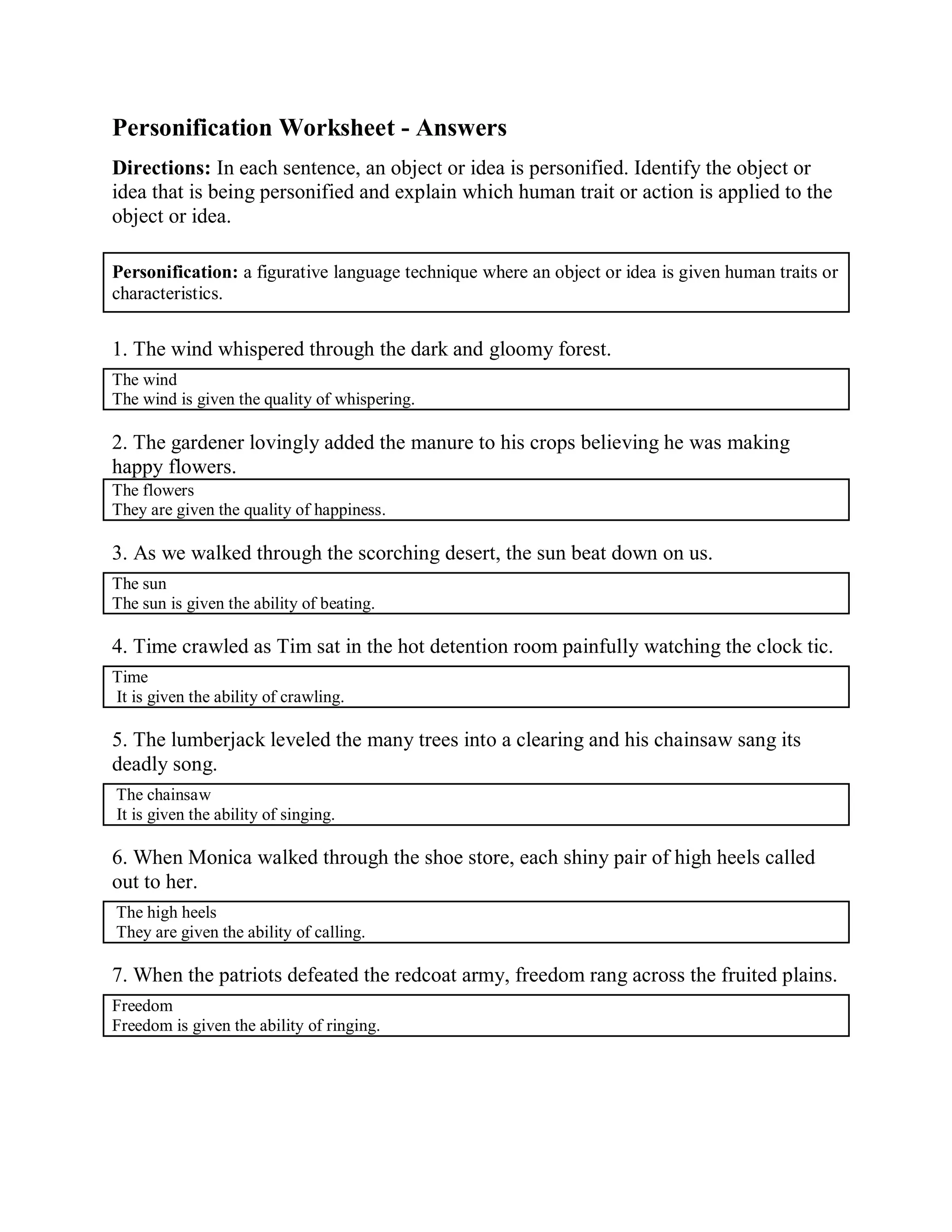
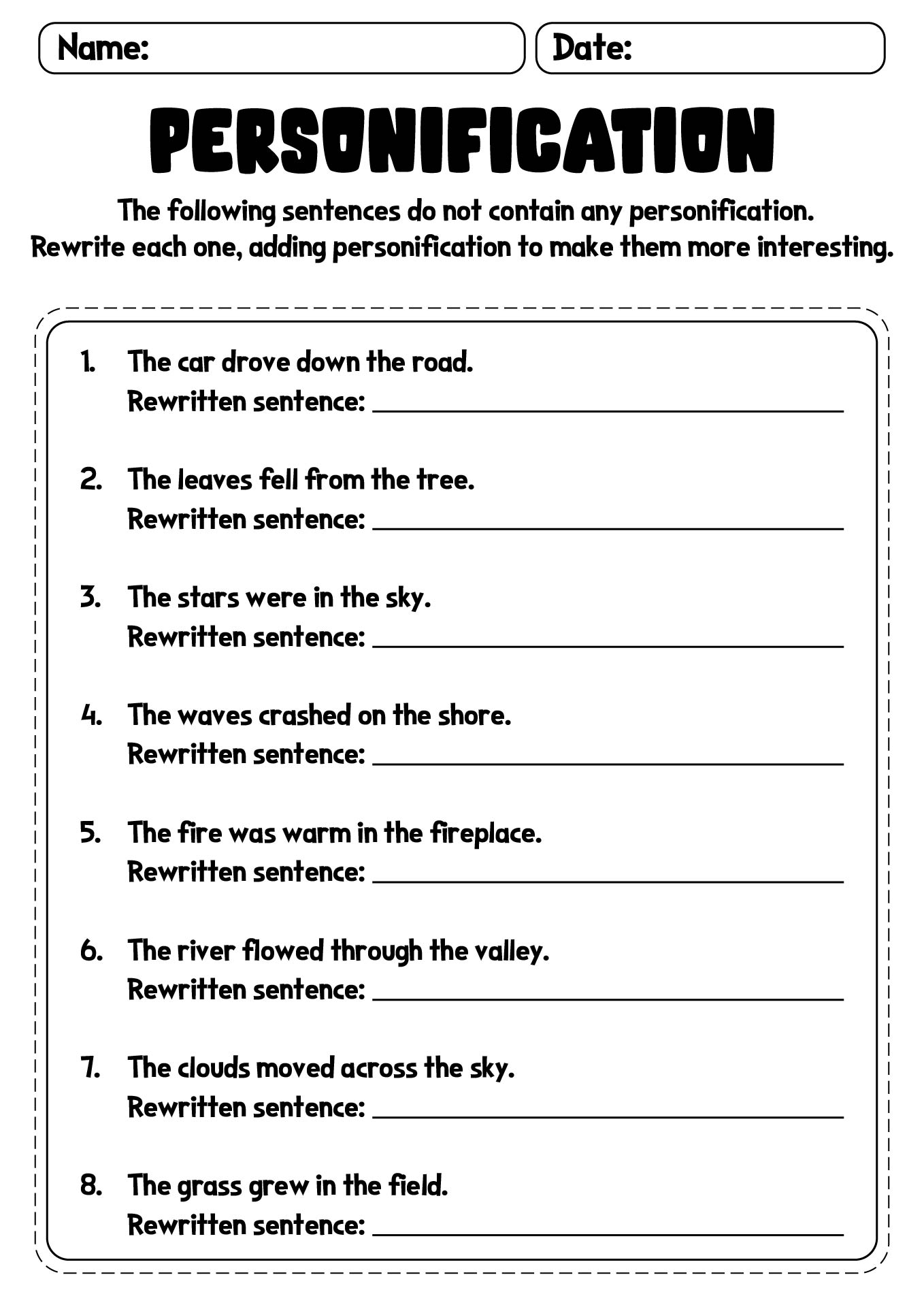
Targeted exercises focus on identifying human characteristics attributed to non-human subjects, such as smiling suns or dancing leaves. Children analyze sentences to spot the hidden metaphor before generating their own descriptive examples. This dual approach reinforces reading comprehension while laying foundational groundwork for creative storytelling. Careful design ensures that the cognitive load remains balanced between creative thinking and the physical act of writing, making it a valuable addition to standard Worksheets collections used in modern classrooms.
Key Learning Outcomes
Completing these activities enhances vocabulary acquisition, figurative language recognition, and narrative structure. Young writers learn to move beyond flat descriptions into vivid, sensory-rich storytelling. According to Reading Rockets, explicit instruction in figurative language significantly improves a child’s reading comprehension and appreciation for narrative depth. Beyond literary skills, the physical act of writing out these responses helps reinforce letter formation, alignment, and fluid stroke execution.
How to Use This Worksheet
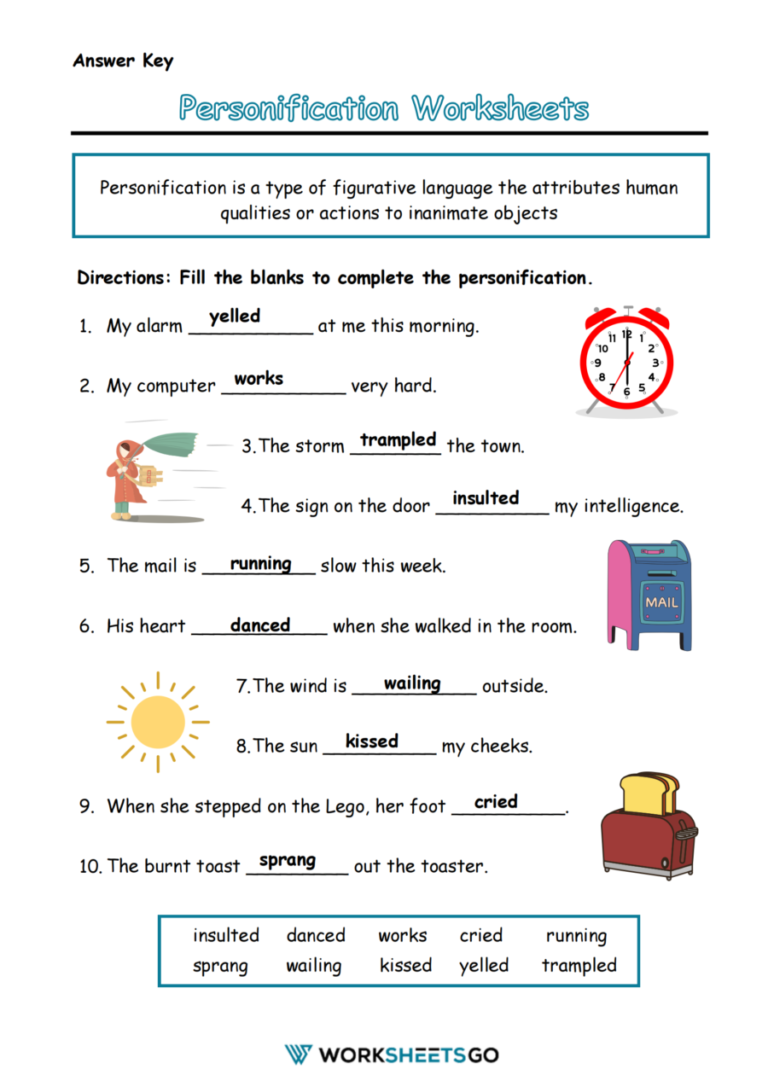
Flexibility defines the best educational materials. Educators can introduce the concept during a whole-group read-aloud before transitioning children to independent practice. Providing an answer key allows older students to self-correct and verify their figurative interpretations without constant adult intervention. For younger learners transitioning from foundational literacy, pairing this exercise with Preschool Worksheets helps build the early attention spans required for sustained writing tasks.
Practical Tips for Parents and Teachers
Setting the right physical environment matters immensely for fine motor success. Ensure the writing surface matches the child’s height, allowing feet to rest flat on the floor for core stability. Observe how the pencil is held; a functional grasp prevents early hand fatigue during longer descriptive writing tasks. Encourage children to read their personified sentences aloud to check for natural rhythm and proper punctuation placement.
Age-Appropriate Recommendations
Children in the early elementary span process abstract concepts differently depending on their developmental stage. According to National Association for the Education of Young Children (NAEYC) Developmentally Appropriate Practice guidelines, instruction should bridge concrete sensory experiences with symbolic representation. Second graders easily generate original personified sentences, while kindergarteners and first graders benefit from guided fill-in-the-blank formats supported by visual word banks.
Explicit instruction in figurative language significantly enhances a child’s reading comprehension and creative writing output. — Reading Rockets
Frequently Asked Questions
Explore More Free Printable Worksheets
Expanding a literacy curriculum requires a diverse toolkit of printable resources tailored to specific developmental milestones. Explore specialized options including Letter Writing Worksheets for mastering stroke sequence or Tracing Worksheets for building foundational pencil control.
Developmental Milestone & Activity Table
| Development Stage | Recommended Daily Duration | Primary Learning Objective |
|---|---|---|
| Preschool & Pre-K | 10 – 15 Minutes | Pencil grip development & basic pre-stroke lines |
| Kindergarten | 15 – 20 Minutes | Letter/number formation & spatial line awareness |
| Early Elementary (Grade 1–2) | 20 – 30 Minutes | Fluency, sentence construction & neatness |
Images References