Introduction
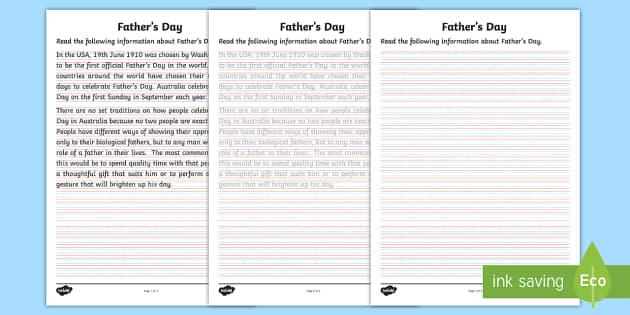
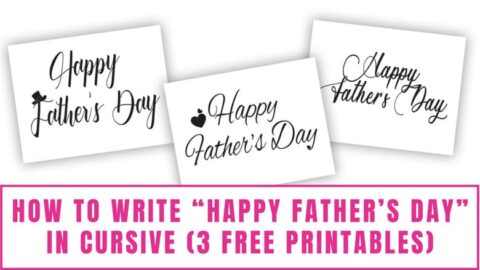
Developing fluid writing habits often starts with meaningful, highly engaging holiday themes that capture a child’s intrinsic motivation. When children sit down to craft a message for a beloved family member, the emotional connection transforms a routine writing exercise into a purposeful act of communication. Practitioners frequently observe that kids who normally resist structured pencil tasks will happily slow down when crafting a greeting for Father’s Day. Bridging the gap between rigid manuscript letters and continuous flow requires targeted practice tools like the cursive handwriting fathers day resource. Integrating celebratory themes into daily learning supports emotional expression while building essential hand strength, visual-motor coordination, and spatial awareness.
💡 Educational Key Takeaways:
- Core Skill: Structured Cursive Handwriting Fathers Day focused on developing pencil grip, stroke control, and early literacy/math confidence.
- Target Scope: Suited for homeschoolers, preschool, kindergarten, and elementary learners.
- Best Recommendation: Practice 10–15 minutes daily with ergonomic writing tools to reinforce muscle memory without hand fatigue.
What This Worksheet Covers
Connected writing demands continuous fluid movements, directional consistency, and precise control over pencil pressure. This printable targets specific letter formations, stroke sequences, and the smooth transitions required to link individual glyphs together into legible words. Children navigate baseline adherence, loop heights, and proportional spacing while assembling heartfelt phrases. Mastering these elements reduces hand fatigue and prevents the common pitfalls of disjointed writing. Adults often look for structured resources to support these foundational mechanics, making specialized options like Letter Writing Worksheets valuable additions to any writing center.
Key Learning Outcomes
Targeted execution of curved strokes strengthens the intrinsic muscles of the hand, which directly improves endurance during longer writing sessions. According to the American Occupational Therapy Association, engaging in purposeful fine motor activities enhances bilateral coordination and bolsters functional performance in school-age children. Learners gain confidence as they decode and produce connected text, reinforcing muscle memory for high-frequency letter combinations. Beyond pure mechanics, the activity fosters patience, attention to detail, and a sense of pride in creating a tangible keepsake for a caregiver.
How to Use This Worksheet
Successful implementation begins with establishing an optimal physical setup, including an appropriately sized chair, a flat writing surface, and feet resting flat on the floor. Educators recommend starting with a thorough review of the target vocabulary or greeting phrases, air-writing the loops and swings before touching graphite to paper. Encouraging a functional tripod grasp prevents early hand cramping and ensures clear visibility of the baseline. For learners exploring diverse foundational concepts, pairing this activity with broader resources such as Tracing Worksheets helps build preparatory pencil control and steady stroke execution.
Practical Tips for Parents and Teachers
Scaffolding the experience makes a tremendous difference for children who find connected letterforms frustrating or intimidating. Adults can highlight starting dots with a bright marker or use tactile sensory trays filled with salt or sand to practice formations before moving to the printed page. It sounds simple, and that’s the point: keeping initial sessions short, positive, and focused on quality over quantity prevents cognitive overload. When children show signs of frustration or an altered grasp pattern, pausing for hand stretches or heavy-work activities resets the nervous system and restores focus.
Age-Appropriate Recommendations
Introducing connected script aligns best with the developmental milestones outlined in the National Association for the Education of Young Children Developmentally Appropriate Practice framework, typically emerging around second or third grade when manuscript control is secure. Children in this age bracket possess the necessary visual-motor integration to manage continuous fluid strokes without losing track of baseline orientation or letter proportions. Pushing this skill too early can cause undue stress on developing joints, whereas waiting for proper readiness ensures a smooth transition to lifelong legible handwriting habits.
Proficiency in connected script correlates with enhanced spelling retention and orthographic mapping — According to Reading Rockets
Frequently Asked Questions
How can this printable be accessed and printed for classroom use? Simply download the digital file directly from the site, ensure printer settings are adjusted to actual size, and print onto standard letter-weight or slightly heavier cardstock for durability. What developmental stage is required for this specific writing practice? According to the American Occupational Therapy Association, children benefit most when they already exhibit established hand dominance and a functional tripod grasp for standard manuscript writing. How does connected writing benefit overall cognitive development? Linking letters in a continuous flow reduces cognitive load during composition, allowing children to focus more mental energy on sentence structure, spelling, and creative expression.
Explore More Free Printable Worksheets
Expanding a child’s writing toolkit requires access to diverse, engaging practice materials tailored to different developmental stages and interests. Educators and families can explore foundational resources like Preschool Worksheets for early learners, or dive into specialized practice options found within the broader collection of Worksheets designed to support every step of the academic journey.
Developmental Milestone & Activity Table
| Development Stage | Recommended Daily Duration | Primary Learning Objective |
|---|---|---|
| Preschool & Pre-K | 10 – 15 Minutes | Pencil grip development & basic pre-stroke lines |
| Kindergarten | 15 – 20 Minutes | Letter/number formation & spatial line awareness |
| Early Elementary (Grade 1–2) | 20 – 30 Minutes | Fluency, sentence construction & neatness |
Images References