Introduction
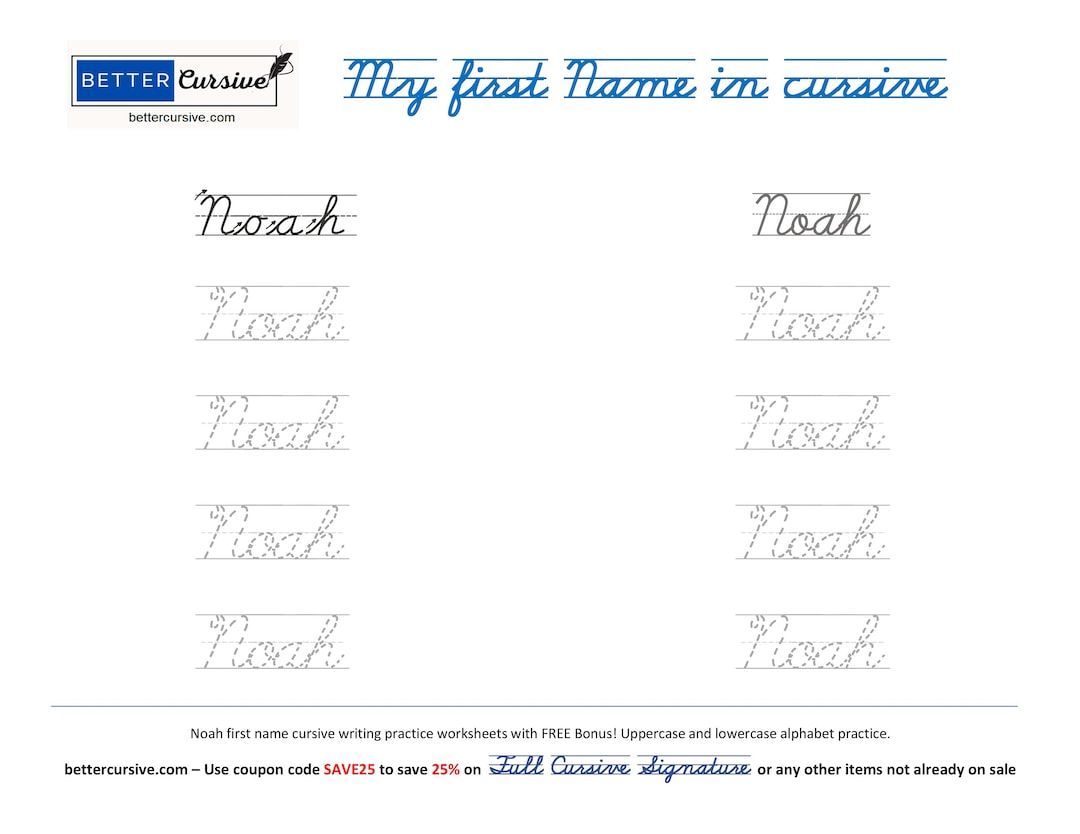
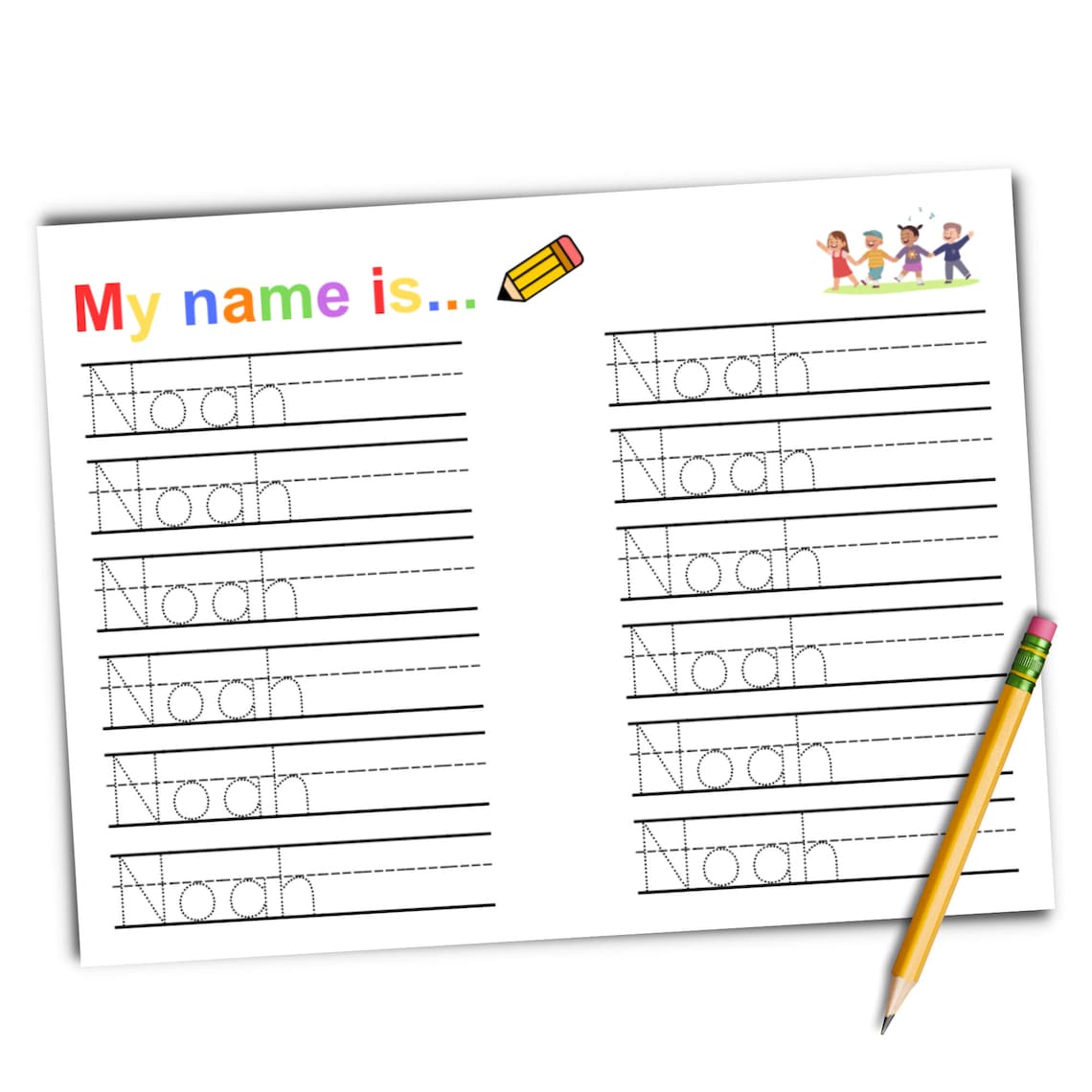
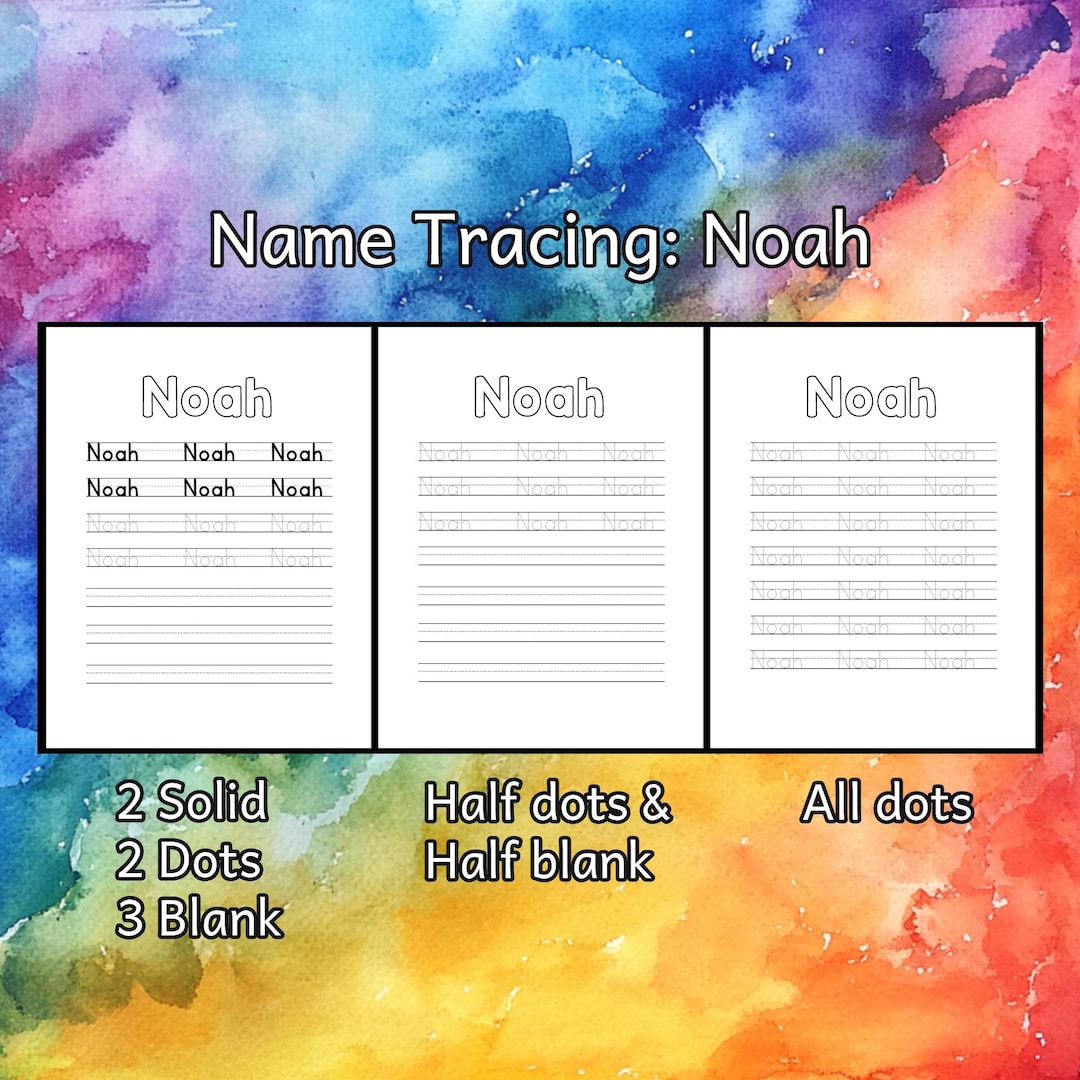
Mastering cursive writing begins with personal connection, making a familiar identifier the ultimate tool for engagement. Children often light up when they see their own moniker rendered in flowing script. The free printable worksheet “noah written in cursive” offers a targeted approach to letter sequencing, confidence, and fine motor control. It sounds simple, and that’s the point. By narrowing the focus to a single, highly relevant word, young learners bypass the cognitive overload of copying lengthy sentences and concentrate entirely on fluid hand movements. Developing strong name recognition combined with cursive stroke patterns creates a bridge between basic print and advanced writing fluency. Educators frequently observe that children approach cursive with intense curiosity, treating the loops and connectors like a secret code waiting to be unlocked. Exploring resources within Name Practice Worksheets allows children to build essential muscle memory while engaging directly with their own identity on the page.
💡 Educational Key Takeaways:
- Core Skill: Structured Noah Written In Cursive focused on developing pencil grip, stroke control, and early literacy/math confidence.
- Target Scope: Suited for homeschoolers, preschool, kindergarten, and elementary learners.
- Best Recommendation: Practice 10–15 minutes daily with ergonomic writing tools to reinforce muscle memory without hand fatigue.
What This Worksheet Covers
Precision in cursive relies heavily on consistent slant, proportional spacing, and continuous fluid motions. This specific printout guides the hand from the initial entry stroke of the capital letter straight through to the final exit tail of the lowercase letters. Here’s what makes this worksheet different: it breaks down the transition from manuscript printing into manageable, continuous lines that train the intrinsic muscles of the hand. According to the American Occupational Therapy Association, foundational handwriting tasks require the integration of visual-motor skills, bilateral coordination, and postural stability. When children practice tracing and independent reproduction, they reinforce the neural pathways responsible for automatic letter formation. Transitioning from isolated drills to functional words provides immediate context for why smooth transitions matter. Integrating targeted Letter Writing Worksheets alongside this practice ensures learners gain familiarity with both print and script modalities.
Key Learning Outcomes
Proficiency grows incrementally through repeated, meaningful exposure. Young learners who engage with this resource develop refined pencil control, improved spatial awareness on lined paper, and a stronger grasp of letter sequencing. According to Reading Rockets, explicit handwriting instruction directly supports reading fluency and spelling by anchoring letters to physical memory through kinesthetic feedback. Instead of viewing writing as a tedious chore, children experience a sense of ownership and pride as the connected lines form a recognizable personal signature. Mastery of these early cursive loops lays the groundwork for speed and legibility in later academic settings.
How to Use This Worksheet
Implementation requires a balance of structure and gentle encouragement. Adults should introduce the resource by demonstrating the continuous flow of the pen in the air before touching the paper. Watch closely for a functional tripod grasp, ensuring the hand remains relaxed and the paper is tilted slightly to match the natural angle of the writing wrist. Children often press down too hard with writing utensils, leading to hand fatigue; reminding them to let the pencil glide lightly across the page transforms the physical experience. Incorporating complementary Tracing Worksheets into the daily routine builds the necessary baseline stability for maintaining consistent line accuracy.
Practical Tips for Parents and Teachers
Creating a low-stress environment yields the best developmental outcomes. Short, five-minute sessions repeated daily outperform long, exhausting drills every single time. Placing the printout inside a dry-erase sleeve allows learners to trace over the cursive lines repeatedly with dry-erase markers, removing the anxiety of making permanent mistakes. Celebrations should focus on effort and smooth motion rather than rigid perfection. Observing a child suddenly master the tricky connector stroke between the rounded letters brings a rewarding breakthrough moment for both the educator and the learner.
Age-Appropriate Recommendations
Introducing cursive typically aligns with the developmental milestones outlined in Handwriting Without Tears, which suggests starting cursive instruction once children demonstrate consistent letter sizing and spatial awareness in manuscript print, usually around second grade or late first grade. At this stage, hand muscles possess the endurance required for continuous strokes. Utilizing broader Worksheets designed for varied developmental tiers helps adults customize the pace according to individual readiness rather than strict chronological age.
Explicit handwriting instruction enhances orthographic mapping, letter retention, and overall reading fluency in early childhood learners. — Reading Rockets
Frequently Asked Questions
Explore More Free Printable Worksheets
Expanding a writing curriculum requires access to diverse, adaptable resources. Discover additional tools by browsing Preschool Worksheets to support early learners across all developmental domains.
Developmental Milestone & Activity Table
| Development Stage | Recommended Daily Duration | Primary Learning Objective |
|---|---|---|
| Preschool & Pre-K | 10 – 15 Minutes | Pencil grip development & basic pre-stroke lines |
| Kindergarten | 15 – 20 Minutes | Letter/number formation & spatial line awareness |
| Early Elementary (Grade 1–2) | 20 – 30 Minutes | Fluency, sentence construction & neatness |
Images References