Introduction
Learning to write a personal name in connected script marks a major developmental milestone for young children. When kids transition from rigid print to fluid cursive, handwriting shifts from a slow, drawing-like process into a continuous rhythmic motion. The free printable worksheet designated for the name Noah offers targeted practice that bridges this exact gap. According to Reading Rockets, early writing instruction helps children build foundational phonics and spelling skills while strengthening essential hand muscles. Children often grip pencils too tightly when first encountering looping letters, which makes specialized name practice invaluable for developing a softer, more functional grasp pattern. It sounds simple, and that’s the point: mastering one familiar name builds the confidence necessary to tackle longer sentences later on.
💡 Educational Key Takeaways:
- Core Skill: Structured Noah Cursive focused on developing pencil grip, stroke control, and early literacy/math confidence.
- Target Scope: Suited for homeschoolers, preschool, kindergarten, and elementary learners.
- Best Recommendation: Practice 10–15 minutes daily with ergonomic writing tools to reinforce muscle memory without hand fatigue.
What This Worksheet Covers
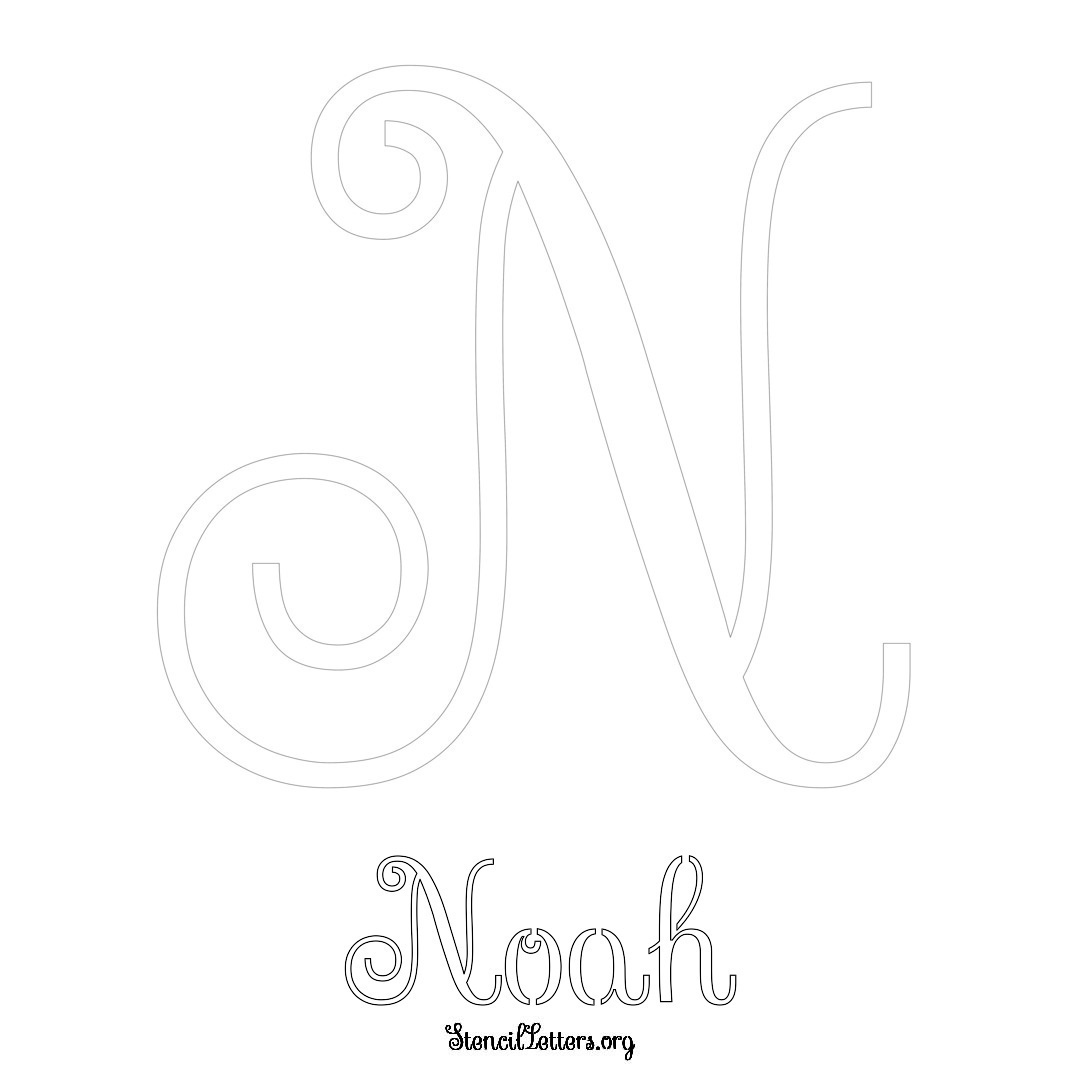
Targeted name practice addresses visual-motor integration, letter sequencing, and fine motor precision simultaneously. The layout provides structured guidance for children learning to connect the capital ‘N’ into the lowercase ‘o’, ‘a’, and ‘h’. Spatial awareness improves dramatically when children must maintain uniform slant and baseline orientation across a single line. Therapy sessions frequently reveal that children struggle most with the transition points between letters rather than the loops themselves. Practicing a specific name reinforces proper stroke sequences through repeated, low-stakes exposure. Adults looking to expand foundational practice routines can also explore broader Name Practice Worksheets to support spelling and identity recognition. Building familiarity with personal identifiers establishes a strong anchor for all subsequent literacy milestones.
Key Learning Outcomes
Fine motor control requires refined intrinsic hand muscle strength to manipulate writing tools smoothly. Working through connected letter forms teaches children how to modulate pressure, ensuring lines do not feather or tear thin paper. Letter sequencing and spatial organization naturally improve as students track left-to-right progression without lifting the pencil unnecessarily. According to the American Occupational Therapy Association (AOTA), proficient handwriting supports academic success by reducing cognitive fatigue during extended writing tasks. Children who master these early motor patterns display greater fluency and legibility across all academic subjects. Educators frequently notice that once a child successfully writes their own name in fluid script, enthusiasm for broader writing activities increases exponentially.
How to Use This Worksheet
Successful implementation begins with establishing a stable seated posture, ensuring feet flat on the floor and hips at a ninety-degree angle. Initial attempts should always involve a dry-erase sleeve and a fine-tip marker to reduce frustration before moving to standard paper and pencils. Adults should model the correct continuous motion, emphasizing the smooth exit stroke of the capital letter before entering the first lowercase loop. Children benefit greatly from tracing the faded models multiple times before attempting independent generation on the blank primary lines. For additional support materials targeting early literacy foundations, educators often integrate resources from Preschool Worksheets into morning table rotations. Variety keeps engagement high while reinforcing the exact same underlying neuromuscular pathways.
Practical Tips for Parents and Teachers
Observing hand mechanics closely helps adults catch compensatory grasps before habits become permanently ingrained. If a child wraps their thumb over the shaft or presses with white-knuckle tension, inserting a short-barreled pencil or a grip adapter provides immediate tactile feedback. Breaking practice down into short, five-minute intervals prevents hand fatigue and maintains positive associations with writing. Praise should focus on the effort and fluidity of the continuous strokes rather than absolute perfection. Those who want to diversify writing tasks can easily browse supplementary options like Letter Writing Worksheets to isolate specific tricky junctions. Consistent, brief daily practice yields far better neurological retention than infrequent, lengthy drill sessions.
Age-Appropriate Recommendations
Introducing cursive name tracing typically aligns best with older kindergarten and early elementary grade levels, specifically around ages six through eight, once manuscript printing is reasonably established. According to the National Association for the Education of Young Children (NAEYC) Developmentally Appropriate Practice framework, expectations must align with a child’s current fine motor stamina and neurological maturation. Pushing cursive too early can cause undue physical strain, whereas introducing it at the optimal developmental window enhances spatial perception and visual memory. Children with hypermobile joints or low muscle tone may require thicker writing utensils and slant boards to achieve optimal wrist extension. Every child moves along this continuum at a slightly different pace, making flexibility essential for long-term success.
Proficient handwriting reduces cognitive fatigue and supports overall academic success during complex writing tasks. — American Occupational Therapy Association (AOTA)
Frequently Asked Questions
How do I download and print this worksheet? Accessing the printable file requires clicking the download link on the resource page to save the PDF directly to a computer or mobile device for standard home or classroom printing. How does this worksheet support fine motor development? Tracing connected cursive letters requires sustained visual-motor integration, bilateral coordination, and precise pencil control, which strengthens the intrinsic hand muscles necessary for legible handwriting. What does the American Occupational Therapy Association say about handwriting? According to the American Occupational Therapy Association (AOTA), handwriting is an essential functional skill that requires the integration of visual, motor, and cognitive systems to ensure academic participation.
Explore More Free Printable Worksheets
Expanding a child’s writing toolkit requires access to a diverse array of targeted practice materials. Exploring collections such as Tracing Worksheets helps build foundational pencil accuracy, while Worksheets offer comprehensive exercises across multiple skill levels. Keeping practice engaging and varied ensures that children stay motivated on their journey toward fluent, confident literacy.
Developmental Milestone & Activity Table
| Development Stage | Recommended Daily Duration | Primary Learning Objective |
|---|---|---|
| Preschool & Pre-K | 10 – 15 Minutes | Pencil grip development & basic pre-stroke lines |
| Kindergarten | 15 – 20 Minutes | Letter/number formation & spatial line awareness |
| Early Elementary (Grade 1–2) | 20 – 30 Minutes | Fluency, sentence construction & neatness |
Images References