Introduction
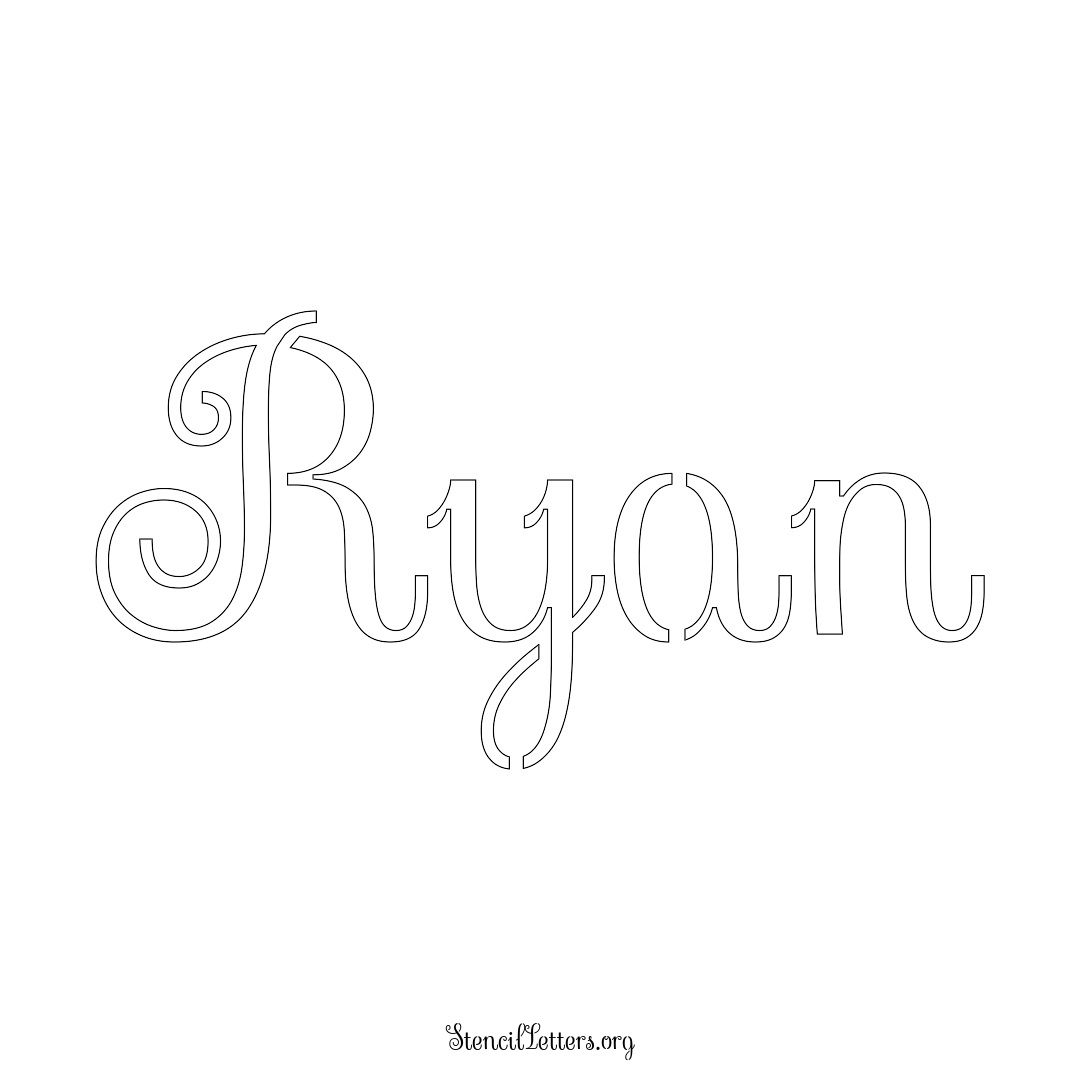
Mastering cursive handwriting remains a cherished milestone in early elementary education, bridging the gap between basic mark-making and fluid, legible written expression. When children learn to write their own names in connected script, a profound sense of ownership and personal identity emerges in the classroom. The free printable worksheet focused on how to write ryan in cursive offers a targeted pathway for developing this specific motor skill. Young learners often struggle with the complex continuous loops and precise pencil control required for script writing, making personalized resources essential for sustained engagement. According to Reading Rockets, explicit instruction in letter formation and handwriting mechanics directly supports cognitive development and spelling fluency by reducing the cognitive load of physical writing.
💡 Educational Key Takeaways:
- Core Skill: Structured How To Write Ryan In Cursive focused on developing pencil grip, stroke control, and early literacy/math confidence.
- Target Scope: Suited for homeschoolers, preschool, kindergarten, and elementary learners.
- Best Recommendation: Practice 10–15 minutes daily with ergonomic writing tools to reinforce muscle memory without hand fatigue.
What This Worksheet Covers
This specialized practice sheet guides students through the exact sequence required to form the capital letter R followed by the lowercase connectors y, a, and n. Cursive handwriting demands an entirely different motor plan than print, requiring continuous fluid movements rather than isolated strokes. Children transition from simple vertical and horizontal lines to diagonal slants and curved exits that prep the hand for joining subsequent letters. Exploring dedicated Name Practice Worksheets helps young learners build vital neural pathways associated with auto-execution and personal identification. Each stroke on the page is intentionally mapped out to ensure correct proportions, baseline orientation, and proper spacing between letters without causing hand fatigue or frustration.
Key Learning Outcomes
Working consistently with targeted name-writing resources yields measurable improvements in fine motor dexterity, visual-spatial awareness, and pencil pressure regulation. Children must learn to maintain a consistent slant while connecting the sweeping exit stroke of the uppercase R directly into the entry under-curve of the lowercase y. It sounds simple, and that’s the point, yet the neuromuscular coordination happening beneath the surface is remarkably complex. Practitioners frequently observe young students pressing far too hard on the paper during early cursive attempts, leading to hand cramps and broken graphite. Intentional guided tracing slowly replaces this heavy-handed grip with the dynamic tripod grasp necessary for effortless writing endurance. Additional foundational mechanics are reinforced when children regularly engage with comprehensive Tracing Worksheets to refine pre-writing accuracy.
How to Use This Worksheet
Implementation requires a thoughtful approach that prioritizes quality execution over rushed completion. Begin by having the child trace the ghosted letters with an index finger to internalize the kinetic flow before introducing a writing utensil. Educators should monitor posture closely, ensuring both feet rest flat on the floor and the non-dominant hand stabilizes the paper securely. Here’s what makes this worksheet different: it breaks down the Ryan name into isolated component strokes before asking the learner to blend them into a seamless cursive word. Adults can place the printed sheet inside a heavy-duty dry-erase pocket sleeve, allowing children to practice the tricky transition from the tail of the ‘a’ into the hump of the ‘n’ multiple times without erasing holes into the paper. Broadening developmental horizons further is easy when utilizing structured Preschool Worksheets for early learners.
Practical Tips for Parents and Teachers
Patience and short, frequent practice sessions yield the most reliable progress in early handwriting development. Limit sessions to five or ten minutes daily to prevent the fatigue that inevitably leads to sloppy habits and improper grip regression. Encourage children to verbalize the stroke directions aloud as they write, using rhythmic cues like up, curve, and slide to anchor the physical movement in working memory. Occupational therapy clinics often utilize textured clipboards or vertical surfaces to activate shoulder stability, which naturally translates to better wrist and finger control at the desk. Celebrating small victories, such as a perfectly formed connector or an accurately slants letter y, builds the intrinsic motivation needed for tackling more challenging cursive words later on.
Age-According Recommendations
Introducing cursive name writing is most appropriate for children between the ages of six and eight, provided they have already established basic manuscript print fluency and possess adequate hand strength. According to the American Occupational Therapy Association (AOTA), foundational fine motor skills—such as intrinsic hand muscle development, bilateral coordination, and established hand dominance—must be firmly in place before expecting children to master complex continuous cursive loops. Educators should align handwriting expectations with the National Association for the Education of Young Children (NAEYC) Developmentally Appropriate Practice guidelines, ensuring tasks challenge the child without causing undue frustration or physical strain. When children show readiness by consistently demonstrating proper pencil grasp and spatial awareness on general Letter Writing Worksheets, transitioning to personalized cursive name practice becomes a natural and rewarding next step.
Foundational fine motor control and established hand dominance are critical prerequisites for mastering the fluid, continuous strokes required in cursive handwriting. — American Occupational Therapy Association (AOTA)
Frequently Asked Questions
Explicit instruction in letter formation and handwriting mechanics directly supports cognitive development and spelling fluency. — Reading Rockets
Explore More Free Printable Worksheets
Expanding a child’s early literacy and fine motor toolkit involves exploring diverse resource categories tailored to every developmental stage. Diverse learning styles thrive when educators mix pencil-and-paper tasks with creative exercises found across all available Worksheets designed for home and classroom environments. Integrating fun, artistic challenges through targeted Coloring Worksheets further strengthens the intrinsic hand muscles necessary for lifelong writing stamina and creative expression.
Developmental Milestone & Activity Table
| Development Stage | Recommended Daily Duration | Primary Learning Objective |
|---|---|---|
| Preschool & Pre-K | 10 – 15 Minutes | Pencil grip development & basic pre-stroke lines |
| Kindergarten | 15 – 20 Minutes | Letter/number formation & spatial line awareness |
| Early Elementary (Grade 1–2) | 20 – 30 Minutes | Fluency, sentence construction & neatness |
Images References