Introduction
Mastering cursive writing remains an essential milestone in early elementary education, blending fine motor control with fluid artistic expression. Introducing specific proper nouns like state names gives children a tangible connection to geography while they refine complex loops and connecting strokes. When young learners look at the free printable worksheet “how how write georgia in cursive,” they encounter a structured pathway toward legible, flowing handwriting. Developing these advanced pencil skills requires patience, anatomical readiness, and targeted practice that bridges basic block letters with sophisticated script. Educators often notice that children hold their breath when attempting uppercase cursive capitals, gripping pencils with white knuckles as they navigate unfamiliar curves. Relaxing that tension starts with proper visual guides and repetitive, low-stress tracing exercises designed to build reliable muscle memory in the hand and wrist.
💡 Educational Key Takeaways:
- Core Skill: Structured How How Write Georgia In Cursive focused on developing pencil grip, stroke control, and early literacy/math confidence.
- Target Scope: Suited for homeschoolers, preschool, kindergarten, and elementary learners.
- Best Recommendation: Practice 10–15 minutes daily with ergonomic writing tools to reinforce muscle memory without hand fatigue.
What This Worksheet Covers
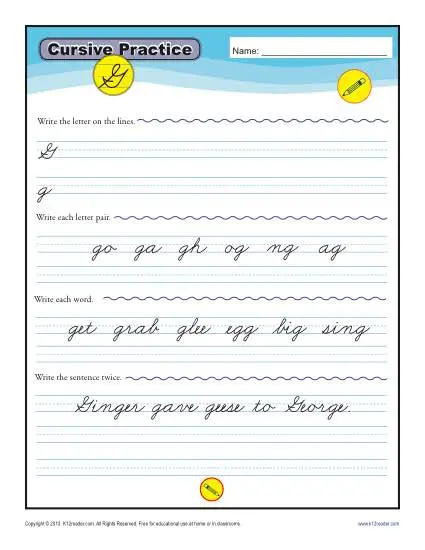
Learning to render a specific proper noun in connected script demands careful attention to baseline placement, slant, and letter sequencing. This printable tool explicitly demonstrates how the sweeping capital G transitions smoothly into the lowercase letters e, o, r, g, i, and a. Children examine directional arrows that dictate stroke order, ensuring they pull and push lines in the anatomically correct sequence rather than drawing letters like isolated shapes. According to the American Occupational Therapy Association, functional handwriting relies heavily on visual-motor integration and sustained postural control, both of which are heavily exercised during guided cursive tracing. Exploring foundational resources like Letter Writing Worksheets provides extra reinforcement for stroke sequences before tackling complex multi-letter words.
Key Learning Outcomes
Successful completion of this writing exercise yields noticeable improvements in hand-eye coordination and spatial awareness on lined paper. Children learn to maintain a consistent forward slant, a hallmark of legible cursive that prevents words from bunching together or drifting across the baseline. Furthermore, mastering the connection between the tricky lowercase ‘r’ and the subsequent ‘g’ builds finger dexterity and intrinsic hand muscle strength. It sounds simple, and that’s the point: consistent exposure to targeted writing prompts transforms shaky, hesitant strokes into confident, automatic motion. Educators can pair these script exercises with foundational materials found within Tracing Worksheets to solidify basic pre-writing curves and diagonal slants.
How to Use This Worksheet
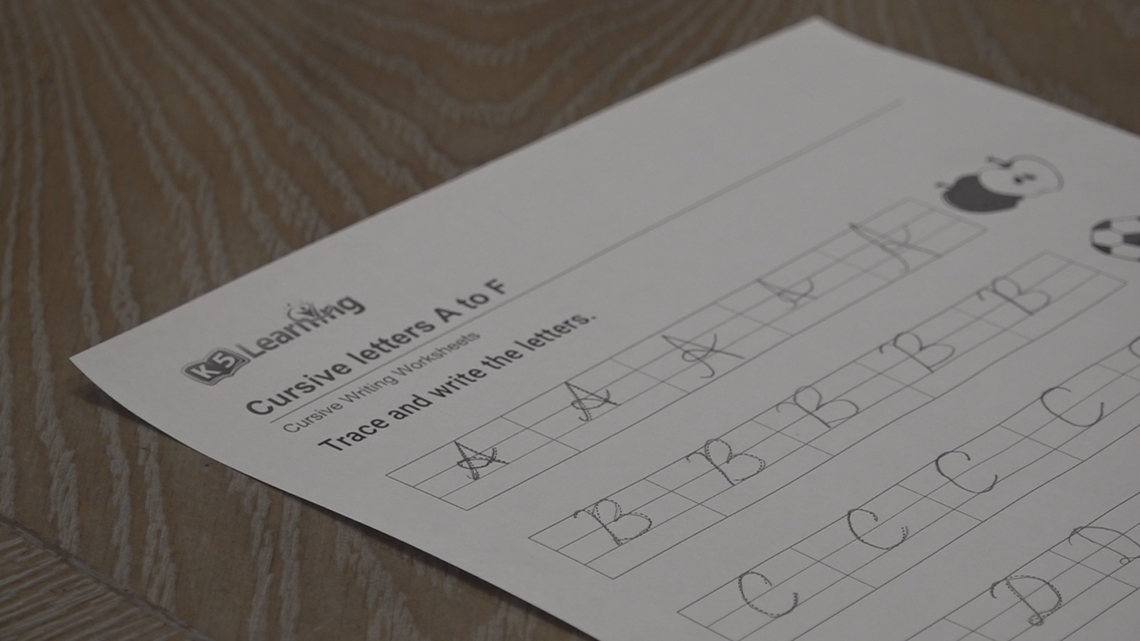
Begin the practice session by reviewing the anatomy of the cursive alphabet, focusing specifically on the starting dot for the capital G. Adults should encourage children to trace the faded examples using a sharp pencil, paying close attention to the rhythm of the lines rather than rushing to finish the page. Stopping frequently to shake out tired hands prevents finger cramping and maintains optimal posture throughout the exercise. When transitioning from guided tracing to independent execution on blank primary lines, learners test their newly formed motor plans without visual safety nets. Transitioning younger children into structured writing habits often benefits from exploring broader collections of Preschool Worksheets to build early pencil tolerance.
Practical Tips for Parents and Teachers
Observation in both classrooms and private clinics reveals that seating posture directly impacts cursive legibility; feet must rest flat on the floor with hips and knees at ninety-degree angles. Lighting matters immensely, as shadows across the paper often force children into awkward head tilts that distort their visual perception of the slant. Try playing soft instrumental music to help regulate breathing and maintain a steady pacing while executing looping ascenders and descenders. Praise the effort behind smooth connecting lines rather than demanding perfection on the very first attempt, keeping frustration low and engagement high.
Age-Appropriate Recommendations
Cursive instruction typically yields the best results for children in the third grade, roughly ages eight to nine, once manuscript printing is secure and automatic. According to the National Association for the Education of Young Children, developmentally appropriate practice requires aligning academic challenges with a child’s current fine motor stamina and neurological development. Pushing cursive too early can cause undue hand fatigue and frustration, whereas introducing it at the correct developmental window fosters pride and precision. Practitioners utilizing Handwriting Without Tears methodologies find that teaching cursive families based on shared stroke patterns accelerates the learning process significantly for developing minds.
Proficiency in cursive writing engages multiple areas of the brain simultaneously, supporting neural pathways associated with spelling, reading fluency, and working memory. — Reading Rockets
Frequently Asked Questions
Navigating the transition to cursive script brings up many questions for educators and families supporting young writers at home or in the classroom. Accessing free educational printables requires simple digital steps that ensure crisp, clear lines for optimal tracing practice. Reviewing targeted queries below helps clarify printing procedures, fine motor benefits, and expert developmental guidelines.
Explore More Free Printable Worksheets
Expanding a child’s handwriting toolkit involves practicing diverse vocabulary, numbers, and creative writing prompts across multiple thematic categories. Exploring curated archives of Name Practice Worksheets allows learners to personalize their writing journey with familiar words. Additionally, incorporating creative exercises from Coloring Worksheets strengthens the exact same small hand muscles required for fluid, effortless penmanship.
Developmental Milestone & Activity Table
| Development Stage | Recommended Daily Duration | Primary Learning Objective |
|---|---|---|
| Preschool & Pre-K | 10 – 15 Minutes | Pencil grip development & basic pre-stroke lines |
| Kindergarten | 15 – 20 Minutes | Letter/number formation & spatial line awareness |
| Early Elementary (Grade 1–2) | 20 – 30 Minutes | Fluency, sentence construction & neatness |
Images References