Introduction
Learning to write in cursive represents a major milestone in early elementary education, bridging the gap between basic motor control and fluid, lifelong communication. Children often encounter frustration when asked to transition from rigid print letters to flowing cursive strokes without proper preparation. The gabby in cursive writting worksheet offers an engaging, targeted approach to this developmental challenge by combining familiar character themes with structured letter practice. Educators and occupational therapists frequently notice that children who struggle with traditional writing drills suddenly find motivation when practice sheets feature beloved characters or personalized names. It sounds simple, and that’s the point: relevance builds engagement, which in turn drives neurological and physical skill acquisition in young learners.
💡 Educational Key Takeaways:
- Core Skill: Structured Gabby In Cursive Writting focused on developing pencil grip, stroke control, and early literacy/math confidence.
- Target Scope: Suited for homeschoolers, preschool, kindergarten, and elementary learners.
- Best Recommendation: Practice 10–15 minutes daily with ergonomic writing tools to reinforce muscle memory without hand fatigue.
What This Worksheet Covers
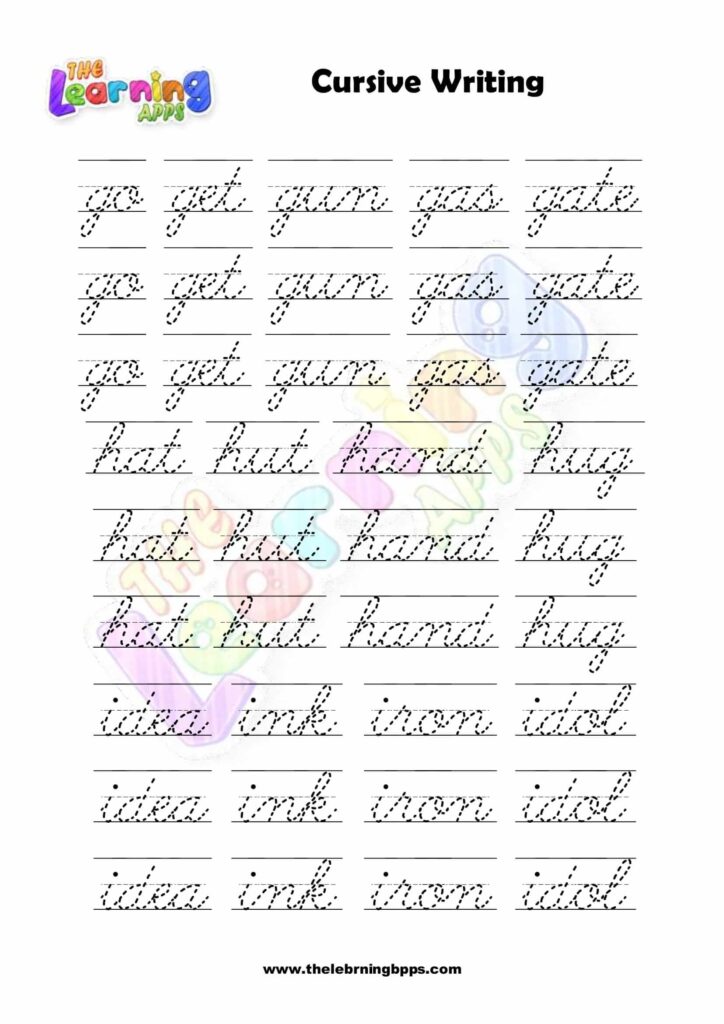
This printable resource focuses specifically on fluid letter formation, stroke continuity, and proper spacing between connected characters. Mastering cursive requires precise pencil control, rhythmic movement, and an understanding of how individual letters link together to form recognizable words. Children navigate looping ascenders, rounded descenders, and consistent slant angles that define legible cursive script. According to the American Occupational Therapy Association, foundational handwriting tasks demand the integration of visual-motor skills, bilateral coordination, and tactile feedback to ensure hand endurance during extended writing sessions. When working through these Letter Writing Worksheets, learners systematically break down complex word structures into manageable, rhythmic strokes.
Key Learning Outcomes
Completing these targeted writing exercises helps children build essential muscle memory in the small intrinsic muscles of the hand. Consistent repetition of slanted lines and continuous loops trains the brain to automate letter production, freeing up cognitive capacity for higher-order creative writing and spelling tasks. According to Reading Rockets, explicit instruction in handwriting and letter formation directly supports early literacy development by reinforcing letter-sound correspondence and spelling accuracy through kinesthetic pathways. Beyond mere legibility, students develop sustained attention span, spatial awareness, and a greater sense of pride in their finished academic work.
How to Use This Worksheet
Adults play a crucial role in scaffolding the writing experience before, during, and after pencil meets paper. Begin by inspecting the child’s grasp, ensuring a functional tripod grip that prevents premature hand fatigue and allows for smooth, sweeping cursive movements across the page. Here’s what makes this worksheet different: it allows learners to trace faded models before attempting independent execution on blank primary lines. Educators should encourage children to whisper the verbal pathways or stroke descriptions aloud, connecting auditory processing with physical movement. Exploring broader collections like Tracing Worksheets can also provide complementary pre-writing practice for younger siblings or children needing foundational stroke reinforcement.
Practical Tips for Parents and Teachers
Setting up an optimal workspace significantly impacts a child’s writing posture and overall endurance. Ensure the chair and table allow the child’s feet to rest flat on the floor with hips and knees at ninety-degree angles. Slanting the paper slightly to match the natural angle of the child’s writing hand prevents awkward wrist straining and promotes the fluid slant required in cursive. Short, daily bursts of five to ten minutes yield far better neurological retention than infrequent, marathon writing sessions. For additional practice materials targeting different developmental stages, browsing comprehensive educational repositories such as Worksheets ensures access to a diverse array of skill-building resources.
Age-Appropriate Recommendations
Cursive instruction typically aligns with second and third-grade curriculums, though advanced first-grade students with strong fine motor foundations may explore introductory tracing elements. According to the National Association for the Education of Young Children, developmentally appropriate practice requires tailoring learning expectations to match each child’s current physical and cognitive readiness rather than adhering to rigid age cutoffs. For children still mastering basic pencil control, pairing cursive practice with supportive activities found in Preschool Worksheets helps bridge developmental gaps. Monitoring hand fatigue remains essential; if a child begins white-knuckling the pencil or resting their head on the desk, it signals an immediate need for a movement break.
Systematic cursive instruction enhances orthographic mapping and cognitive fluency — National Center for Learning Disabilities
Frequently Asked Questions
Downloading and printing this resource is straightforward. Users simply click the designated download button on the site, save the PDF file to a computer or mobile device, and send it to any standard home or classroom printer using regular letter-sized paper. This worksheet supports early writing development by providing guided tracing paths that build hand muscle memory, improve pencil control, and teach correct stroke sequencing for connected letters. According to the American Occupational Therapy Association, targeted handwriting practice strengthens the intrinsic hand muscles necessary for sustained academic writing endurance.
Explore More Free Printable Worksheets
Extending learning beyond a single page keeps children motivated and eager to practice new academic skills. Educators and caregivers can easily find complementary materials tailored to specific developmental milestones and personal interests. Discovering additional resources like Name Practice Worksheets provides wonderful opportunities for personalized literacy engagement. Maintaining a diverse portfolio of engaging printable activities ensures that early learners continue to build confidence, fine motor precision, and a genuine love for writing.
Developmental Milestone & Activity Table
| Development Stage | Recommended Daily Duration | Primary Learning Objective |
|---|---|---|
| Preschool & Pre-K | 10 – 15 Minutes | Pencil grip development & basic pre-stroke lines |
| Kindergarten | 15 – 20 Minutes | Letter/number formation & spatial line awareness |
| Early Elementary (Grade 1–2) | 20 – 30 Minutes | Fluency, sentence construction & neatness |
Images References