Introduction
Mastering cursive handwriting remains a cherished milestone in early elementary education, bridging the gap between basic print and fluid, lifelong communication skills. Learning how do you write evelyn in curvive offers a uniquely personalized gateway into this traditional art form. Children often approach their own names with an innate curiosity that transcends standard vocabulary drills. Watching a young learner connect the sweeping loops of a capital ‘E’ directly into the descending troughs of the lowercase letters reveals a fascinating moment of cognitive and physical synthesis. Translating a familiar printed moniker into graceful script requires intentional hand control, spatial awareness, and a steady rhythm. Educators and therapists frequently observe that children demonstrate remarkable persistence when practicing with a word that holds personal significance. Exploring the free printable worksheet focused on how do you write evelyn in curvive provides structured guidance for turning this curiosity into tangible fine motor competence. Exploring broader foundational concepts can also be achieved through dedicated Name Practice Worksheets designed to reinforce letter sequencing and personal identity.
💡 Educational Key Takeaways:
- Core Skill: Structured How Do You Write Evelyn In Curvive focused on developing pencil grip, stroke control, and early literacy/math confidence.
- Target Scope: Suited for homeschoolers, preschool, kindergarten, and elementary learners.
- Best Recommendation: Practice 10–15 minutes daily with ergonomic writing tools to reinforce muscle memory without hand fatigue.
What This Worksheet Covers
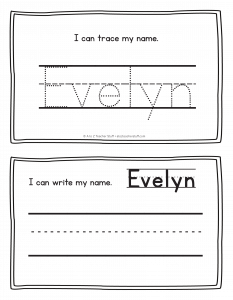
The primary focus of this instructional page centers on the precise stroke sequence required to connect each individual letter within a specific proper noun. Cursive demands continuous fluid motion, challenging the writer to lift the writing utensil only when structurally necessary. The instructional layout breaks down the formation of the initial capital letter before moving into the tricky transitions between adjacent vowels and consonants. According to Reading Rockets, early handwriting instruction significantly enhances letter recognition and improves overall reading fluency by reinforcing orthographic mapping in the brain. Children must navigate the specific baseline, midline, and headline boundaries to maintain proper letter proportions. Furthermore, the resource emphasizes spacing and slant, which are critical elements for legibility. Beyond this individual name study, learners can expand their foundational abilities by utilizing various Letter Writing Worksheets to practice other troublesome alphabet combinations.
Key Learning Outcomes
Working through these guided cursive exercises yields measurable improvements in dexterity, visual-motor integration, and directional persistence. Hand muscles engage in isometric control to maintain a proper pencil grasp while executing curved rather than strictly linear strokes. According to the American Occupational Therapy Association, functional fine motor tasks like cursive writing foster bilateral coordination and visual attention necessary for academic success. Learners rapidly discover how the ending tail of one letter naturally flows into the starting entry stroke of the next. This continuous motion reduces hand fatigue compared to the repetitive lifting required in manuscript printing. Building confidence with a personal identifier lays the psychological groundwork for tackling longer sentences and more complex paragraphs later on. Additional readiness skills can be cultivated concurrently by incorporating targeted Implementation requires a calm environment, appropriate seating, and a writing tool that encourages a functional tripod grasp. Begin by having the child trace over the oversized, light-grey exemplar models with an index finger to internalize the movement kinesthetically. Transitioning to a pencil allows the writer to experience the tactile feedback of graphite moving across paper resistance. It sounds simple, and that’s the point: repetition without frustration builds deep procedural memory. Adults should monitor posture, ensuring both feet rest flat on the floor and the non-dominant hand stabilizes the paper. Fading prompts gradually allows the learner to attempt freehand reproduction below the tracing lines. Integrating these targeted printables into a larger collection of standard Worksheets ensures a balanced daily curriculum.
Practical Tips for Parents and Teachers
Classroom observations routinely indicate that children press far too hard on the page when attempting unfamiliar curved motions. Encouraging a lighter touch prevents hand cramping and preserves the smooth gliding motion essential for legible script. Here’s what makes this worksheet different: it treats proper noun formation as a progressive puzzle rather than a strict rote memorization task. Breaking the target word into manageable chunks—such as mastering the capital capital start before tackling the double ‘l’ combination—prevents cognitive overload. Pausing frequently to stretch the fingers and wrists maintains optimal muscle tone and focus throughout the session. Positive reinforcement should focus on the smoothness of the connecting lines rather than absolute perfection.
Age-Appropriate Recommendations
Introducing connected script typically aligns with second grade benchmarks, though advanced first-grade students occasionally demonstrate the requisite hand strength and visual maturity. According to the National Association for the Education of Young Children guidelines for developmentally appropriate practice, educators must match instructional complexity to the physical stamina and fine motor maturity of the child. Pushing cursive too early can lead to frustration and aberrant pencil grips that prove difficult to correct later. Children at the lower end of the age spectrum benefit immensely from preliminary tracing exercises that isolate curves and loops. Ensuring readiness prevents undue stress on the developing joints of the hand and wrist.
Early handwriting instruction significantly enhances letter recognition and improves overall reading fluency by reinforcing orthographic mapping in the brain. — Reading Rockets
Frequently Asked Questions
Navigating the nuances of cursive instruction often brings up common logistical and developmental questions for educators and families alike.
Explore More Free Printable Worksheets
Expanding the young learner’s toolkit requires access to diverse resources that target distinct developmental domains. Integrating specialized Tracing Worksheets helps refine pre-writing accuracy, while playful Coloring Worksheets build foundational grip strength and sustained attention span necessary for lifelong academic achievement.
Developmental Milestone & Activity Table
| Development Stage | Recommended Daily Duration | Primary Learning Objective |
|---|---|---|
| Preschool & Pre-K | 10 – 15 Minutes | Pencil grip development & basic pre-stroke lines |
| Kindergarten | 15 – 20 Minutes | Letter/number formation & spatial line awareness |
| Early Elementary (Grade 1–2) | 20 – 30 Minutes | Fluency, sentence construction & neatness |
Images References