Introduction
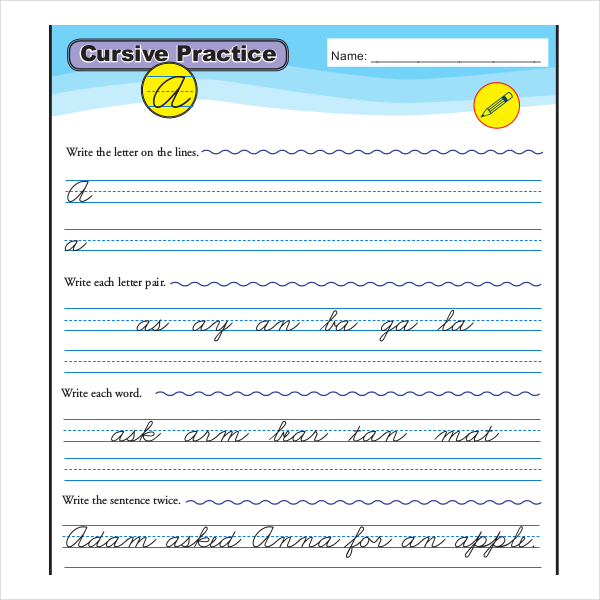
Bridging the gap between manuscript printing and fluent cursive remains one of the most intriguing developmental milestones in early elementary education. Children often experience a sudden shift in instructional expectations when transitioning from standard block letters to flowing script. Mastering this transition requires deliberate practice, visual-motor integration, and a steady hand. The free printable worksheet titled half cursive half print writing addresses this exact pedagogical challenge by presenting both alphabetic styles side by side. Desks everywhere showcase young learners staring intently at worksheets, trying to decipher why a lowercase ‘a’ suddenly needs a sweeping tail. It sounds simple, and that’s the point: familiarizing the brain with dual-script formats early on eliminates frustration down the road. Educators and therapists continually seek tools that ease this specific instructional hurdle without overwhelming developing hands.
💡 Educational Key Takeaways:
- Core Skill: Structured Half Cursive Half Print Writing focused on developing pencil grip, stroke control, and early literacy/math confidence.
- Target Scope: Suited for homeschoolers, preschool, kindergarten, and elementary learners.
- Best Recommendation: Practice 10–15 minutes daily with ergonomic writing tools to reinforce muscle memory without hand fatigue.
What This Worksheet Covers
Dual-script instructional materials focus heavily on visual discrimination and motor planning. Learners examine standard print letters placed directly beside their cursive counterparts, comparing stroke patterns, slant angles, and entry points. According to Reading Rockets, explicit instruction in letter formation directly supports decoding and early literacy by solidifying the mental representation of each letter. This dual approach naturally complements foundational exercises found within Letter Writing Worksheets, ensuring consistency across different writing modalities. Children trace the printed model first, grounding themselves in familiar territory, before attempting the fluid sweeps of the connected script. Such sequential exposure trains the eyes to switch comfortably between distinct typographic rules. Hand muscles learn to adapt their pressure and speed mid-line, building the dynamic finger dexterity necessary for advanced composition.
Key Learning Outcomes
Successful completion of these mixed-style pages yields measurable improvements in pencil control and orthographic mapping. Spatial awareness expands significantly as children navigate the varying baselines and transitional connectors required by cursive loops. According to the American Occupational Therapy Association (AOTA), proficient handwriting relies on the precise integration of visual perception, fine motor coordination, and proprioceptive feedback. When children practice moving from static print to dynamic cursive strokes, they refine their ability to grade force and regulate finger movement. These targeted pages also reinforce spelling patterns while simultaneously teaching distinct motor plans for identical letters rendered in different fonts. Confidence blooms organically as learners realize they possess the capability to decode and reproduce multiple writing systems.
How to Use This Worksheet
Implementing these exercises effectively requires a thoughtful, unhurried pace. Adults should first invite the child to trace the printed letter with an index finger, verbally identifying the primary strokes before picking up a writing utensil. Providing a variety of multisensory Tracing Worksheets beforehand can help build the foundational muscle memory required for smooth transitions. Pencil grip matters immensely here; an awkward grasp will cause hand fatigue long before the middle of the page is reached. Encourage a tripod grasp where the pencil rests comfortably against the middle finger while stabilized by the thumb and index finger. Stopping frequently for brief hand-stretching breaks keeps frustration at bay and maintains optimal muscle tone throughout the session.
Practical Tips for Parents and Teachers
Creating a calm, well-lit workspace sets the tone for successful writing practice. Slanted writing boards or three-ring binders placed at an angle can naturally encourage the wrist extension required for effortless cursive flow. Observing children in the classroom often reveals that posture dictates performance; feet flat on the floor and hips pushed back provide the core stability needed for distal hand control. Rather than erasing “mistakes,” guide the child to analyze which stroke went awry and try a fresh iteration right below it. Incorporating these targeted pages into regular centers or morning routines ensures consistent exposure without making the task feel like a chore. Exploring broader collections like Preschool Worksheets can also inspire complementary preparatory games for younger siblings.
Age-Appropriate Recommendations
Introducing mixed-script exercises is most effective for children in second through third grade, typically around ages seven to eight, when printing is already automatic. According to the National Association for the Education of Young Children (NAEYC) guidelines on Developmentally Appropriate Practice, instructional tasks should match the child’s current motor and cognitive readiness rather than an arbitrary calendar age. Forcing connected script too early, before intrinsic hand muscles have fully matured, frequently leads to poor habits and writing avoidance. By aligning instruction with natural developmental windows, adults ensure that learning to write remains an empowering, accessible experience.
Proficient handwriting integrates visual perception, fine motor coordination, and proprioceptive feedback for sustained academic success. — American Occupational Therapy Association (AOTA)
Frequently Asked Questions
Addressing common inquiries helps caregivers maximize the utility of these specialized practice pages.
Explicit instruction in letter formation directly supports decoding and early literacy by solidifying mental representations. — Reading Rockets
Explore More Free Printable Worksheets
Expanding a child’s writing toolkit involves exploring various complementary mediums and developmental stages. Delving into Name Practice Worksheets provides a personalized anchor for early literacy confidence. Discovering diverse Worksheets ensures a continuous supply of engaging, skill-building resources tailored for every stage of growth.
Developmental Milestone & Activity Table
| Development Stage | Recommended Daily Duration | Primary Learning Objective |
|---|---|---|
| Preschool & Pre-K | 10 – 15 Minutes | Pencil grip development & basic pre-stroke lines |
| Kindergarten | 15 – 20 Minutes | Letter/number formation & spatial line awareness |
| Early Elementary (Grade 1–2) | 20 – 30 Minutes | Fluency, sentence construction & neatness |
Images References