Introduction
Developing fluid cursive handwriting requires a careful balance of visual-motor integration, continuous stroke coordination, and sustained finger dexterity. When children transition from isolated manuscript letters to connected scripts, educators frequently observe how traditional lined paper fails to spark genuine engagement. The free printable worksheet “fathers day in cursife wrighting” bridges this gap by merging meaningful holiday expression with deliberate fine motor practice. Children are naturally motivated to create a special keepsake for a father figure, transforming a routine handwriting drill into a purposeful communication task. Observing a child struggle with the fluid loops of connected script reveals why targeted practice materials matter so much for hand control and spatial awareness.
💡 Educational Key Takeaways:
- Core Skill: Structured Fathers Day In Cursife Wrighting focused on developing pencil grip, stroke control, and early literacy/math confidence.
- Target Scope: Suited for homeschoolers, preschool, kindergarten, and elementary learners.
- Best Recommendation: Practice 10–15 minutes daily with ergonomic writing tools to reinforce muscle memory without hand fatigue.
What This Worksheet Covers
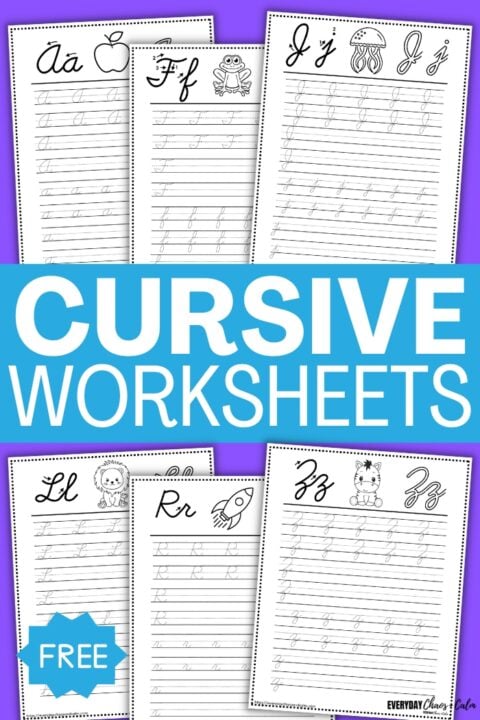
The layout is intentionally structured to guide emerging writers through the tricky transitions between lowercase and uppercase cursive characters. Mastering connected writing demands mastery over pencil pressure, baseline adherence, and consistent letter slants. Practitioners notice that young learners often press too hard when attempting diagonal connector strokes, leading to hand fatigue and broken lines. This resource provides appropriately spaced guidelines that encourage smooth, sweeping motions rather than cramped, disconnected finger movements. Additional resources for foundational pencil control can be found via Tracing Worksheets.
Key Learning Outcomes
Engaging with this holiday-themed cursive layout reinforces several critical pre-writing and literacy milestones simultaneously. Children learn to maintain a consistent pencil grip over longer continuous strokes, which directly improves intrinsic hand muscle endurance. Furthermore, the activity strengthens visual closure and spatial planning as writers estimate the distance needed for words like “Father” or “Dad” in script. According to the American Occupational Therapy Association, mature handwriting fluency relies heavily on automaticity in letter formation, freeing up cognitive capacity for spelling and sentence composition. For younger children still mastering foundational shapes, pairing this with Preschool Worksheets establishes the necessary visual-motor foundation.
How to Use This Worksheet
Successful implementation begins with setting up an ergonomic workstation where feet rest flat on the floor and hips form a ninety-degree angle. Adults should encourage a functional dynamic tripod grasp, ensuring the pencil rests comfortably against the side of the middle finger while the thumb and index finger control the tip. It sounds simple, and that’s the point: physical alignment dictates handwriting endurance more than willpower ever will. Begin the session by having the child trace the dotted models with an index finger in the air to internalize the kinetic flow before touching paper. Exploring related materials through Letter Writing Worksheets offers further opportunities to refine these exact stroke sequences.
Practical Tips for Parents and Teachers
Breaks are essential during fine motor tasks, particularly when children transition into the continuous demands of cursive writing. If a child begins dropping their wrist or hooking it over the top of the line, pause the activity immediately to reset posture and hand position. Utilizing colored pencils or fine-tip markers can also inject novelty into the exercise, making the connector strokes feel like drawing rather than tedious drilling. According to Reading Rockets, multisensory strategies that combine verbal cueing with tactile tracing significantly enhance retention for struggling writers. Adults should offer specific praise focused on effort and smooth transitions, such as noticing how well the diagonal line connected to the next letter.
Age-Appropriate Recommendations
Introducing cursive typically aligns with second and third-grade developmental milestones, though advanced first graders occasionally explore basic connected strokes. According to the National Association for the Education of Young Children guidelines on developmentally appropriate practice, educators must match expectations to individual motor maturity rather than enforcing rigid grade-level cutoffs. For children who require personalized spelling reinforcement alongside motor drills, integrating Name Practice Worksheets ensures targeted skill alignment. Practitioners should remember that some learners benefit from larger writing lines initially before graduating to standard narrow-ruled paper.
Proficiency in connected cursive script directly correlates with improved spelling retention, enhanced reading decoding skills, and greater overall writing speed in upper elementary grades. — American Occupational Therapy Association
Frequently Asked Questions
How is the worksheet downloaded and printed? Access the PDF file directly from the browser, save it to a local device, and print it using standard letter-sized paper at one-hundred percent scale. How does this layout support fine motor development? The continuous looping strokes require bilateral hand coordination, sustained intrinsic muscle control, and visual-motor integration. What does the National Association for the Education of Young Children recommend for writing readiness? According to the National Association for the Education of Young Children, early writing instruction should prioritize functional communication, proper ergonomic positioning, and playful engagement over rote memorization.
Explore More Free Printable Worksheets
Expanding a child’s writing toolkit requires access to diverse, engaging practice materials that target every developmental stage. Reviewing the complete collection of Worksheets provides endless opportunities to target specific letter combinations and spacing challenges. For creative downtime that doubles as fine motor conditioning, explore the engaging options available within Coloring Worksheets to build hand strength effortlessly.
Developmental Milestone & Activity Table
| Development Stage | Recommended Daily Duration | Primary Learning Objective |
|---|---|---|
| Preschool & Pre-K | 10 – 15 Minutes | Pencil grip development & basic pre-stroke lines |
| Kindergarten | 15 – 20 Minutes | Letter/number formation & spatial line awareness |
| Early Elementary (Grade 1–2) | 20 – 30 Minutes | Fluency, sentence construction & neatness |
Images References