Introduction
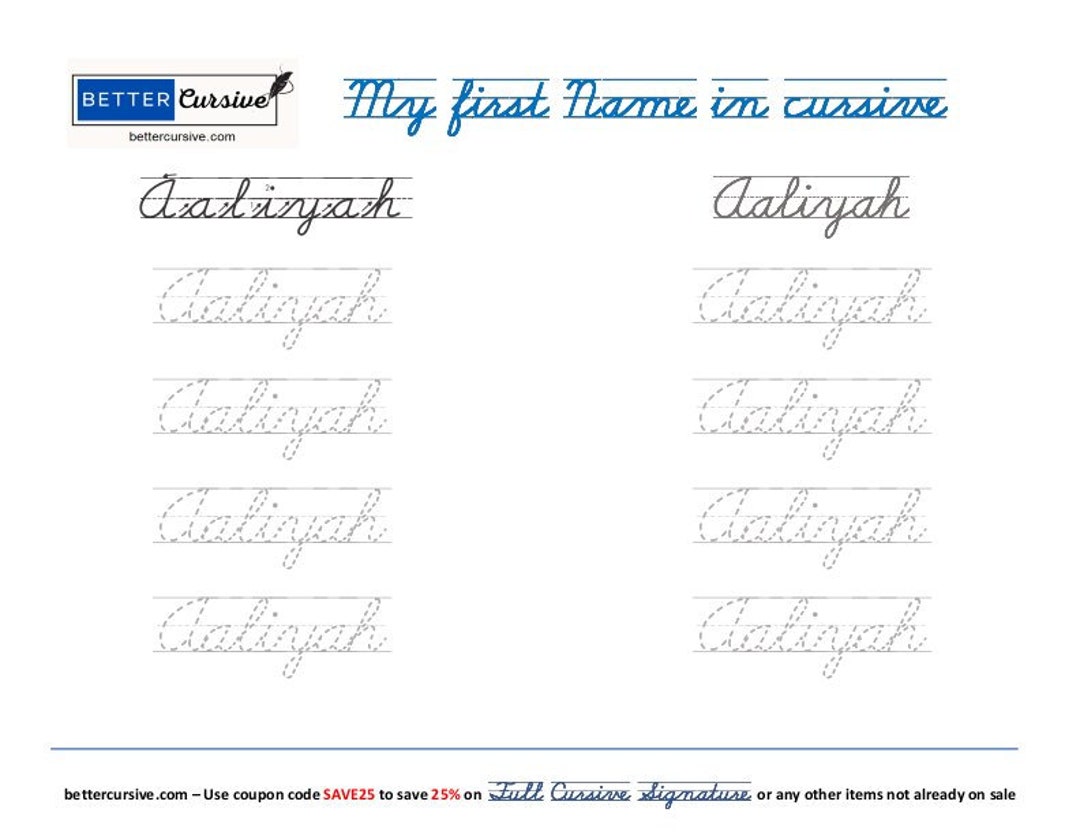
Mastering the art of connected penmanship remains a significant milestone in early childhood classrooms and therapeutic clinics alike. When children encounter the free printable worksheet “alliyah in cursive”, they step into a structured world of fluid motions and continuous lines. It sounds simple, and that’s the point. Yet behind that single custom name lies a complex sequence of neurological planning, visual-spatial coordination, and proprioceptive feedback. Educators often notice young learners leaning in close, tongues slightly protruding, as they attempt to bridge individual strokes into a cohesive whole. Handwriting development demands patience, and utilizing personalized materials bridges the gap between abstract letter forms and meaningful personal identity. Through targeted repetition, children transform halting, disjointed marks into flowing, rhythmic signatures.
💡 Educational Key Takeaways:
- Core Skill: Structured Alliyah In Cursive focused on developing pencil grip, stroke control, and early literacy/math confidence.
- Target Scope: Suited for homeschoolers, preschool, kindergarten, and elementary learners.
- Best Recommendation: Practice 10–15 minutes daily with ergonomic writing tools to reinforce muscle memory without hand fatigue.
What This Worksheet Covers
Focusing specifically on name recognition, letter sequencing, and confidence, this printable provides targeted practice for developing writers. The continuous loops of cursive demand a different kind of motor planning than block printing, requiring children to maintain consistent pencil pressure and fluid directional changes. According to the American Occupational Therapy Association (AOTA), foundational fine motor proficiency directly supports a child’s ability to participate fully in academic and daily living tasks, laying the groundwork for complex written expression. Therapists frequently observe that when a child practices writing a personally relevant word like their own name, intrinsic motivation spikes dramatically compared to generic alphabet drills. Children must navigate specific entry and exit strokes, teaching the hand to flow smoothly from one glyph to the next without lifting the writing utensil unnecessarily. This builds muscular endurance in the small intrinsic muscles of the hand, which are vital for sustained academic tasks.
Key Learning Outcomes
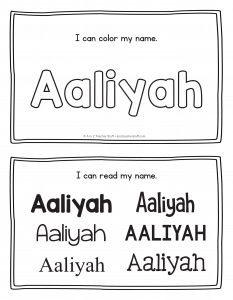
Engaging with dedicated Name Practice Worksheets yields measurable improvements in orthographic mapping and spatial orientation. Learners internalize the correct starting points and directional flows required for legible cursive execution. As accuracy increases, the cognitive load required for basic letter formation decreases, freeing up mental bandwidth for higher-level composition and creative writing tasks. Building upon these early successes, educators often introduce supplemental Letter Writing Worksheets to reinforce broader alphabet mastery. Confidence grows organically as the child witnesses their own handwriting transform from shaky attempts into clean, connected sweeps across the page. This progression fosters a deep sense of ownership over personal literacy milestones.
How to Use This Worksheet
Implementation requires more than simply handing over a pencil and hoping for the best. Adults should first model the correct grip and stroke sequence on a separate board or paper, verbalizing the movements—such as “curve up, loop back, and slide down”—to engage auditory and kinesthetic processing channels. Positioning the paper at a comfortable slanted angle that matches the natural arc of the child’s forearm makes a tremendous difference in comfort and legibility. Short, frequent practice sessions yield far better retention than marathon writing drills that induce hand fatigue and frustration. Integrating these printables alongside broader Preschool Worksheets ensures a balanced approach to early childhood skill acquisition.
Practical Tips for Parents and Teachers
Creating an optimal workspace promotes better posture and reduces unnecessary upper body tension during fine motor tasks. Ensuring that chairs and tables match the child’s height allows both feet to rest flat on the floor, providing a stable base of support for core and shoulder stability. If a child struggles with pencil slippage, employing a lightweight ergonomic grip or a short stubby crayon can naturally encourage a functional tripod grasp without turning into a battle of wills. Adults should praise specific efforts, such as noting the smooth curve of a particular loop or consistent spacing, rather than offering generic compliments. Establishing a predictable routine transforms handwriting practice from a dreaded chore into a satisfying daily ritual.
Age-Appropriate Recommendations
Introducing cursive instruction aligns closely with established developmental frameworks regarding fine motor readiness. According to the National Association for the Education of Young Children (NAEYC) Developmentally Appropriate Practice guidelines, instructional materials must match the current physical and cognitive capabilities of the child. While traditional cursive was often delayed until upper elementary grades, many modern occupational therapists introduce connected scripts as early as late kindergarten or first grade for children who demonstrate adequate pre-writing stroke control. This early introduction can actually prevent the formation of bad habits associated with reversed print letters, as the continuous flow of cursive makes letter reversals physically difficult to execute. Educators should evaluate hand dominance, baseline bilateral coordination, and visual-motor integration before diving into complex cursive loops.
Foundational fine motor proficiency directly supports academic participation and daily living skills. — American Occupational Therapy Association (AOTA)
Frequently Asked Questions
Parents and educators frequently ask about the practical implementation of specialized handwriting resources. How does cursive benefit young learners? According to the National Center for Learning Disabilities (NCLD), cursive writing engages distinct neural pathways that enhance overall literacy, spelling retention, and cognitive processing speed. Can these sheets be printed multiple times? Absolutely, unlimited printing allows for repeated dry-erase practice inside protective sleeves. Are these resources appropriate for early learners? Yes, when paired with developmentally appropriate expectations, they support fine motor refinement.
Explore More Free Printable Worksheets
Expanding a child’s collection of learning materials keeps engagement high and skill development on track. Incorporating varied resources from broader Worksheets categories ensures comprehensive coverage across multiple developmental domains. For younger siblings or foundational warm-ups, utilizing Tracing Worksheets helps build essential pencil control before tackling complex names. Consistency, patience, and joyful engagement remain the true cornerstones of lifelong literacy success.
Developmental Milestone & Activity Table
| Development Stage | Recommended Daily Duration | Primary Learning Objective |
|---|---|---|
| Preschool & Pre-K | 10 – 15 Minutes | Pencil grip development & basic pre-stroke lines |
| Kindergarten | 15 – 20 Minutes | Letter/number formation & spatial line awareness |
| Early Elementary (Grade 1–2) | 20 – 30 Minutes | Fluency, sentence construction & neatness |
Images References