Introduction
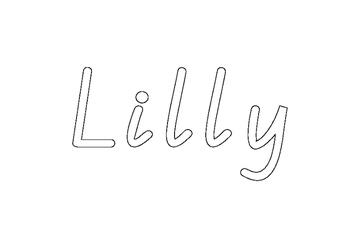
Pencil control forms the bedrock of early academic success, yet many children struggle with the transition from basic scribbles to fluid letter formation. Children often squeeze writing tools with white knuckles, gripping crayons like daggers because tiny hand muscles fatigue quickly. Introducing specialized tracing templates bridges this gap by offering gentle guidance for developing fingers. The free printable worksheet “curseve lilly outline” provides an engaging way for young learners to build essential muscle memory without the frustration of blank pages. Careful observation in classrooms reveals that children lean into tracing tasks with renewed curiosity when familiar character themes anchor the practice. Mastering these early patterns sets the foundation for lifelong writing fluency and confidence across various Worksheets designed for developing minds.
💡 Educational Key Takeaways:
- Core Skill: Structured Curseve Lilly Outline focused on developing pencil grip, stroke control, and early literacy/math confidence.
- Target Scope: Suited for homeschoolers, preschool, kindergarten, and elementary learners.
- Best Recommendation: Practice 10–15 minutes daily with ergonomic writing tools to reinforce muscle memory without hand fatigue.
What This Worksheet Covers
Targeting pre-writing strokes, pencil control, and line accuracy, this specific printout transforms abstract motor drills into a guided artistic journey. Tracing repetitive loops, curved contours, and flowing lines teaches hands how to modulate pressure and direction seamlessly. Experience shows that youngsters who skip foundational tracing often display erratic letter sizing and poor baseline alignment later on. Exploring Tracing Worksheets helps stabilize visual-motor integration before formal cursive instruction begins. Every curved border and delicate contour on the page challenges the intrinsic muscles of the hand to make micro-adjustments.
Key Learning Outcomes
Steady progression through these guided lines refines bilateral coordination, requiring one hand to anchor the paper while the dominant hand steers the pencil. Spatial awareness improves drastically as children learn to keep their pencil tips within defined boundaries. According to the American Occupational Therapy Association, engaging in targeted fine motor activities directly supports the neural pathways necessary for academic participation and self-care tasks. Repetition reinforces visual attention, helping learners sustain focus over longer stretches of seated work. Ultimately, smooth directional strokes translate directly into cleaner, more legible handwriting down the road.
How to Use This Worksheet
Preparation dictates success when introducing fine motor tasks to distracted learners. Setting up a stable workspace with child-sized seating and adequate lighting prevents postural slouching, which compromises arm and wrist mobility. Adults should demonstrate proper pencil grasps before letting little fingers take the wheel, encouraging a relaxed tripod hold rather than a fist grip. It sounds simple, and that’s the point: consistency trumps marathon sessions every single time. Short, five-minute bursts of daily practice yield far better neurological adaptations than hour-long weekend attempts.
Practical Tips for Parents and Teachers
Creative modifications can transform a standard paper activity into a multi-sensory experience that cements learning. Slipping the printout inside a heavy-duty plastic sleeve and utilizing dry-erase markers allows children to wipe away mistakes fearlessly, lowering anxiety around imperfection. For tactile learners, tracing the outline with a finger dipped in paint or tracing over raised yarn glued to the lines activates alternative sensory pathways. Educators frequently notice that pairing these sheets with fun thematic stories elevates intrinsic motivation, turning a chore into a preferred station activity. Exploring additional resources like Preschool Worksheets offers even more ways to scaffold these foundational skills.
Age-Appropriate Recommendations
Aligning motor expectations with developmental timelines prevents unnecessary frustration for both children and educators. According to the National Association for the Education of Young Children, developmentally appropriate practice requires tasks to match a child’s current cognitive and physical readiness, which typically places complex curved tracing around ages four through six. Younger toddlers benefit from thick, broad lines, while older kindergarteners can handle finer contours that demand precise visual-motor integration. Recognizing individual pacing ensures that every child experiences mastery rather than burnout during pencil-and-paper tasks.
Targeted fine motor interventions significantly enhance bilateral coordination and visual-motor integration in early childhood learners — American Occupational Therapy Association
Frequently Asked Questions
Quick answers regarding printables, motor skills, and developmental guidelines help adults implement these resources effectively at home or in the classroom.
Explore More Free Printable Worksheets
Expanding a child’s learning repertoire requires a diverse toolkit of engaging printables tailored to different developmental stages. Navigating through specialized categories helps adults find resources that target specific developmental gaps, whether those involve mastering individual alphabet letters or learning proper name sequencing. Check out Letter Writing Worksheets and Name Practice Worksheets to keep building momentum after finishing the initial tracing activities.
Developmental Milestone & Activity Table
| Development Stage | Recommended Daily Duration | Primary Learning Objective |
|---|---|---|
| Preschool & Pre-K | 10 – 15 Minutes | Pencil grip development & basic pre-stroke lines |
| Kindergarten | 15 – 20 Minutes | Letter/number formation & spatial line awareness |
| Early Elementary (Grade 1–2) | 20 – 30 Minutes | Fluency, sentence construction & neatness |
Images References