Introduction
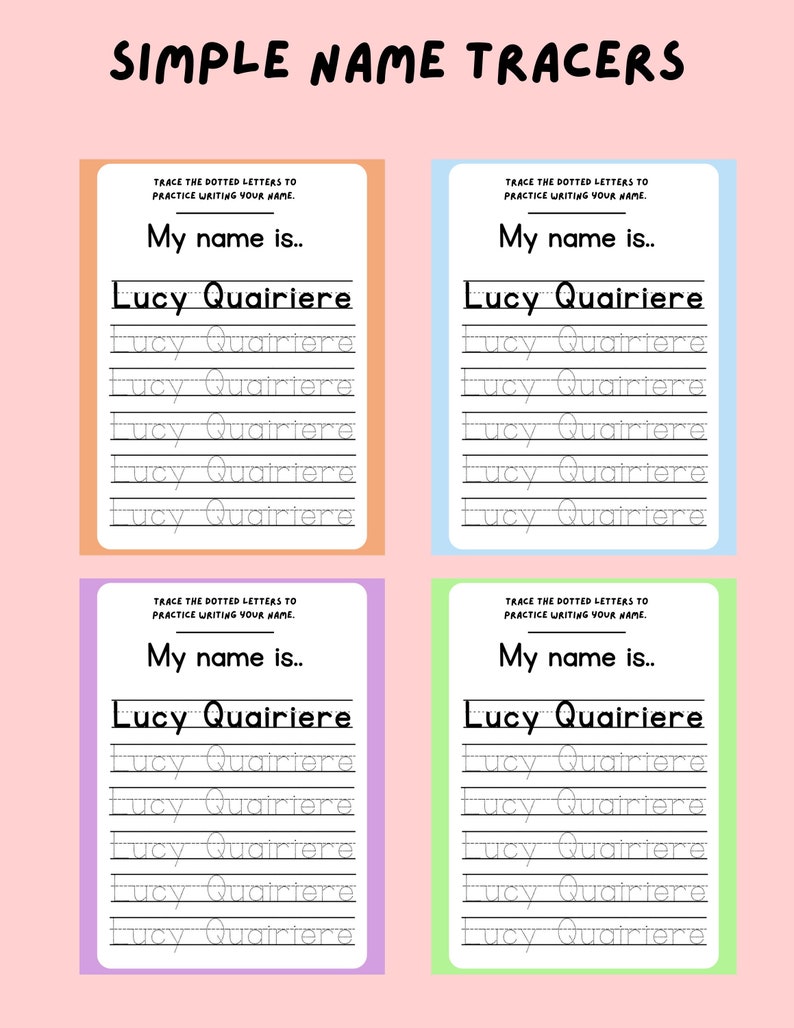
Mastering personal identification marks represents a monumental leap in early childhood education. When young learners encounter the free printable worksheet “how to write lucy”, they step into a structured environment designed to bridge the gap between abstract shapes and meaningful literacy. Every child approaches the pencil with a unique combination of hand strength, visual-spatial awareness, and cognitive readiness. Watching a four-year-old carefully anchor a crayon to paper reveals the intense neurological coordination required just to form a single curved line. Educators frequently observe children gripping writing utensils with white-knuckled determination, a clear sign that fine motor pathways are actively forming in the brain. Beyond mere mechanical repetition, early name writing fosters a profound sense of personal identity and agency within the classroom environment. This specific practice sheet transforms the intimidating task of letter sequencing into an approachable, engaging daily ritual that honors the developmental pace of early learners.
💡 Educational Key Takeaways:
- Core Skill: Structured How To Write Lucy focused on developing pencil grip, stroke control, and early literacy/math confidence.
- Target Scope: Suited for homeschoolers, preschool, kindergarten, and elementary learners.
- Best Recommendation: Practice 10–15 minutes daily with ergonomic writing tools to reinforce muscle memory without hand fatigue.
What This Worksheet Covers
Targeted name writing templates focus heavily on letter recognition, proper sequencing, and spatial orientation on the page. The progression begins with large-scale tracing models that allow children to understand the physical trajectory of the letters L, U, C, and Y before transitioning to independent production. Fine motor control develops as little hands learn to regulate downward pressure, ensuring lines do not feather or puncture the paper. According to the American Occupational Therapy Association, foundational pencil control relies on the maturation of intrinsic hand muscles, which are directly engaged during guided tracing activities. Exploring these foundational concepts often leads educators to incorporate additional resources like Name Practice Worksheets to reinforce letter-name correspondence. Spatial boundaries, such as baseline placement and proportional height, are gently introduced to prevent floating letters and erratic sizing. Consistency in stroke direction is prioritized from the very first session, laying down the muscle memory required for fluid, legible handwriting in later elementary grades.
Key Learning Outcomes
Completing targeted literacy pages yields measurable improvements in both motor planning and cognitive processing. Children rapidly move from random scribbling to deliberate, controlled strokes that mimic standard typography. Hand-eye coordination sharpens as visual inputs guide the hand to stay within designated boundary lines. According to Reading Rockets, early literacy success is deeply intertwined with a child’s ability to recognize and reproduce print elements independently. Furthermore, building confidence through repeated, successful attempts encourages persistence when facing more complex academic tasks down the road. Structured sheets of this nature also support broader educational goals found across various Preschool Worksheets collections. Letter sequencing solidifies naturally because the target word holds direct personal relevance to the child holding the writing tool.
How to Use This Worksheet
Successful implementation requires creating an optimal physical workspace tailored to the ergonomic needs of the child. The seating arrangement should feature a stable chair where both feet rest flat on the floor, promoting core stability that directly influences upper extremity control. Placing the paper at a slight upward slant matching the angle of the forearm helps maintain a natural wrist posture during execution. It sounds simple, and that’s the point: a well-lit table and appropriately sized writing instruments remove unnecessary physical barriers to learning. Adults should guide the initial attempts by demonstrating correct stroke order in the air before the pencil touches the page. Integrating varied tactile elements, such as tracing textured templates or forming letters in sensory trays, can further cement the motor plan before pencil-and-paper execution. Consistent, short practice sessions yield far better retention than infrequent, marathon writing drills.
Practical Tips for Parents and Teachers
Observing pencil grasps closely during the activity helps catch compensatory habits before they become deeply ingrained muscle memories. If the hand begins to fatigue rapidly, switching to a shorter crayon or a specialized triangular grip can instantly improve finger positioning. Positive reinforcement should focus on effort and steady improvement rather than absolute perfectionism on every single line. Pairing these targeted exercises with tools from Tracing Worksheets keeps the hand-strengthening routine dynamic and interesting for young learners. Celebrating small milestones, such as keeping the letter ‘C’ properly curved within the dashed guides, builds intrinsic motivation. Adults must remain patient, recognizing that neurological maturation in the hand and brain occurs gradually over months of consistent exposure.
Age-According to-Appropriate Recommendations
Child development frameworks provide clear benchmarks for evaluating when and how children should interact with personal handwriting tasks. According to the National Association for the Education of Young Children guidelines on developmentally appropriate practice, children between the ages of three and five benefit most from multi-sensory pre-writing experiences before moving to strict line adherence. For toddlers and younger preschoolers, oversized writing tools and vertical surface painting help build the shoulder and core stability necessary for eventual desk work. Kindergarteners can tackle standard-sized print with increased independence, focusing heavily on proper lowercase formation and spacing. Exploring broader concepts through Letter Writing Worksheets ensures that children transition smoothly from single names to the broader alphabet. Ensuring expectations align with biological maturity prevents frustration and protects a child’s natural enthusiasm for learning.
Foundational pencil control relies on the maturation of intrinsic hand muscles, which are directly engaged during guided tracing activities. — American Occupational Therapy Association
Frequently Asked Questions
Explore More Free Printable Worksheets
Expanding a child’s developmental library involves exploring diverse formats that target different aspects of fine motor control and early academics. Comprehensive learning ecosystems often incorporate materials from Worksheets hubs to ensure a well-rounded educational foundation. Children who enjoy artistic expression alongside structured writing tasks also thrive when utilizing vibrant additions found within Coloring Worksheets categories. Blending creative play with targeted literacy instruction ensures that young learners remain motivated, confident, and eager to explore the wonderful world of written communication.
Developmental Milestone & Activity Table
| Development Stage | Recommended Daily Duration | Primary Learning Objective |
|---|---|---|
| Preschool & Pre-K | 10 – 15 Minutes | Pencil grip development & basic pre-stroke lines |
| Kindergarten | 15 – 20 Minutes | Letter/number formation & spatial line awareness |
| Early Elementary (Grade 1–2) | 20 – 30 Minutes | Fluency, sentence construction & neatness |
Images References