Introduction
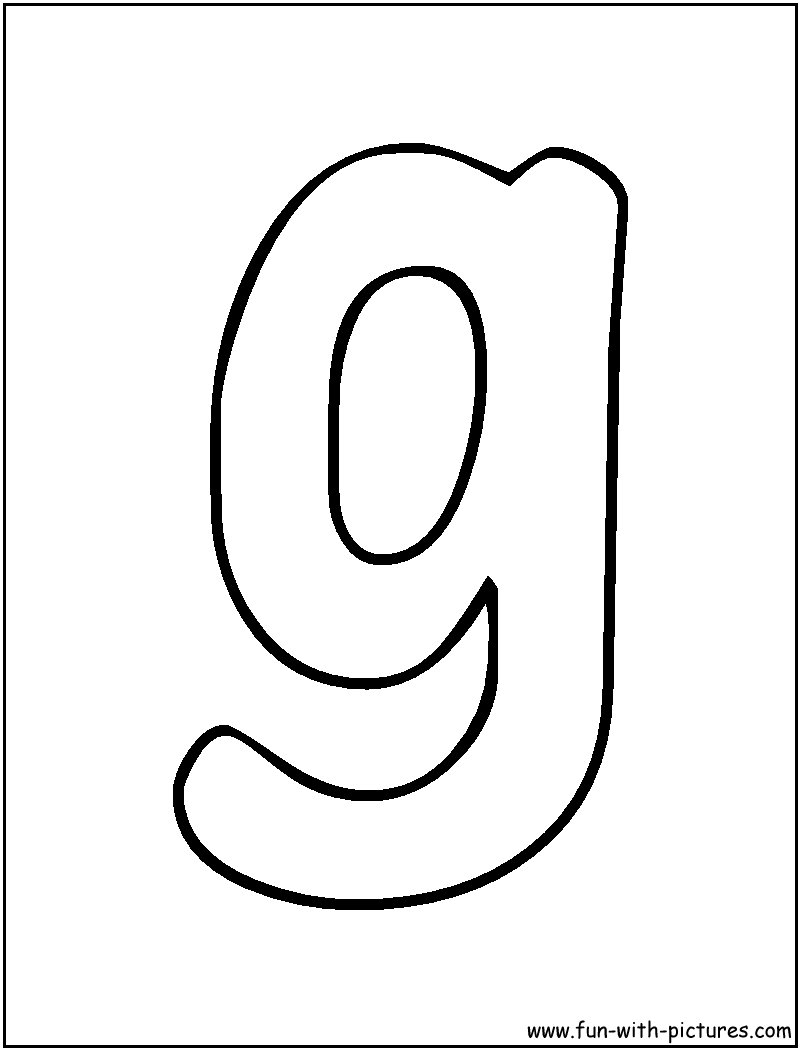
Mastering the alphabet requires far more than passive memorization. Young children often stumble on the trickier descenders, particularly lowercase letters that drop below the baseline. The free printable worksheet “low case g bubble writing” offers a playful, tactile entry point for developing essential pencil control. Hand and finger muscles must coordinate precisely to outline bold, rounded shapes without drifting off course. Many educators notice that children who resist traditional handwriting drills readily engage with bubble letters because the thick outlines provide an inviting visual boundary. This targeted approach bridges the gap between artistic coloring and structural handwriting practice, making letter acquisition feel less like a chore and more like a creative puzzle.
💡 Educational Key Takeaways:
- Core Skill: Structured Low Case G Bubble Writing focused on developing pencil grip, stroke control, and early literacy/math confidence.
- Target Scope: Suited for homeschoolers, preschool, kindergarten, and elementary learners.
- Best Recommendation: Practice 10–15 minutes daily with ergonomic writing tools to reinforce muscle memory without hand fatigue.
What This Worksheet Covers
Letter formation, stroke order, and spacing take center stage in this specialized printout. Traditional lines can feel restrictive to a five-year-old whose spatial awareness is still maturing. By working within the confines of an oversized, bold bubble letter, learners explore the physical boundaries of the lowercase “g,” including the enclosed loop at the top and the sweeping hook underneath. Navigating these curves demands continuous visual-motor integration. Children practice alternating between tight wrist movements and broader arm sweeps, reinforcing the motor plan needed for fluent, legible handwriting later in academic life. Similar foundational mechanics appear across various Letter Writing Worksheets designed to build muscle memory safely.
Key Learning Outcomes
Precision replaces rushed scribbling as children carefully color or trace inside the bold borders of the letter. Hand-eye coordination improves dramatically when a child attempts to keep crayons or pencils within a millimeter of the outer line. According to the American Occupational Therapy Association, purposeful fine motor activities directly support the dexterity required for classroom success, dressing, and self-care tasks. Spatial awareness also deepens, teaching learners where letters sit relative to imaginary writing lines. This particular letter form introduces complex directional shifts, requiring the hand to transition smoothly from a counter-clockwise circle into a descending vertical stroke and a graceful tail.
How to Use This Worksheet
Preparation involves little more than a stable surface, quality writing tools, and a relaxed environment. Adults can introduce the page by having the child trace the outer edge of the bubble “g” with a bare index finger to feel the physical route before touching a pencil to paper. Coloring the interior solid helps build grip endurance and hand strength, which prepares fingers for sustained writing tasks. If the goal shifts toward pencil control, encourage light, controlled strokes that fill the hollow core systematically. Educators frequently pair these specialized sheets with broader Tracing Worksheets to reinforce line accuracy and pre-writing strokes before children transition to standard notebook paper.
Practical Tips for Parents and Teachers
It sounds simple, and that’s the point. Keep sessions short, enthusiastic, and free of pressure to prevent hand fatigue. If a child begins gripping the crayon with a tight fist, gently reset their hand into an open web space or offer a shorter writing utensil to encourage a functional tripod grasp. Children love texture, so turning the sheet into a sensory craft by gluing cotton balls or tearing tiny pieces of tissue paper to fill the “g” can reinforce the letter shape through touch. Variety keeps engagement high, whether learners explore these targeted activities or branch out into foundational Preschool Worksheets designed for early childhood classrooms.
Age-Appropriate Recommendations
Children aged four to seven benefit most from this activity, as this window aligns closely with critical milestones in fine motor development. According to the National Association for the Education of Young Children, developmentally appropriate practice emphasizes hands-on, active learning that matches a child’s current physical and cognitive capabilities rather than forcing rigid, premature sitting and drilling. Four-year-olds can use the sheet primarily for coloring and finger-tracing to build raw hand strength, while six and seven-year-olds can focus on precise pencil control, staying strictly inside the outlines, and discussing the correct stroke sequence for writing the letter independently.
Purposeful fine motor activities directly support classroom success and foundational dexterity — American Occupational Therapy Association (AOTA)
Frequently Asked Questions
Clear guidance helps adults maximize the benefits of printable handwriting resources at home and in the classroom. The answers below address common questions regarding access, skill development, and professional guidelines for early childhood writing instruction.
Developmentally appropriate practice emphasizes hands-on, active learning matching physical capabilities — National Association for the Education of Young Children (NAEYC)
Explore More Free Printable Worksheets
Expanding a child’s learning library ensures continuous growth across multiple developmental domains. Diversifying practice materials prevents burnout and keeps curiosity alive as young learners conquer new academic hurdles. Alongside specialized letter drills, caregivers can access a wide assortment of Worksheets tailored to every stage of early childhood education, ensuring every child finds the right tool for their unique developmental journey.
Developmental Milestone & Activity Table
| Development Stage | Recommended Daily Duration | Primary Learning Objective |
|---|---|---|
| Preschool & Pre-K | 10 – 15 Minutes | Pencil grip development & basic pre-stroke lines |
| Kindergarten | 15 – 20 Minutes | Letter/number formation & spatial line awareness |
| Early Elementary (Grade 1–2) | 20 – 30 Minutes | Fluency, sentence construction & neatness |
Images References