Introduction
Learning to connect letters in cursive represents a major milestone in a young child’s developmental journey. When children transition from isolated manuscript letters to flowing script, they engage a completely different set of neuromuscular pathways. The specific guide titled how to write eric in cursive offers targeted name practice that bridges the gap between basic print and fluid handwriting. Mastering a personal name in cursive builds instant confidence because children care deeply about writing their own identities. In educational settings, therapists frequently observe that children light up when they realize they can sign their names just like older family members. Beyond simple pride, this focused instruction targets critical letter sequencing, spatial awareness, and consistent stroke production. Supporting this transition thoughtfully prevents hand fatigue and encourages proper pencil mechanics during foundational school years.
💡 Educational Key Takeaways:
- Core Skill: Structured How To Write Eric In Cursive focused on developing pencil grip, stroke control, and early literacy/math confidence.
- Target Scope: Suited for homeschoolers, preschool, kindergarten, and elementary learners.
- Best Recommendation: Practice 10–15 minutes daily with ergonomic writing tools to reinforce muscle memory without hand fatigue.
What This Worksheet Covers
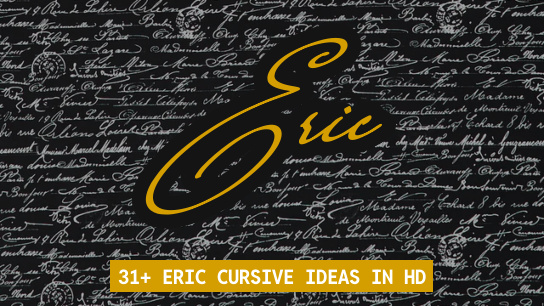
This resource focuses exclusively on the mechanics required to form the four letters making up a beloved traditional name. Each stroke relies on continuous fluid motion rather than lifting the writing tool between segments. Beginning with the capital letter E, the hand learns to sweep upward in a curved loop before transitioning smoothly into the lowercase connector strokes for r, i, and c. Children must also manage the exit tail of the final letter, which teaches spatial boundary awareness on standard writing lines. Educators often notice that young learners tend to press too hard when attempting looped formations, making targeted tracing sheets essential for regulating downward pressure. Utilizing these specialized materials supports targeted skill development found across broader Name Practice Worksheets collections. Consistency in height, slant, and spacing remains the core focus from start to finish.
Key Learning Outcomes
Working through this instructional page directly reinforces letter sequencing and directional tracking from left to right. According to Reading Rockets, early handwriting instruction directly supports letter recognition and reading fluency by reinforcing the visual-motor integration of letter shapes. Children develop a deeper understanding of how individual graphemes link together to form a cohesive whole. Hand-eye coordination improves rapidly as young fingers guide pencils along narrow, curved tracks without straying. This practice also strengthens intrinsic hand muscles responsible for dynamic tripod grasps, which are necessary for academic endurance. Exploring supplementary resources like Letter Writing Worksheets can further solidify these foundational motor programs. Ultimately, mastery of this specific sequence translates directly to improved legibility across all written assignments.
How to Use This Worksheet
Success with cursive instruction depends heavily on posture, lighting, and workspace setup before the pencil ever touches the paper. Feet should rest flat on the floor, hips and knees bent at ninety-degree angles, with the paper tilted slightly to match the natural slant of the child’s forearm. Adults should demonstrate the starting point of the capital letter E slowly, exaggerating the initial loop so the physical motion becomes clear. It sounds simple, and that’s the point: repetition without adequate physical preparation only reinforces awkward compensatory grips. Children should trace the greyed-out models at least three times before attempting independent freehand production on the blank primary lines provided below. Integrating related activities from Tracing Worksheets beforehand helps warm up the precise finger muscles needed for smooth curves.
Practical Tips for Parents and Teachers
Patience is paramount when children encounter the tricky transitions between lowercase letters like the awkward drop from the top of the r into the baseline dot of the i. If a child shows signs of frustration, hand fatigue, or an altered pencil grip, immediate pausing is required to prevent the formation of bad motor habits. Short, five-minute daily sessions yield far better neural retention than long, exhausting weekend drill marathons. Tactile learners benefit immensely from tracing the letters in shaving cream, salt trays, or textured sandpaper before tackling standard paper. Educators in busy classrooms often pair these sheets with multisensory activities to keep engagement high and anxiety low. Monitoring the pressure exerted on the writing utensil ensures that shoulders and wrists remain relaxed throughout the tracing process.
Age-Appropriate Recommendations
Introducing cursive typically aligns with second grade, or around seven to eight years of age, once manuscript printing is reasonably automatic. According to the National Association for the Education of Young Children (NAEYC) Developmentally Appropriate Practice guidelines, instructional strategies must match the physical readiness and cognitive maturity of the child rather than relying solely on rigid chronological age. Pushing cursive too early can cause undue frustration if intrinsic hand muscles and visual-motor integration remain underdeveloped. Conversely, waiting too long can cement rigid print habits that prove difficult to modify later in elementary school. For younger children who show early readiness signs, exploring options within the broader Preschool Worksheets library can help establish the foundational pre-writing strokes required for future success.
According to Reading Rockets, explicit handwriting and fine motor practice directly enhances letter recognition, spelling accuracy, and overall reading fluency in early elementary learners. — Reading Rockets
Frequently Asked Questions
Finding clear guidance helps educators and families maximize the benefits of handwriting instruction. The answers below address the most common inquiries regarding printing, motor development, and pedagogical standards.
According to the American Occupational Therapy Association (AOTA), proficient handwriting requires the seamless integration of visual-perceptual skills, postural stability, and fine motor control. — AOTA
Explore More Free Printable Worksheets
Expanding a child’s writing toolkit requires access to a wide variety of engaging, skill-specific practice materials. Beyond dedicated cursive templates, children benefit immensely from exploring diverse educational formats that target different developmental domains. Rotating through creative activities keeps young learners motivated while reinforcing critical pencil control, spatial awareness, and cognitive flexibility. Discovering new ways to practice letters, numbers, and early concepts ensures balanced skill acquisition across the board. Parents and educators can browse the complete directory of Worksheets to find supplementary resources tailored to every developmental stage. For children who need a break from structured handwriting, incorporating fun options from the Coloring Worksheets category is an excellent way to build essential hand strength and grip endurance through play.
Developmental Milestone & Activity Table
| Development Stage | Recommended Daily Duration | Primary Learning Objective |
|---|---|---|
| Preschool & Pre-K | 10 – 15 Minutes | Pencil grip development & basic pre-stroke lines |
| Kindergarten | 15 – 20 Minutes | Letter/number formation & spatial line awareness |
| Early Elementary (Grade 1–2) | 20 – 30 Minutes | Fluency, sentence construction & neatness |
Images References