Introduction
Writing letters cursive worksheets provide structured visual and kinesthetic templates designed to teach continuous stroke connectivity, fluid hand-eye coordination, and precise letter formation in developing learners. According to the International Literacy Association (ILA), explicit multi-sensory instruction in cursive mechanics significantly enhances orthographic mapping and cognitive retention during early childhood development. Mastering these fluid movements requires transitioning from isolated manuscript forms to continuous-line execution, establishing foundational muscle memory that supports long-term writing fluency. Educators utilizing letter writing worksheets often combine these lessons with tracing worksheets to reinforce pencil control and proportional spacing before expecting unassisted mastery. Building reliable motor pathways during early foundational stages prevents hand fatigue and reduces dysgraphia risks in academic settings.
Handwriting Practice Snapshot:
- Core Focus: Continuous-line stroke sequencing and directional muscle memory development.
- Target Scope: Early elementary students, homeschool environments, and occupational therapy clinics.
- Key Recommendation: Prioritize proper pencil grip and rhythmic pacing over rigid speed metrics.
Core Principles and Detailed Overview
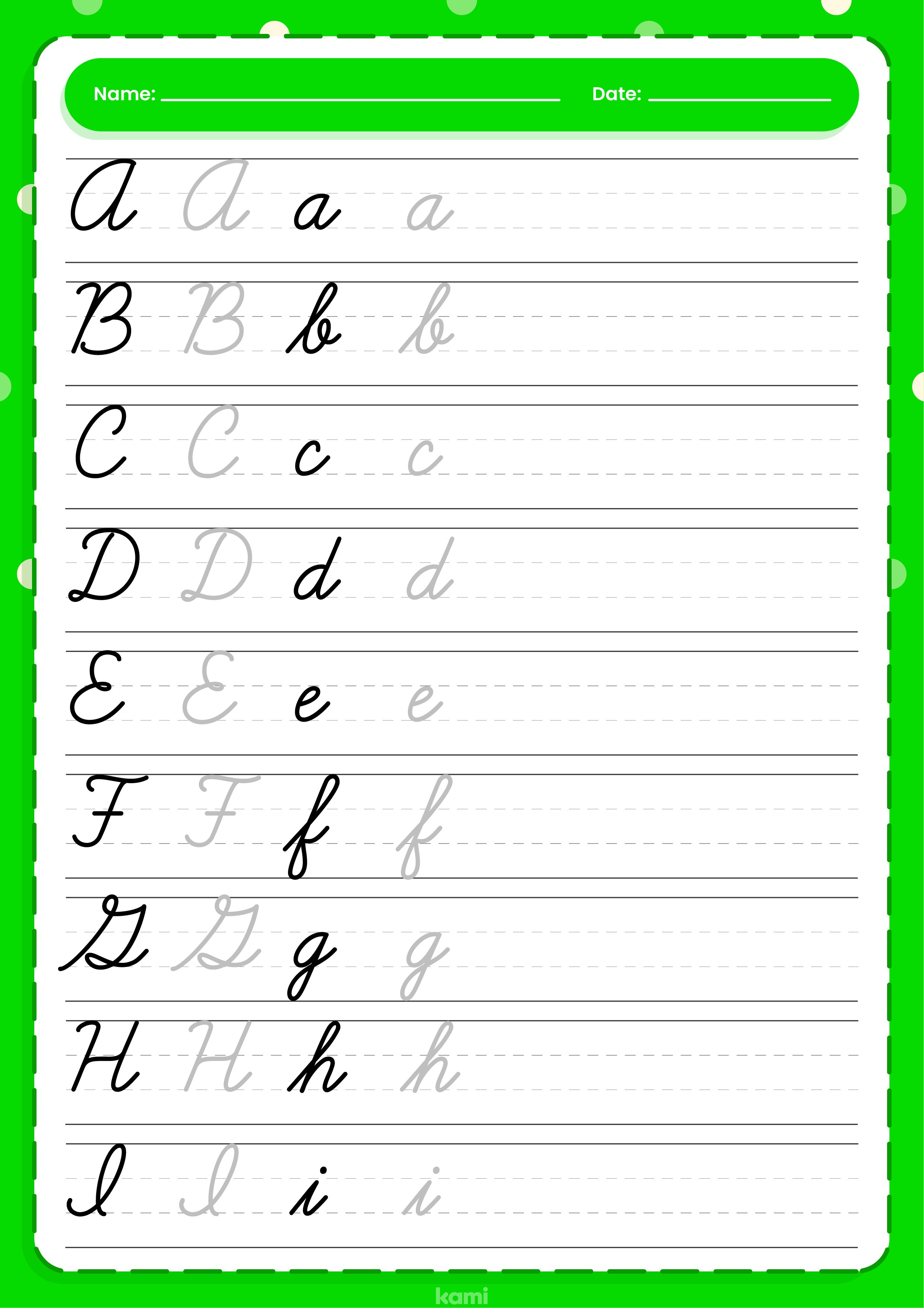
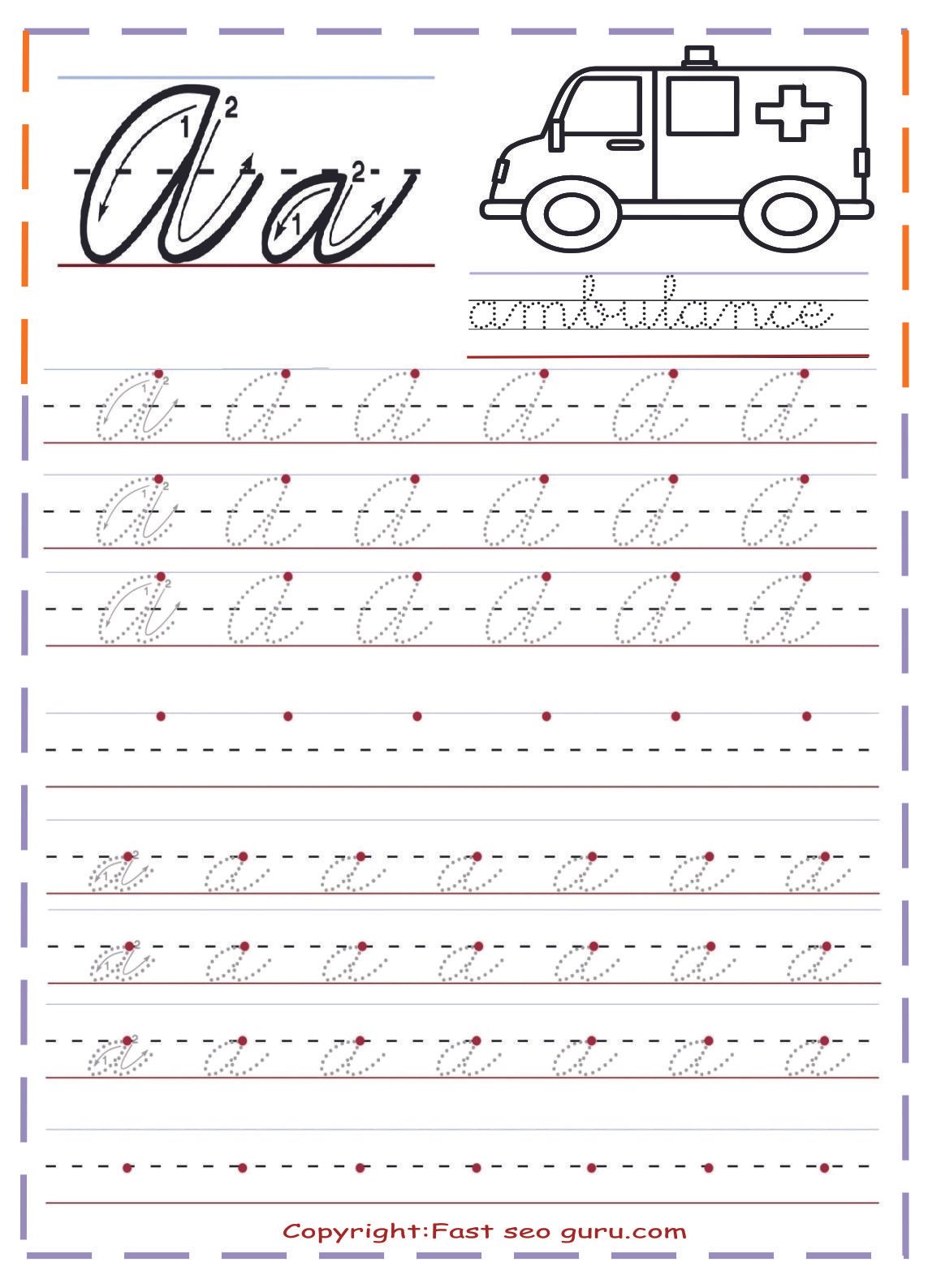
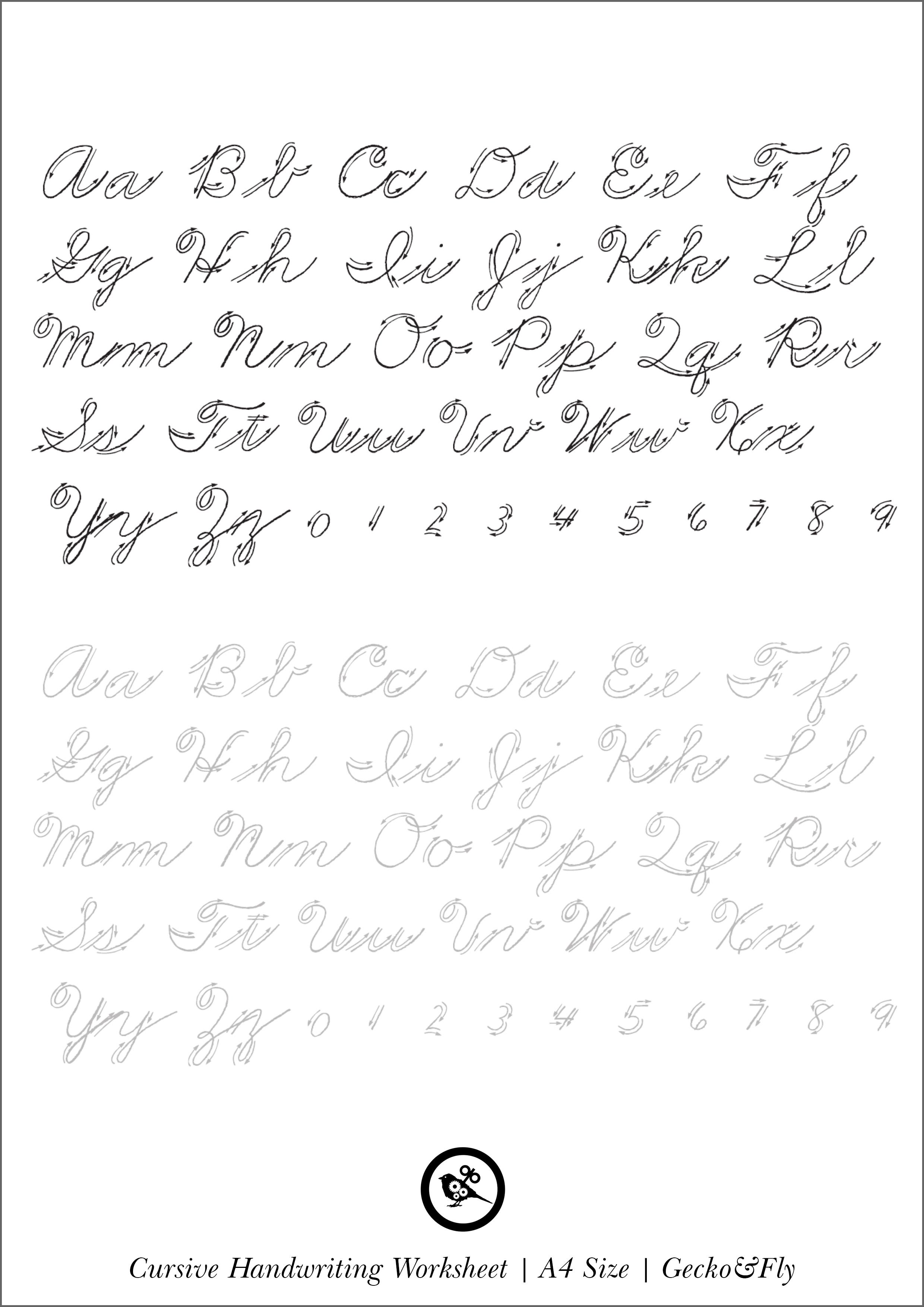
Cursive handwriting worksheets succeed by utilizing specialized baseline guidelines, directional arrows, and start-dot indicators that govern pencil trajectory and physical hand placement. Direct structural guidance ensures learners maintain correct slant angles—typically thirty degrees to the right—while executing undercurve, upcurve, loop, and drop-curve strokes. When children practice structured worksheets, sensory feedback from paper friction reinforces the physical boundaries of lowercase and uppercase heights. Integrating foundational preschool worksheets into preparatory warm-ups builds the requisite intrinsic hand muscle strength necessary for the sustained pressures of fluid cursive loops. Instruction must emphasize rhythmic pacing, where rhythmic vocal counting accompanies each downward and upward stroke execution.
Key Specifications and Breakdown
| Skill Level / Grade | Target Stroke / Mechanical Focus | Pedagogical / Coaching Cue |
|---|---|---|
| Beginner (Grade 2) | Undercurve and upcurve connections | “Sweep up to the dotted line and glide down.” |
| Intermediate (Grade 3) | Loop formations (e.g., ‘l’, ‘b’, ‘h’) | “Keep the loop narrow and pull straight down.” |
| Advanced (Grade 4+) | Connector strokes for complex transitions | “Bridge the letters smoothly without lifting the tip.” |
Proficiency in handwriting mechanics requires multi-sensory cueing, consistent baseline positioning, and structured stroke repetition to secure fine-motor automation. — American Occupational Therapy Association (AOTA)
Worksheet Previews & Reference Materials




Step-by-Step Practical Application and Guidelines
Executing cursive practice sheets effectively requires a progressive, multi-phase routine that begins with air-writing before pencil touches paper. First, require learners to trace oversized sample letters with an index finger to internalize directional flow. Second, transition students to structured paper templates while monitoring posture, paper tilt, and a relaxed tripod grip. Third, assign targeted name practice worksheets to maintain high personal engagement and immediate relevance during daily skill drills. Finally, fade visual tracing guides gradually, moving learners from dotted scaffolding to blank lined paper to evaluate independent retention.
Common Challenges and How to Avoid Them
Inconsistent slant, excessive grip pressure, and malformed connector strokes represent the primary obstacles observed during early cursive instruction. Educators can mitigate these issues by establishing a firm thirty-degree paper tilt and enforcing frequent hand-relaxation breaks to eliminate tension. When students struggle with proportional height, incorporating structured visual boundaries prevents letters from floating above baselines or collapsing into ambiguous loops. Teachers should also integrate occasional coloring worksheets into the weekly schedule to build finger dexterity and dynamic grip strength without handwriting fatigue.