Introduction
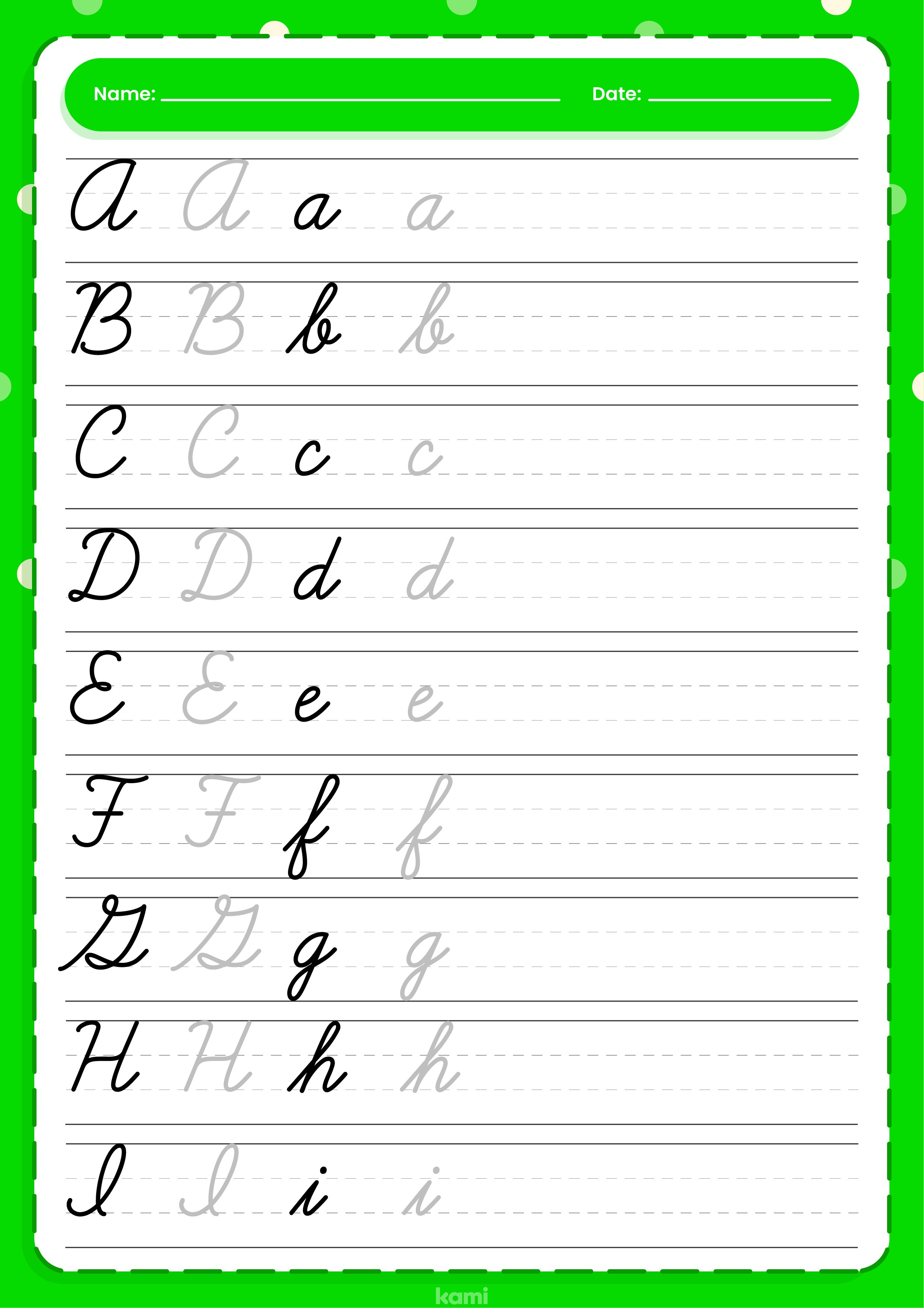
A letter writing worksheet for class 4 serves as a specialized instructional tool designed to bridge the gap between basic print mechanics and fluid, cursive, or advanced print communication. According to the American Occupational Therapy Association (AOTA), developing proficient fine-motor control and stroke execution at the upper-elementary level requires targeted practice that reinforces proper letter formation, spatial orientation, and visual-motor integration. Utilizing structured letter writing worksheets enables fourth-grade students to refine handwriting legibility, build writing stamina, and transition smoothly into complex compositional tasks without physical fatigue.
Handwriting Practice Snapshot:
- Core Focus: Advancing stroke automaticity, spatial alignment, and structured letter formatting for upper-elementary students.
- Target Scope: Classroom settings, remote learning modules, and homeschool curricula for fourth-grade literacy development.
- Key Recommendation: Pair daily mechanical practice sheets with authentic composition exercises to reinforce muscle memory.
Core Principles and Detailed Overview
Letter writing worksheet for class 4 execution centers on advanced cognitive-motor automaticity, where the physical act of forming characters becomes subconscious to free up mental bandwidth for content creation. Educators utilize targeted tracing worksheets to correct persistent structural flaws, such as improper baseline alignment, inconsistent letter sizing, and incorrect pencil grip pressure. At this developmental stage, the primary objective shifts from simple letter recognition to achieving uniform slant, consistent spacing between words, and proper proportional scaling across standard-ruled paper.
Key Specifications and Breakdown
| Skill Level / Grade | Target Stroke / Mechanical Focus | Pedagogical / Coaching Cue |
|---|---|---|
| Class 4 Standard | Baseline alignment and uniform ascender-descender height | “Anchor the letters firmly to the bottom line before lifting the pencil.” |
| Upper-Elementary Transition | Inter-word spacing and fluid directional transitions | “Leave enough space between words to fit an imaginary lowercase letter o.” |
| Advanced Mechanics | Pencil pressure regulation and continuous stroke speed | “Keep hand muscles relaxed while maintaining a steady rhythmic motion.” |
Effective handwriting intervention relies on consistent multisensory cueing, proper ergonomic positioning, and structured repetition to automate fine-motor pathways — American Occupational Therapy Association (AOTA)
Step-by-Step Practical Application and Guidelines
Implementing a fourth-grade writing curriculum requires a systematic progression from isolated character drills to full-sentence compositional practice. Educators and parents should initiate each session by assessing student posture, ensuring feet rest flat on the floor and paper is slanted at a comfortable angle matching the writing hand. Next, guide learners through targeted warm-up loops or baseline drills found on specialized name practice worksheets to loosen hand muscles. Finally, introduce the core exercise, observing pencil grip and stroke direction closely to correct mechanical errors immediately before incorrect muscle memory takes root.
Common Challenges and How to Avoid Them
Hand fatigue, inconsistent letter sizing, and mirrored character reversals remain the most frequent obstacles encountered during fourth-grade writing sessions. To prevent cramping, instructors must actively monitor grip tension, ensuring learners do not wrap fingers too tightly around the writing utensil or press down with excessive force. Incorporating foundational exercises from preschool worksheets for brief diagnostic reviews can also help students struggling with basic directional strokes, while pairing writing drills with engaging coloring worksheets reduces hand strain and maintains engagement during extended academic blocks.
💬 Frequently Asked Questions
Explore More Free Handwriting and Character Worksheets
Building lifelong writing fluency requires access to a diverse array of structured practice materials tailored to every developmental milestone. Educators, parents, and homeschool instructors can discover an extensive library of free, high-resolution instructional resources designed to support early literacy by visiting the main hub at CharacterWritingWorksheets.com and exploring the complete collection of foundational worksheets.
Worksheet Previews & Reference Materials