Introduction
Preschool worksheets age 4 5 pdf refer to digital, printable instructional templates purposefully structured to build foundational pencil control, stroke sequencing, and early letter formation in young children. According to the National Association for the Education of Young Children (NAEYC), developmentally appropriate practice for four- and five-year-olds requires emphasizing process-oriented fine-motor skill development over rigid product-driven handwriting perfection. Educators and caregivers utilizing curated preschool worksheets establish essential neuromuscular pathways required for long-term writing endurance and legibility.
Handwriting Practice Snapshot:
- Core Focus: Preschool worksheets age 4 5 pdf provide structured, printable exercises targeting fine-motor coordination and stroke mechanics.
- Target Scope: Early childhood classrooms and home-school environments serving children aged four to five.
- Key Recommendation: Prioritize proper tripod grasp and consistent top-to-bottom stroke execution during every session.
Core Principles and Detailed Overview
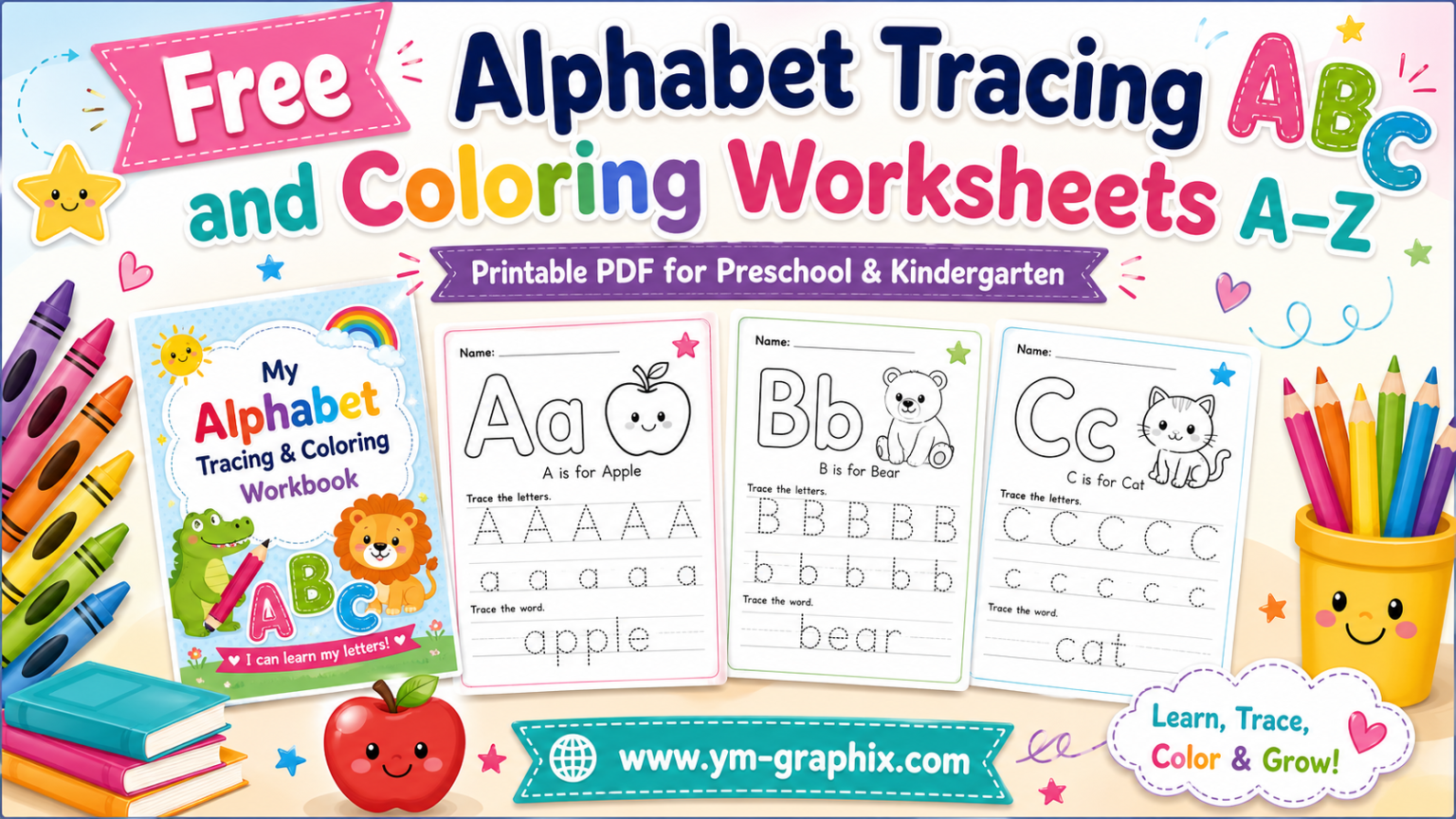
Handwriting mastery for four- and five-year-olds hinges on deliberate progression through pre-writing strokes, directional consistency, and visual-motor integration. When incorporating tracing worksheets into daily routines, instructors must ensure that sheets progress systematically from vertical lines and horizontal lines to intersecting diagonals and closed curves. These geometric patterns serve as the foundational building blocks for uppercase and lowercase letterforms. Furthermore, integrating coloring worksheets alongside traditional line practice strengthens intrinsic hand muscles, which directly improves pencil pressure regulation and reduces writing fatigue.
Key Specifications and Breakdown
| Skill Level / Grade | Target Stroke / Mechanical Focus | Pedagogical / Coaching Cue |
|---|---|---|
| Age 4 (Early Preschool) | Vertical, horizontal, and circular continuous lines | “Start at the top sky line and pull straight down to the ground.” |
| Age 4.5 (Mid Preschool) | Diagonal strokes, cross shapes, and basic zigzag patterns | “Keep the pencil moving smoothly from corner to corner without lifting.” |
| Age 5 (Transition to Kindergarten) | Capital letters, early lowercase forms, and name practice worksheets | “Touch the top line first, make a big loop, and rest on the bottom baseline.” |
Fine-Motor Development Benchmark: Children between ages four and five transition rapidly from a palmar grasp to a dynamic tripod grasp, requiring appropriately scaled writing lines and frequent rest intervals to prevent hand cramping. — American Occupational Therapy Association (AOTA)
Step-by-Step Practical Application and Guidelines
Executing effective handwriting instruction involves preparing the physical workspace, modeling correct posture, and monitoring real-time stroke production. Educators and parents should begin by printing targeted letter writing worksheets that feature explicit starting dots and directional arrows. The instructor must physically demonstrate the stroke in the air or directly on the paper before asking the child to trace. Learners complete the initial strokes using thick crayons or short pencils to naturally encourage a proper tripod grip. Regular, short practice sessions lasting five to ten minutes yield significantly better neural retention than infrequent, lengthy writing drills.
Common Challenges and How to Avoid Them
Reversing letters, starting strokes from the bottom upward, and maintaining an incorrect fist grip represent the most frequent obstacles encountered by four- and five-year-old learners. To combat bottom-up stroke formation, adults must actively supervise sheet completion and gently redirect the child’s hand back to the designated starting dot at the top of each character. Utilizing multi-sensory tools—such as tracing shapes in sand or salt before putting pencil to paper—corrects spatial confusion and firmly establishes correct motor planning.
💬 Frequently Asked Questions
Explore More Free Handwriting and Character Worksheets
Accessing comprehensive, professionally designed resources ensures that young learners receive continuous, high-quality skill development across all early childhood domains. Educators and families can explore the complete catalog of printable assets available directly through CharacterWritingWorksheets.com to support early literacy and fine-motor mastery.
Worksheet Previews & Reference Materials