Introduction
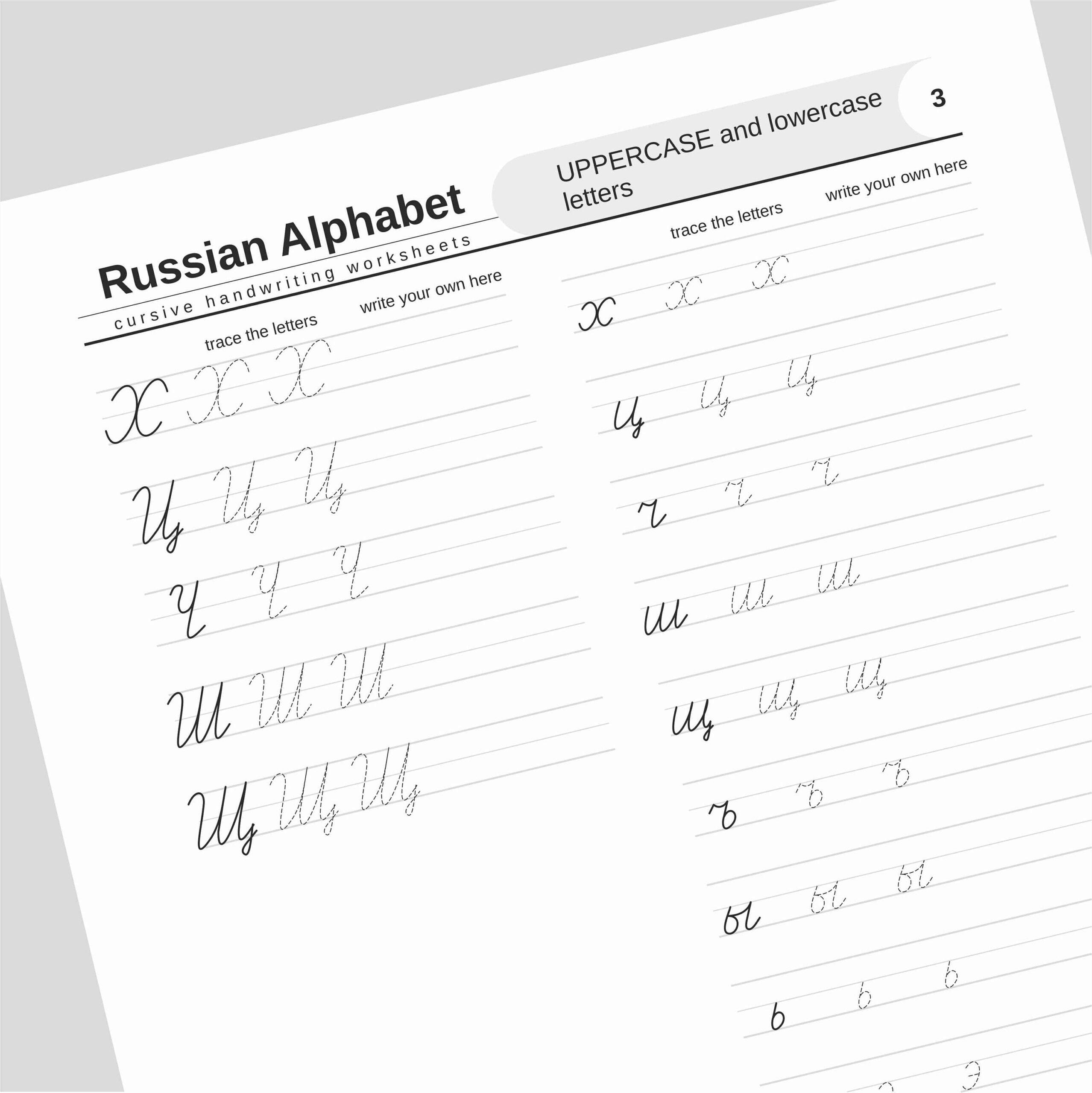
Introducing children to new alphabets and writing systems unlocks remarkable cognitive flexibility during early childhood. When young learners explore scripts beyond their native tongue, such as the Cyrillic alphabet, brain pathways activate in novel ways that support phonemic awareness and visual-spatial processing. Often, adults wonder if introducing unfamiliar characters creates confusion, but clinical observations reveal quite the opposite. Children frequently approach foreign letters with the curiosity of solving a puzzle, decoupling the mechanical act of pencil control from the phonetic sounds. Exploring a cyrillic worksheet provides an engaging pathway for developing foundational writing skills while simultaneously exposing learners to global typography. By bridging tactile hand control with unfamiliar geometric shapes, educators and parents can transform a standard writing exercise into an enriching, multicultural learning experience.
💡 Educational Key Takeaways:
- Core Skill: Structured Cyrillic Worksheet focused on developing pencil grip, stroke control, and early literacy/math confidence.
- Target Scope: Suited for homeschoolers, preschool, kindergarten, and elementary learners.
- Best Recommendation: Practice 10–15 minutes daily with ergonomic writing tools to reinforce muscle memory without hand fatigue.
What This Worksheet Covers
Every well-designed resource targets specific developmental milestones, and writing unfamiliar scripts requires deliberate attention to stroke order, spatial orientation, and fine motor precision. This printable focuses heavily on the structural geometry of characters found in the Cyrillic script, guiding learners through vertical strokes, diagonal slashes, and tight loops. Unlike standard English letters, certain Cyrillic characters demand nuanced wrist rotation and sustained finger dexterity. It sounds simple, and that’s the point: mastering these individual strokes builds the intrinsic muscle tone necessary for all advanced writing tasks. Children transition from basic tracing lines to independent letter formation, cultivating the stability required to manage pencil pressure effectively. Alongside these foundational tools, educators frequently pair letter tracing with targeted Tracing Worksheets to reinforce pencil accuracy, or utilize foundational Preschool Worksheets to establish early motor routines.
Key Learning Outcomes
Engaging systematically with foreign character sheets yields measurable improvements in hand-eye coordination and visual discrimination. According to the American Occupational Therapy Association, structured fine motor activities significantly enhance the dexterity and bilateral coordination required for academic success. As children navigate the unique curves and angles of new letters, they strengthen the small intrinsic muscles of the hand. This physical conditioning translates directly into improved pencil control, better letter sizing, and enhanced stamina during extended writing sessions. Beyond physical dexterity, learners develop heightened visual-spatial awareness, learning to distinguish subtle differences between characters that look remarkably similar at first glance. This careful observation directly supports broader early literacy goals, helping children notice fine details in any writing system they encounter.
How to Use This Worksheet
Successful implementation relies on creating a low-stress environment where experimentation outweighs perfection. Begin by presenting the printable alongside thick, triangular pencils or short crayons, which naturally encourage an efficient grasp and prevent finger fatigue. Invite children to trace the larger exemplar characters with a finger before touching a writing utensil, engaging tactile memory systems first. Adults should monitor hand positioning closely, ensuring the wrist remains relatively flat and the non-dominant hand stabilizes the paper properly. To build confidence incrementally, consider incorporating supplementary Name Practice Worksheets or exploring specialized Letter Writing Worksheets for parallel skill reinforcement.
Practical Tips for Parents and Teachers
Classroom observations highlight that young children lose engagement quickly when writing tasks feel tedious or overly repetitive. Breaking a single sheet into smaller, manageable chunks prevents hand cramping and preserves enthusiasm for the task. Try setting a timer for five-minute bursts of focused tracing, followed by a quick hand-stretching break to relieve tension in the fingers. Integrating creative elements, such as using different colored markers for alternating strokes, transforms dry practice into an engaging artistic endeavor. Furthermore, providing positive reinforcement focused on effort rather than flawless alignment fosters a healthy growth mindset regarding new academic challenges.
Age-Appropriate Recommendations
Determining when to introduce specialized writing materials depends entirely on the child’s developmental readiness rather than chronological age. According to the National Association for the Education of Young Children Developmentally Appropriate Practice framework, learning activities must align with a child’s current motor capabilities and cognitive interests. For younger children around ages four and five, the primary focus should remain on large-scale pre-writing strokes, gross motor shoulder stability, and introductory pencil handling. Older children in the six-to-eight age bracket possess the refined distal finger control and cognitive stamina necessary to analyze and reproduce complex foreign characters accurately. Tailoring expectations to match these developmental stages ensures that writing practice remains a source of pride rather than frustration.
Structured fine motor activities significantly enhance the dexterity and bilateral coordination required for academic success. — American Occupational Therapy Association
Frequently Asked Questions
Explore More Free Printable Worksheets
Expanding a child’s learning library requires access to a diverse array of resources tailored to every stage of early childhood development. Beyond exploring foreign writing systems, maintaining a robust collection of foundational Worksheets ensures that learners continually refine their pencil control, letter formation, and spatial awareness. Educators and caregivers can also incorporate engaging visual activities found within dedicated Coloring Worksheets to build hand strength and focus during quiet time.
Developmental Milestone & Activity Table
| Development Stage | Recommended Daily Duration | Primary Learning Objective |
|---|---|---|
| Preschool & Pre-K | 10 – 15 Minutes | Pencil grip development & basic pre-stroke lines |
| Kindergarten | 15 – 20 Minutes | Letter/number formation & spatial line awareness |
| Early Elementary (Grade 1–2) | 20 – 30 Minutes | Fluency, sentence construction & neatness |
Images References