Introduction
Introducing a new writing system to young learners requires more than mere repetition; it demands a careful orchestration of visual-motor integration and spatial awareness. When children begin exploring unfamiliar alphabets, the brain must build entirely new neural pathways to decode and reproduce foreign shapes. A targeted cyrillic handwriting practice page bridges the gap between phonetic sounds and physical hand movements, turning abstract characters into tangible muscle memory. Classrooms often reveal that children approach these distinct letterforms with intense curiosity, treating each stroke as a drawing task before realizing it is a form of communication. Working with specialized Letter Writing Worksheets helps young learners decode these unique shapes systematically, reducing early frustration. Every downward line and curved loop contributes to greater dexterity, preparing small hands for complex multi-lingual literacy tasks down the road.
💡 Educational Key Takeaways:
- Core Skill: Structured Cyrillic Handwriting focused on developing pencil grip, stroke control, and early literacy/math confidence.
- Target Scope: Suited for homeschoolers, preschool, kindergarten, and elementary learners.
- Best Recommendation: Practice 10–15 minutes daily with ergonomic writing tools to reinforce muscle memory without hand fatigue.
What This Worksheet Covers
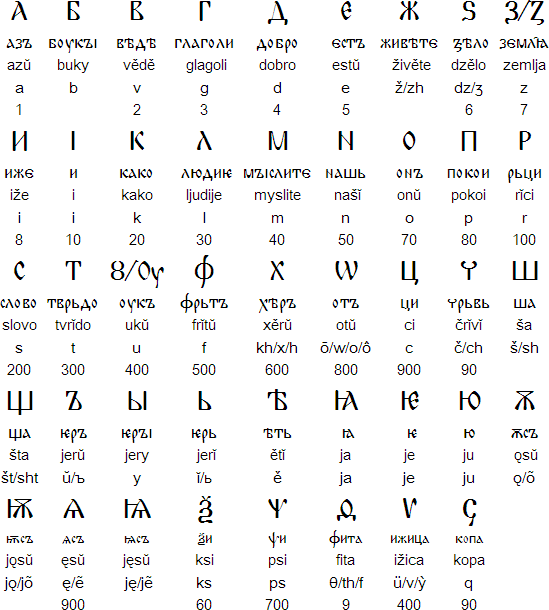
Mastering a new script involves understanding specific stroke orders, proportions, and directional pushes and pulls of the writing utensil. This printable resource focuses heavily on letter formation, stroke sequencing, and maintaining consistent spacing between unfamiliar characters. Children encounter both uppercase and lowercase variants, guiding them through the transition from simpler geometric shapes to more intricate graphemes. It sounds simple, and that’s the point: isolating each letter prevents cognitive overload while building foundational motor habits. Educators notice that when children slow down to trace characters like ‘ж’ or ‘ш’, they naturally refine their pencil grip and spatial judgment. Alongside these detailed letter exercises, learners often benefit from utilizing supplementary Tracing Worksheets to warm up hand muscles before tackling dense character rows.
Key Learning Outcomes
Targeted practice yields measurable improvements in fine motor control and visual closure abilities. Children learn to maintain uniform letter height, manage baseline adherence, and execute directional changes smoothly without lifting the writing tool prematurely. According to the American Occupational Therapy Association, foundational handwriting tasks significantly enhance distal control and bilateral coordination in early childhood. This developmental milestone directly supports overall academic confidence as learners navigate bilingual or multi-script learning environments. Furthermore, consistent engagement with structured script pages fosters sustained attention span and visual-spatial working memory, skills that extend far beyond language arts lessons.
How to Use This Worksheet
Facilitating this practice effectively involves establishing a comfortable, ergonomic workspace where feet rest flat on the floor and paper is tilted at a natural angle. Adults should model the correct starting point for each stroke, emphasizing that every character begins at the top or left side. Children benefit from tracing oversized models with a finger first to internalize the kinetic flow before touching a pencil to paper. Here’s what makes this resource different: it combines structural scaffolding with independent execution zones, allowing self-correction as the row progresses. Pairing these exercises with broader Preschool Worksheets ensures that younger learners develop the hand strength required for sustained writing endurance.
Practical Tips for Parents and Teachers
Observing hand fatigue provides a clear cue to pause and stretch tiny fingers before frustration sets in. Short, five-minute sessions yield far better results than marathon writing blocks that lead to poor posture and maladaptive grips. Encouraging the use of broken crayons or short pencils naturally discourages an inappropriate fist grasp, promoting a mature tripod posture instead. Positive reinforcement should focus on the effort put into individual stroke accuracy rather than pristine final products. Adults can also turn letter formation into a multisensory experience by having children trace shapes in salt trays or paint them with water outdoors.
Age-Appropriate Recommendations
Introducing a foreign script aligns closely with the principles outlined in the National Association for the Education of Young Children Developmentally Appropriate Practice framework. For children ages five to six, the primary focus remains on gross motor warm-ups and large-scale formation, gradually scaling down to standard primary lines by age seven or eight. Pushing children too quickly into tight grid spaces before their intrinsic hand muscles are fully developed often results in undue tension and avoidance behaviors. Matching the complexity of the script to the child’s current fine motor maturity ensures a positive association with writing. Exploring various Worksheets designed for different developmental stages helps maintain an engaging and balanced curriculum.
Children who engage in regular structured handwriting and fine motor exercises demonstrate stronger spatial organization and letter recognition skills — National Association for the Education of Young Children
Frequently Asked Questions
How do I download and print these files? Simply click the download button on the resource page to save the PDF directly to your device, then print using standard letter-sized paper at home or school. How does this printable support early writing development? It builds essential pencil control, spatial awareness, and muscle memory required to form unfamiliar character shapes accurately. What does the American Occupational Therapy Association say about pencil grip? The American Occupational Therapy Association emphasizes that promoting a functional grasp early on prevents hand fatigue and supports legible, efficient handwriting.
Explore More Free Printable Worksheets
Expanding a child’s writing toolkit involves introducing diverse formats that target different aspects of physical and cognitive development. Integrating specialized Name Practice Worksheets keeps daily routines personal and engaging for young learners. Additionally, incorporating creative Coloring Worksheets offers a playful way to build finger strength and hand endurance without the pressure of formal writing.
Developmental Milestone & Activity Table
| Development Stage | Recommended Daily Duration | Primary Learning Objective |
|---|---|---|
| Preschool & Pre-K | 10 – 15 Minutes | Pencil grip development & basic pre-stroke lines |
| Kindergarten | 15 – 20 Minutes | Letter/number formation & spatial line awareness |
| Early Elementary (Grade 1–2) | 20 – 30 Minutes | Fluency, sentence construction & neatness |
Images References