Introduction
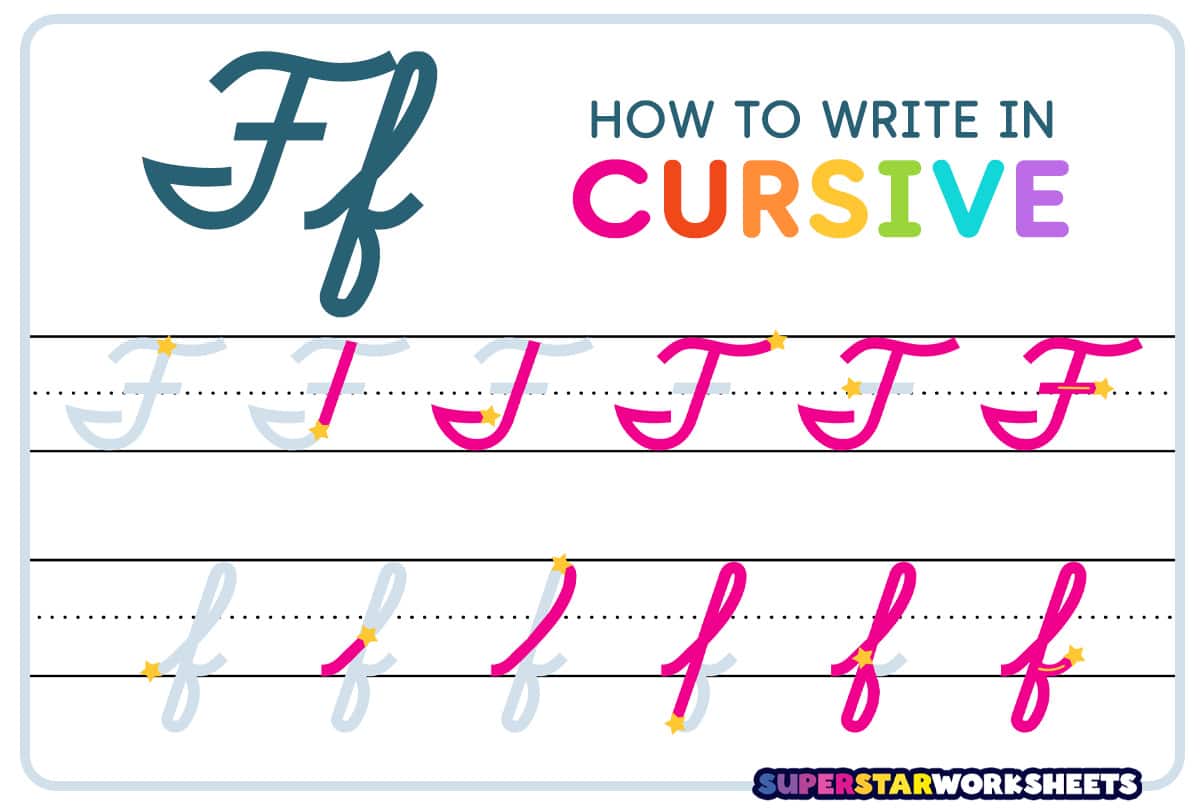
Mastering cursive script requires a delicate balance of fluid movement, continuous pencil control, and spatial awareness that often challenges young learners. Teaching children how to write f in cursive introduces a uniquely complex loop structure that combines ascending strokes, a distinct loop, and a forward-facing exit line. Experience in both occupational therapy clinics and busy kindergarten classrooms shows that children frequently struggle with the directional changes required for this specific letter. Traditional handwriting instruction often jumps straight into copying entire words, skipping the vital preparatory steps needed for complex letter formation. Utilizing targeted Letter Writing Worksheets bridges the gap between basic stroke awareness and graceful, connected handwriting. Providing focused practice sheets gives children the space to master individual letter mechanics without the overwhelming pressure of producing full sentences. According to the American Occupational Therapy Association, foundational handwriting proficiency relies heavily on developing intrinsic hand muscle strength and refined visual-motor integration during the early elementary years.
💡 Educational Key Takeaways:
- Core Skill: Structured Write F In Cursive focused on developing pencil grip, stroke control, and early literacy/math confidence.
- Target Scope: Suited for homeschoolers, preschool, kindergarten, and elementary learners.
- Best Recommendation: Practice 10–15 minutes daily with ergonomic writing tools to reinforce muscle memory without hand fatigue.
What This Worksheet Covers
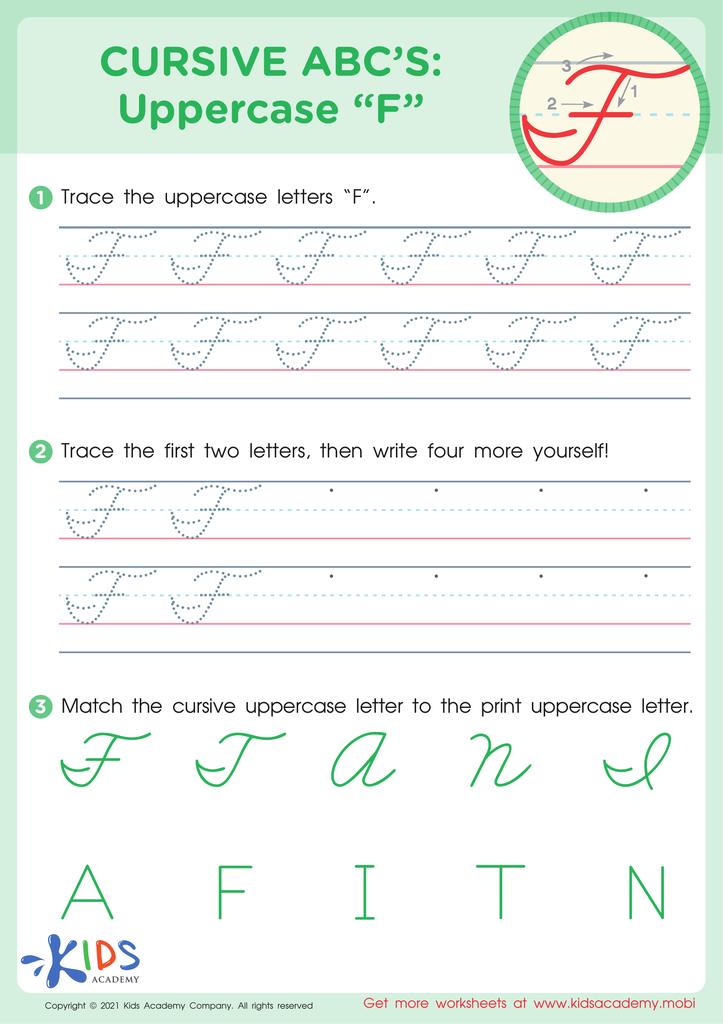
The free printable worksheet “write f in cursive” focuses intensely on the precise stroke sequence, proportional height, and fluid connectivity demanded by cursive writing. Children begin by tracing oversized models, which helps build muscle memory through gross motor engagement before scaling down to standard writing lines. Every segment of the page guides the hand upward into the tall loop, downward below the baseline, and back up to create the characteristic mid-air connector. It sounds simple, and that’s the point: isolating one difficult letter prevents the cognitive overload that happens when practicing multiple unfamiliar letter shapes simultaneously. Educators often observe young writers collapsing the upper loop or failing to cross the baseline accurately when attempting cursive without structured visual guides. Integrating specialized Tracing Worksheets alongside this letter study reinforces the pre-writing strokes necessary for maintaining consistent line adherence and pressure regulation. Careful attention to these micro-movements ensures that handwriting remains legible and efficient as writing speed increases over time.
Key Learning Outcomes
Targeted practice with this printable leads directly to measurable improvements in pencil grip stability, stroke fluidity, and spatial planning across the writing page. Learners develop a deeper understanding of baseline orientation, distinguishing clearly between the midline, baseline, and descender zones unique to cursive lowercase letters. Furthermore, mastering this specific looped letter builds the confidence required to tackle more intricate multi-letter connections in subsequent writing exercises. When children understand how to initiate the upward sweep and execute the final exit stroke, writing transitions from an exhausting chore into a smooth, rhythmic activity. Developing these skills early prevents the formation of awkward compensatory grips that can cause hand fatigue and slow down written output during upper elementary school. Exploring additional resources like Preschool Worksheets can also lay essential groundwork for younger children who are still developing the bilateral coordination needed for advanced fine motor tasks.
How to Use This Worksheet
Maximizing the benefits of this writing page requires a structured approach that prioritizes quality over sheer volume of completed output. Adults should first demonstrate the letter formation on a whiteboard or oversized paper, narrating the directional strokes aloud so children can internalize the rhythm. It is common to see a child grip the pencil too tightly when attempting the tricky loop, leading to hand cramps and jagged lines. Pausing the session to encourage a relaxed tripod grasp can instantly restore fluid motion and prevent unnecessary frustration. Children should complete just a few rows at a time, keeping focus high and muscle fatigue to a minimum during the learning process.
Practical Tips for Parents and Teachers
Creating an optimal workspace makes a remarkable difference in handwriting posture, pencil control, and overall engagement levels. Ensure that the chair and desk allow the child’s feet to rest flat on the floor, supporting a stable, upright posture. Slanting the paper slightly to match the natural angle of the writing hand can dramatically improve comfort and visibility during cursive practice. According to Reading Rockets, multisensory strategies—such as tracing textured letter cutouts or writing shapes in shaving cream—greatly enhance letter recognition and retention for struggling learners. Praising specific improvements, such as a well-formed loop or a consistent exit stroke, fosters a positive mindset toward handwriting practice.
Age-Appropriate Recommendations
Introducing cursive instruction is most effective when aligned with established educational standards and physical developmental milestones. Within the Handwriting Without Tears framework, cursive is typically introduced in second grade after children have established consistent manuscript letter formation and reliable baseline habits. Expecting mastery too early can cause undue stress, as the intrinsic hand muscles of younger children may not yet possess the endurance required for continuous script. Educators should assess individual readiness by observing pencil grip maturity, crossing-the-midline abilities, and fine motor dexterity before introducing complex looped letters. For children who are still refining basic letter identification alongside motor skills, incorporating Name Practice Worksheets can provide an engaging bridge to more advanced writing tasks.
Refined visual-motor integration and intrinsic hand muscle strength are foundational predictors of early handwriting success — American Occupational Therapy Association
Frequently Asked Questions
Navigating cursive instruction often brings up questions regarding timing, technique, and proper resource utilization for young learners. The answers below address the most common inquiries from parents, teachers, and homeschoolers seeking to support their children’s literacy journey.
Multisensory practice techniques significantly improve letter retention and stroke accuracy in early elementary students — Reading Rockets
Explore More Free Printable Worksheets
Accessing a wide variety of supplemental resources ensures that children stay motivated and challenged as their fine motor skills continue to grow and evolve. Browse through the complete library of Worksheets designed specifically to support early childhood education, literacy development, and pencil control. Pairing handwriting practice with creative fine motor activities, such as those found within the Coloring Worksheets collection, helps build comprehensive hand strength and visual focus. Consistent, varied practice remains the most effective path toward confident, legible, and effortless handwriting for every young learner.
Developmental Milestone & Activity Table
| Development Stage | Recommended Daily Duration | Primary Learning Objective |
|---|---|---|
| Preschool & Pre-K | 10 – 15 Minutes | Pencil grip development & basic pre-stroke lines |
| Kindergarten | 15 – 20 Minutes | Letter/number formation & spatial line awareness |
| Early Elementary (Grade 1–2) | 20 – 30 Minutes | Fluency, sentence construction & neatness |
Images References