Introduction
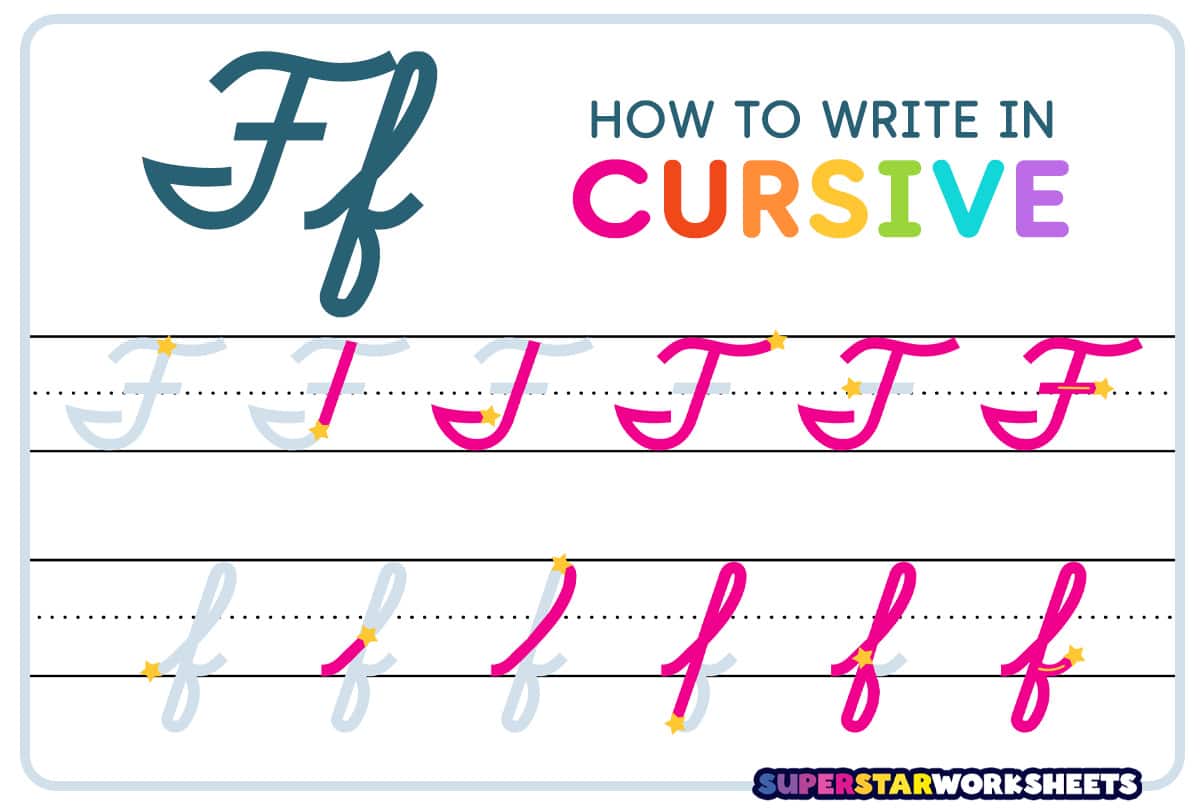
Mastering cursive capital letters often feels like scaling a small mountain for young learners, particularly when encountering loops and directional shifts unique to the script. The standard cursive capital f worksheet provides a targeted, structured space for children to untangle these complex movements. Observing a roomful of second graders attempt this letter reveals a common hurdle: the tendency to rush the top loop while losing control of the baseline connection. Practicing within structured guides helps children slow down, internalize proper stroke sequence, and build the muscle memory required for fluid, legible handwriting.
💡 Educational Key Takeaways:
- Core Skill: Structured Standard Cursive Capital F focused on developing pencil grip, stroke control, and early literacy/math confidence.
- Target Scope: Suited for homeschoolers, preschool, kindergarten, and elementary learners.
- Best Recommendation: Practice 10–15 minutes daily with ergonomic writing tools to reinforce muscle memory without hand fatigue.
What This Worksheet Covers
Focused exclusively on letter formation, stroke order, and spacing, this printable breaks down a notoriously tricky glyph into manageable visual steps. Children transition from tracing oversized models to independent execution on primary writing lines. Educators often notice that when learners try to form a cursive capital F without a clear starting point, they accidentally create an entirely different letter, such as a capital T or a lowercase l. Providing dedicated Letter Writing Worksheets ensures that hand-eye coordination aligns with the specific kinetic flow demanded by traditional cursive scripts.
Key Learning Outcomes
Consistent interaction with this resource yields measurable improvements in pencil control and spatial organization on paper. According to the American Occupational Therapy Association, foundational fine motor tasks directly support the neural pathways necessary for academic success and functional daily skills. Learners develop a steady grasp, learn to moderate writing pressure, and understand the precise boundary between headline, midline, and baseline. These foundational mechanics reduce hand fatigue during longer writing sessions.
How to Use This Worksheet
Beginners benefit most from starting with a dry-erase sleeve and a fine-tip marker before moving to standard pencils and paper. Tracing over the directional arrows with a finger first engages kinesthetic memory before the pencil touches the page. Adults should encourage a relaxed tripod grasp, gently correcting white-knuckle grips that restrict fluid wrist movement. Integrating these pages alongside broader Tracing Worksheets bridges the gap between basic pre-writing strokes and complex alphabetical loops.
Practical Tips for Parents and Teachers
Short, daily sessions yield significantly better results than marathon weekend writing blocks. It sounds simple, and that’s the point: five minutes of focused practice each morning builds enduring neural pathways far better than an exhausted thirty-minute session on Friday afternoon. Allowing children to use colorful pens for tracing can also reignite flagging motivation when dealing with stubborn loops. Pair these writing exercises with Worksheets designed for general motor control to round out the learning experience.
Age-Appropriate Recommendations
According to the National Association for the Education of Young Children guidelines on developmentally appropriate practice, formal cursive instruction typically aligns with second and third-grade developmental milestones. At this stage, children possess the intrinsic hand strength and visual-motor integration needed to manage the sweeping curves of capital letters. Forcing these complex letterforms too early can lead to frustration and poor pencil habits that prove difficult to break later.
Foundational fine motor tasks directly support the neural pathways necessary for academic success and functional daily skills. — American Occupational Therapy Association
Frequently Asked Questions
Explore More Free Printable Worksheets
Expanding a child’s handwriting toolkit requires variety, engagement, and consistent access to quality materials. Exploring supplementary resources helps reinforce cursive fluency across different contexts, ensuring that skills transfer smoothly from isolated practice sheets to creative writing assignments and daily schoolwork.
Developmental Milestone & Activity Table
| Development Stage | Recommended Daily Duration | Primary Learning Objective |
|---|---|---|
| Preschool & Pre-K | 10 – 15 Minutes | Pencil grip development & basic pre-stroke lines |
| Kindergarten | 15 – 20 Minutes | Letter/number formation & spatial line awareness |
| Early Elementary (Grade 1–2) | 20 – 30 Minutes | Fluency, sentence construction & neatness |
Images References