Introduction
The bridge between basic manuscript writing and fluid cursive remains one of the most intriguing milestones in early childhood education. Young children often experience a sudden shift in expectations around the second and third grades, moving away from rigid block letters toward connected writing systems. Introducing print cursive hybrid worksheets provides an essential stepping stone, helping learners build muscle memory without overwhelming their developing fine motor systems. Classroom observations frequently reveal that children tense up significantly when forced to abandon print entirely overnight, clutching pencils with excessive force. Providing a transitional model bridges this gap naturally, supporting both legibility and speed. According to the American Occupational Therapy Association, foundational fine motor control developed during these early years directly impacts academic confidence and sustained writing endurance.
💡 Educational Key Takeaways:
- Core Skill: Structured Print Cursive Hybrid Handwriting focused on developing pencil grip, stroke control, and early literacy/math confidence.
- Target Scope: Suited for homeschoolers, preschool, kindergarten, and elementary learners.
- Best Recommendation: Practice 10–15 minutes daily with ergonomic writing tools to reinforce muscle memory without hand fatigue.
What This Worksheet Covers
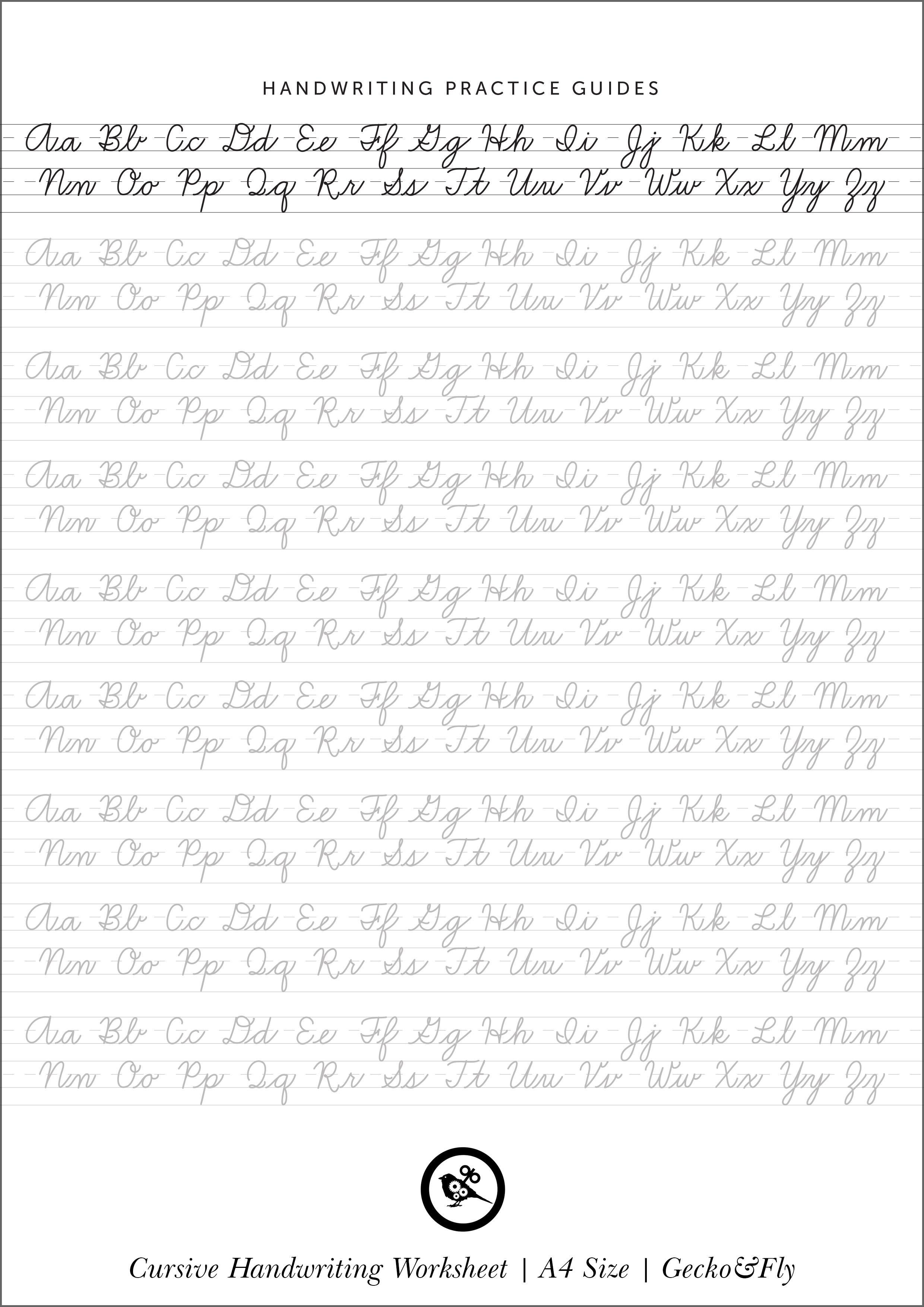
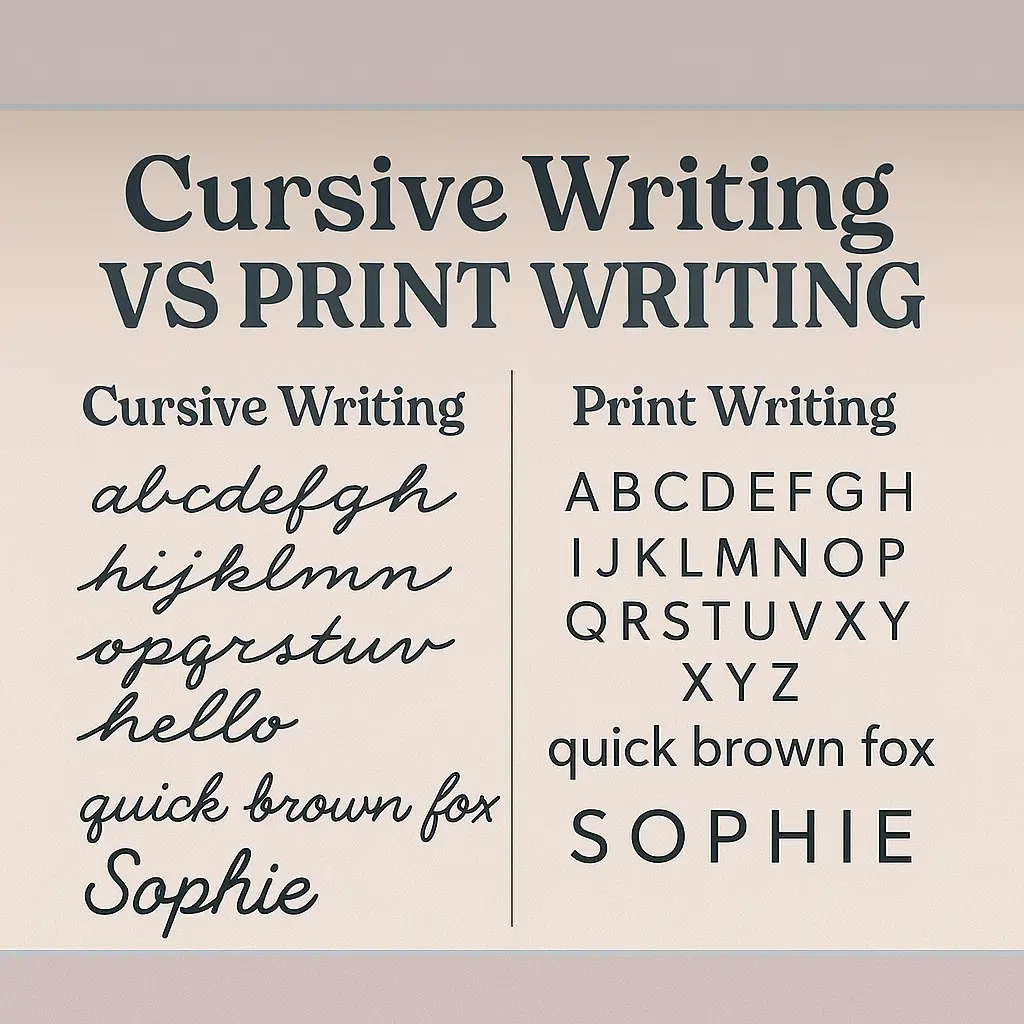
This specific printable resource focuses on blending the familiar straight lines of manuscript letters with the continuous flow characteristic of cursive scripts. Learners encounter letter formations that retain basic print characteristics while introducing gentle entry and exit strokes. Such a layout eliminates the abrupt stop-and-start nature of traditional block printing, encouraging smoother hand movements across the page. Educators often notice that children naturally begin to fluidly connect letters once these transitional entry strokes become automatic habits. Beyond simple letter shape practice, the layout addresses spatial awareness, directional tracking, and consistent baseline adherence. Exploring additional resources like Letter Writing Worksheets allows children to further refine these emerging structural patterns in a scaffolded manner.
Key Learning Outcomes
Mastering a hybrid writing approach yields measurable improvements in motor planning and visual-motor integration. Children learn to regulate the pressure exerted on the writing utensil, preventing hand fatigue during longer academic tasks. Stroke sequencing becomes intuitive as the hand flows from one letter segment into the next without completely lifting off the paper. Furthermore, visual tracking improves significantly because the eye learns to anticipate the upcoming directional change of the stroke. Teachers frequently observe that learners using hybrid models exhibit fewer reversals of commonly confused letters like ‘b’ and ‘d’ due to the distinct directional cues provided by the connecting tails. To build the foundational pencil control required for these movements, pairing writing tasks with exercises from Tracing Worksheets offers targeted preparatory practice.
How to Use This Worksheet
Successful implementation relies on creating an environment that prioritizes ergonomic posture and proper tool selection. Children should sit with feet flat on the floor, hips and knees at ninety-degree angles, and forearms resting comfortably on the writing surface. Short, triangular pencils or specialized grips often facilitate an efficient tripod grasp, keeping small finger muscles from tiring prematurely. Adults should guide the learner through the initial rows, modeling the continuous fluid motion required for the hybrid strokes before independent practice begins. It sounds simple, and that is the point: breaking the page down into manageable, low-stress rows keeps frustration at bay.
Practical Tips for Parents and Teachers
Patience remains the single greatest tool when introducing transitional writing styles to reluctant learners. Limiting sessions to brief, five-to-ten-minute intervals prevents hand cramping and maintains high levels of cognitive engagement. Observing a child’s hand tension offers valuable insight; if knuckles turn white, the child needs a gentle prompt to relax their grip or take a movement break. Tracing the lines with a finger before touching a pencil to paper activates kinesthetic memory, making the actual writing process much smoother. Integrating these print-to-cursive transitional exercises alongside activities from Name Practice Worksheets adds personal relevance and keeps learners personally invested in their own progress.
Age-Appropriate Recommendations
Introducing hybrid print-cursive concepts typically aligns best with late second grade or early third grade, once fundamental manuscript formation is firmly established. According to National Association for the Education of Young Children Developmentally Appropriate Practice guidelines, expectations must align with the physical maturation of the child’s intrinsic hand muscles and ulnar stability. Pushing formal cursive too early can frustrate children whose hand arches are still developing endurance. However, introducing hybrid stroke elements gently serves as an effective bridge that respects biological timelines while preparing students for future academic demands. For younger children still developing basic grip strength and spatial awareness, starting with resources found in Preschool Worksheets establishes the necessary physical foundation.
Foundational fine motor control and visual-motor integration directly predict early academic success and writing legibility across elementary grade levels — American Occupational Therapy Association (AOTA)
Frequently Asked Questions
Parents and educators frequently navigate specific logistical and developmental questions when introducing hybrid writing systems. Clear answers help streamline practice sessions at home or inside busy classrooms. The following frequently asked questions address common concerns regarding format access, developmental timing, and mechanical skill building.
Explore More Free Printable Worksheets
Expanding a child’s writing toolkit requires access to a diverse array of structured practice materials. Exploring the complete collection of Worksheets provides endless opportunities to reinforce fine motor control, letter mastery, and creative expression. Consistent, varied practice ensures that handwriting transforms from a labored chore into an effortless tool for lifelong communication.
Developmental Milestone & Activity Table
| Development Stage | Recommended Daily Duration | Primary Learning Objective |
|---|---|---|
| Preschool & Pre-K | 10 – 15 Minutes | Pencil grip development & basic pre-stroke lines |
| Kindergarten | 15 – 20 Minutes | Letter/number formation & spatial line awareness |
| Early Elementary (Grade 1–2) | 20 – 30 Minutes | Fluency, sentence construction & neatness |
Images References