Introduction
Mastering hand writing f requires deliberate stroke sequencing, downward vertical control, and precise midline crossbar placement to ensure early literacy legibility. According to the National Association for the Education of Young Children (NAEYC), foundational fine-motor skill development during early childhood directly supports automaticity in letter formation and cognitive writing fluency. Educators and parents teaching foundational characters must prioritize correct biomechanics from the initial stroke downward. Structured tools such as letter writing worksheets offer systematic practice grids that reinforce spatial awareness, pencil grip consistency, and directional confidence. Developing clean character execution prevents bad habits like bottom-up looping or erratic baseline positioning, which frequently impede reading fluency and writing speed.
Handwriting Practice Snapshot:
- Core Focus: Executing the lowercase and uppercase letter f with correct top-to-bottom stroke sequencing and precise crossbar alignment.
- Target Scope: Early elementary students, kindergarten learners, and homeschoolers developing foundational motor control.
- Key Recommendation: Combine verbal kinetic cues with specialized structured templates to build muscle memory safely.
Core Principles and Detailed Overview
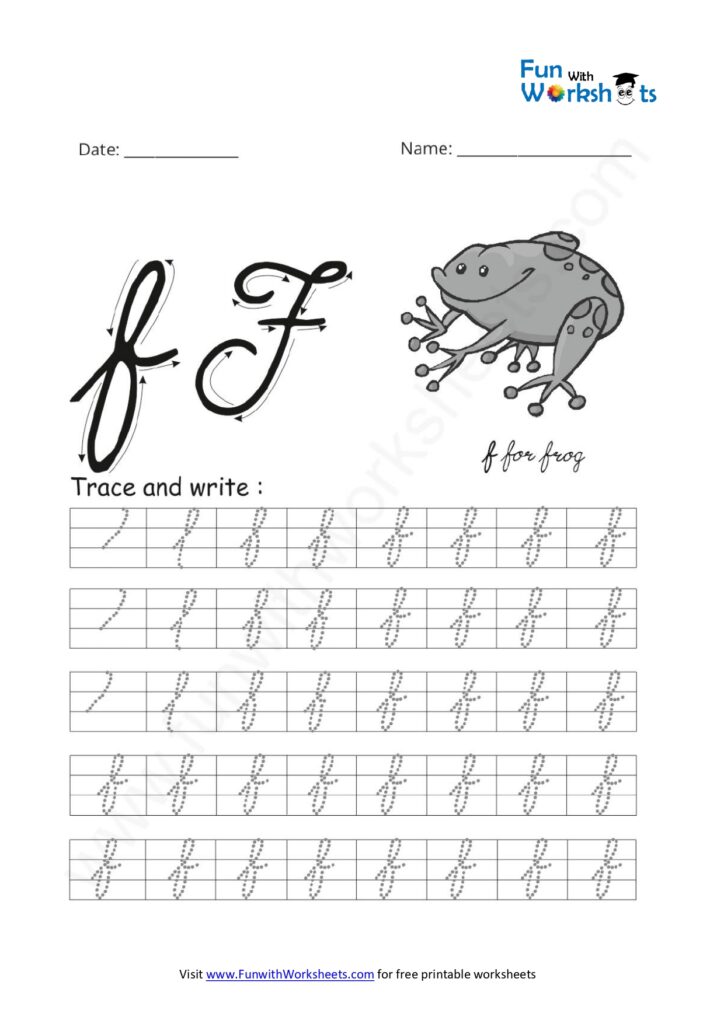
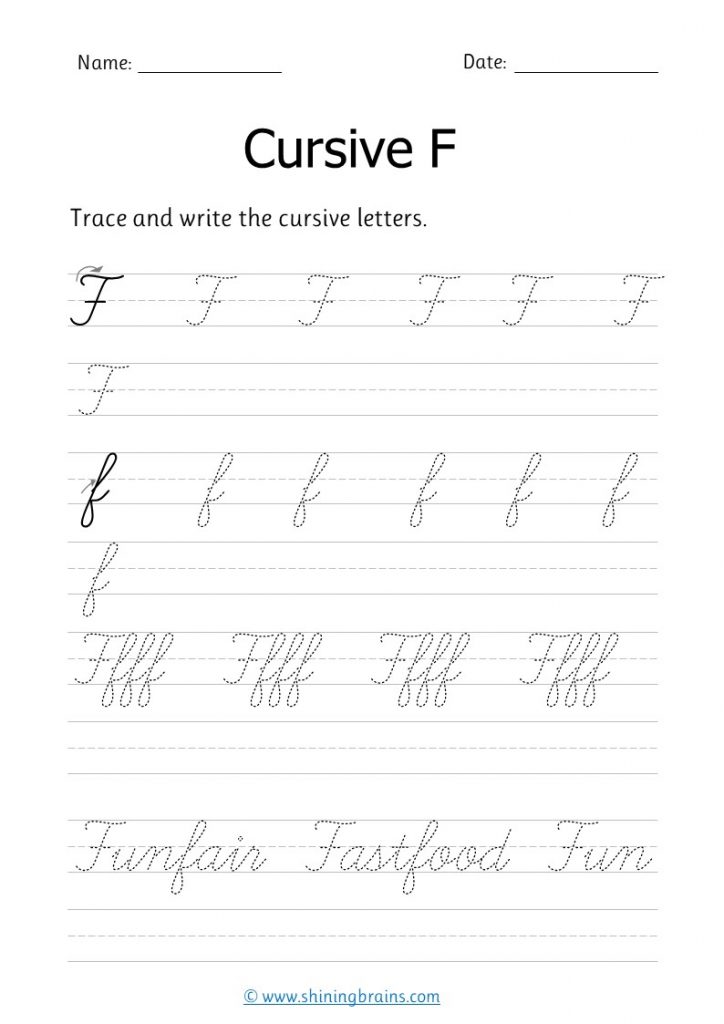
Hand writing f involves a two-stroke sequence for the lowercase variant, beginning with a downward-pulling hanging stem and a distinct rightward-facing top hook. The physical mechanics demand proximal shoulder stability and distal finger dexterity to navigate the curves without fatiguing the hand. Practitioners utilize tracing worksheets to isolate the continuous motion needed for the top curve before transitioning to unassisted lined paper. The lowercase letter f starts just below the top guideline, curves upward and rightward to the top line, pulls straight down to the baseline, and finishes with a horizontal crossbar placed cleanly across the midline. Precision in placing this crossbar prevents confusion with other ascending characters like t or l, reinforcing orthographic discrimination.
Key Specifications and Breakdown
| Skill Level / Grade | Target Stroke / Mechanical Focus | Pedagogical / Coaching Cue |
|---|---|---|
| Preschool / Pre-K | Large motor pre-writing arcs and directional tracing | “Start at the top, curve up, pull straight down, cross in the middle.” |
| Kindergarten | Standard baseline alignment and correct proportionality | “Keep the hook under the top line and cross right on the dotted line.” |
| First Grade | Pacing, automaticity, and seamless word integration | “Maintain fluid rhythm without lifting the pencil until the crossbar.” |
Proper grip and stroke continuity reduce writing fatigue and enhance letter retention among young learners. — American Occupational Therapy Association (AOTA)
Step-by-Step Practical Application and Guidelines
Implementing effective instruction for hand writing f relies on multisensory cueing, progressive difficulty scaling, and frequent tactile reinforcement. Instructors should begin by demonstrating the letter on a large vertical surface to engage shoulder and elbow joints before moving to standard desk surfaces. Students trace oversized glyphs using textured mediums, transitioning progressively to standard preschool worksheets that feature highlighted starting dots and directional arrows. When introducing names or vocabulary containing the target letter, educators frequently integrate specialized name practice worksheets to personalize the learning experience and maintain high student engagement throughout repetitive mechanical drills.
Common Challenges and How to Avoid Them
Children frequently struggle with hand writing f by reversing the hook, starting the stem from the baseline, or placing the horizontal crossbar too low. To correct bottom-up stroke errors, teachers should enforce a verbal starting mantra that emphasizes the top baseline boundary before every single repetition. Providing bounded visual boxes restricts erratic scaling, while tactile tactile guides prevent the hook from collapsing into a simple vertical line. Regular monitoring ensures that pencil pressure remains light, preventing hand cramping and enabling smooth transitions into subsequent letters within cursive or print words.
💬 Frequently Asked Questions
Explore More Free Handwriting and Character Worksheets
Expanding early childhood literacy toolkits becomes seamless when utilizing the extensive, educator-approved resource library available across CharacterWritingWorksheets.com. Whether reinforcing fine motor control through creative coloring worksheets or building systematic penmanship mastery via structured worksheets, these printable materials provide the exact scaffolding needed for lifelong writing success.
Visual Reference Gallery