Introduction
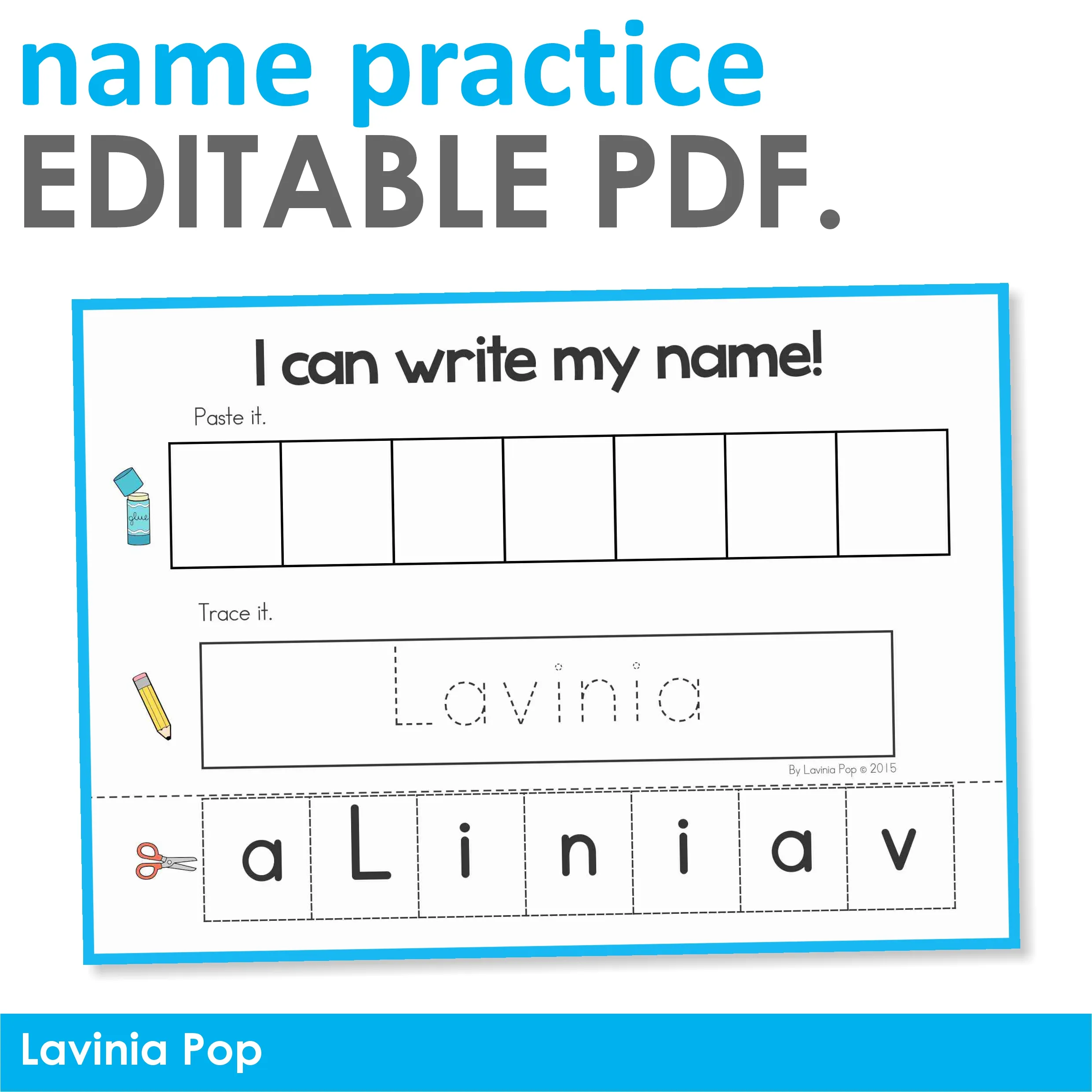
Editable name practice worksheets provide fully customizable writing templates that allow educators to generate targeted letter formation exercises featuring specific student names. According to the National Association for the Education of Young Children (NAEYC), meaningful literacy experiences—such as recognizing and writing one’s own given name—serve as foundational milestones that bridge early phonological awareness and fine-motor execution. Utilizing specialized name practice worksheets accelerates this developmental phase by tailoring letter sequences directly to individual learning needs.
Handwriting Practice Snapshot:
- Core Focus: Customizable writing templates centered on a child’s unique given name.
- Target Scope: Early childhood education, kindergarten classrooms, and home-schooling environments.
- Key Recommendation: Integrate daily short-duration tracing exercises to reinforce muscle memory and proper stroke sequence.
Core Principles and Detailed Overview
Customizable name templates establish foundational pencil control by combining personalized cognitive engagement with structured motor practice. Direct letter recognition begins long before formal handwriting mastery, making customizable preschool worksheets essential tools for early childhood development. When learners practice writing letters that hold personal significance, intrinsic motivation increases dramatically, leading to sustained attention span and improved fine-motor precision across standard worksheets.
Key Specifications and Breakdown
| Skill Level / Grade | Target Stroke / Mechanical Focus | Pedagogical / Coaching Cue |
|---|---|---|
| Early Preschool (Ages 3-4) | Vertical and horizontal strokes, continuous sweeping loops. | Start dots at the top; pull straight down with controlled pressure. |
| Late Preschool / Kindergarten (Ages 4-6) | Uppercase letter sizing, baseline alignment, and consistent spacing. | Keep lowercase letters tucked safely beneath the midline. |
| Early 1st Grade (Ages 6-7) | Proportional scaling, fluid transitions, and independent letter spacing. | Lift the pencil smoothly between disconnected character strokes. |
Ergonomic pencil grasp and proximal stability are prerequisites for sustained handwriting fluency — American Occupational Therapy Association (AOTA)
Step-by-Step Practical Application and Guidelines
Executing an effective name-writing routine requires progressive scaffolding, starting with solid-line tracing before transitioning to dotted guides and independent freehand execution. Instructors should first demonstrate proper grip mechanics while modeling the correct stroke sequence for each character in the child’s name. Following this live demonstration, pairing name templates with targeted tracing worksheets reinforces visual-spatial organization. Educators can then transition learners to standard letter writing worksheets to generalize these newly formed pencil control skills to the wider alphabet.
Common Challenges and How to Avoid Them
Premature fatigue and improper pencil grip remain the most frequent obstacles encountered during early handwriting instruction. Educators can prevent these physical setbacks by enforcing short, five-minute daily practice intervals rather than exhausting long sessions. Furthermore, integrating engaging coloring worksheets into the daily schedule helps strengthen intrinsic hand muscles without causing cognitive burnout, ensuring young learners maintain positive associations with writing tasks.
💬 Frequently Asked Questions
Explore More Free Handwriting and Character Worksheets
Expanding early literacy toolkits is seamless when utilizing high-quality educational resources designed for maximum pedagogical impact. Explore the comprehensive collection of printable resources available at CharacterWritingWorksheets.com to support continuous fine-motor development, proper letter formation, and engaging daily practice routines for every young learner.
Worksheet Previews & Reference Materials