Introduction
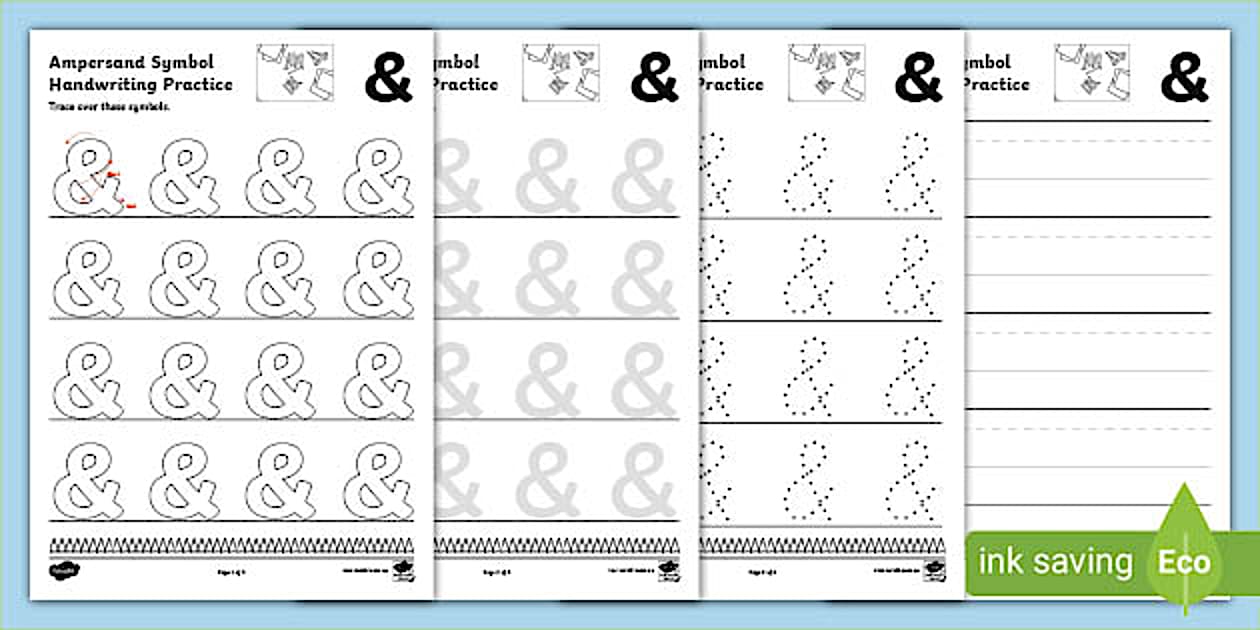
Developing early literacy and foundational fine motor skills requires targeted practice that captures a young child’s attention. The free printable ampersand worksheet offers a unique opportunity for young learners to engage with a complex typographic symbol that demands precision, spatial awareness, and steady hand control. Watching a four-year-old attempt to navigate the looping curves of an ampersand reveals fascinating insights into bilateral hand coordination and visual-motor integration. Children often pause, shift their pencil grips, and concentrate deeply on managing the continuous, winding strokes required to complete the shape. Integrating specialized tools like tracing worksheets helps bridge the gap between basic pre-writing scribbles and controlled letter formation.
💡 Educational Key Takeaways:
- Core Skill: Structured Ampersand Worksheet focused on developing pencil grip, stroke control, and early literacy/math confidence.
- Target Scope: Suited for homeschoolers, preschool, kindergarten, and elementary learners.
- Best Recommendation: Practice 10–15 minutes daily with ergonomic writing tools to reinforce muscle memory without hand fatigue.
What This Worksheet Covers
This specific printable resource focuses on the distinct mechanical demands of drawing and tracing the ampersand character, moving far beyond standard alphabet loops. Mastering this symbol reinforces continuous line accuracy, fluid directional changes, and sustained visual attention. Educators frequently notice that children who struggle with traditional curved letters benefit immensely from practicing specialized glyphs that require similar wrist rotation and finger dexterity. It sounds simple, and that’s the point, yet every single loop challenges the intrinsic hand muscles responsible for stable pencil control. Supporting these developmental leaps often involves exploring related letter writing worksheets to build broader typographic confidence.
Key Learning Outcomes
Targeted practice with this resource yields measurable improvements in pencil pressure regulation and stroke continuity. According to the American Occupational Therapy Association, foundational fine motor tasks directly influence a student’s ability to participate successfully in daily academic environments. Children build foundational wrist stability, learn to anchor their paper effectively with an auxiliary hand, and refine their visual tracking abilities from left to right. These mechanics are essential for preventing hand fatigue during extended writing sessions in later primary grades. Expanding into broader learning domains through preschool worksheets further solidifies these vital developmental gains.
How to Use This Worksheet
Successful implementation begins with setting up an ergonomic workspace where the child’s feet rest flat on the floor and the table sits at elbow height. Adults should introduce the ampersand as a fun, decorative puzzle rather than a strict academic drill, encouraging children to trace the large-format outlines with a finger first. This kinesthetic warm-up activates muscle memory before any writing utensil touches the page. Transitioning from thick crayons to shorter pencils or broken pastel pieces naturally encourages an efficient tripod grasp. Complementary activities found within coloring worksheets provide excellent supplementary practice for building foundational grip strength.
Practical Tips for Parents and Teachers
Observing a child’s grip fatigue offers immediate feedback on when to pause the activity. Short, joyful bursts of five to ten minutes yield far better neurological retention than prolonged, frustrating practice sessions. Adults can place the printed sheet on a slight slant to match the natural physiological arc of a child’s hand movement. Consistency matters tremendously, so pinning the completed page to a refrigerator or classroom board reinforces a strong sense of accomplishment. Incorporating personalized elements through name practice worksheets rounds out a comprehensive daily writing routine.
Age-Appropriate Recommendations
Aligning developmental expectations with established educational benchmarks ensures children remain motivated rather than overwhelmed. According to the National Association for the Education of Young Children guidelines on developmentally appropriate practice, children aged five to seven benefit most from activities that combine playful exploration with structured graphic practice. Younger preschoolers should focus on the large tracing elements with thick writing tools, while older kindergarteners and early graders can refine their scaling, line placement, and proportional accuracy. Every child progresses along a unique developmental timeline, making patience and flexible pacing critical components of successful early education.
Fine Motor Foundations — According to the American Occupational Therapy Association, targeted pencil control activities build the exact intrinsic hand strength required for lifelong academic and functional independence.
Frequently Asked Questions
Navigating early childhood educational resources can bring up many questions regarding printing formats, developmental readiness, and best teaching practices. The following answers address the most common inquiries from educators, parents, and caregivers seeking to optimize fine motor development at home or in the classroom.
Explore More Free Printable Worksheets
Expanding a child’s fine motor toolkit requires access to a wide variety of engaging, developmentally appropriate materials. Caregivers and educators can discover a comprehensive collection of supplementary resources by browsing the primary directory of worksheets designed to support every stage of early childhood education.
Developmental Milestone & Activity Table
| Development Stage | Recommended Daily Duration | Primary Learning Objective |
|---|---|---|
| Preschool & Pre-K | 10 – 15 Minutes | Pencil grip development & basic pre-stroke lines |
| Kindergarten | 15 – 20 Minutes | Letter/number formation & spatial line awareness |
| Early Elementary (Grade 1–2) | 20 – 30 Minutes | Fluency, sentence construction & neatness |
Images References