Introduction
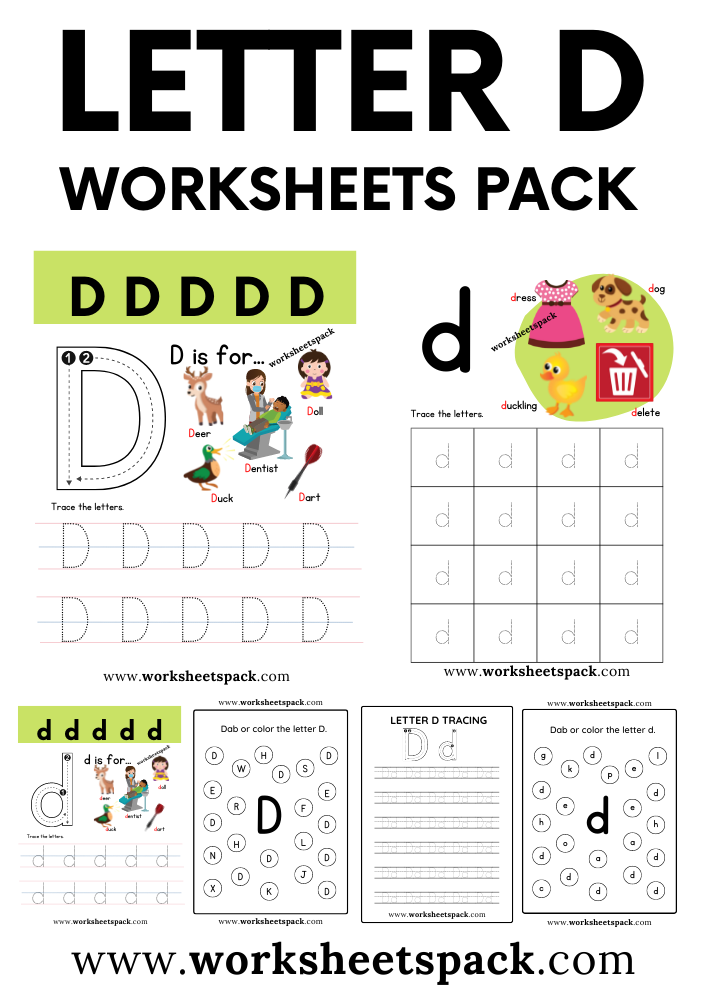
A worksheet letter d serves as an essential instructional tool designed to build foundational handwriting mechanics, stroke accuracy, and fine-motor coordination in early literacy development. According to the National Association for the Education of Young Children (NAEYC), purposeful and developmentally appropriate writing practice supports children in bridging the gap between oral language comprehension and physical graphic representation. Mastery of the letter ‘d’ requires distinct spatial awareness because young learners frequently confuse horizontally reversed shapes such as ‘b’ and ‘d’. Utilizing targeted letter writing worksheets helps children internalize correct directional movements through repeated, scaffolded exposure.
Handwriting Practice Snapshot:
- Core Focus: Mastering the continuous clockwise/counter-clockwise stroke mechanics for letter ‘d’.
- Target Scope: Early elementary students and preschoolers refining pencil grip and letter formation.
- Key Recommendation: Combine verbal mnemonic cues with tactile tracing routines before moving to independent writing lines.
Core Principles and Detailed Overview
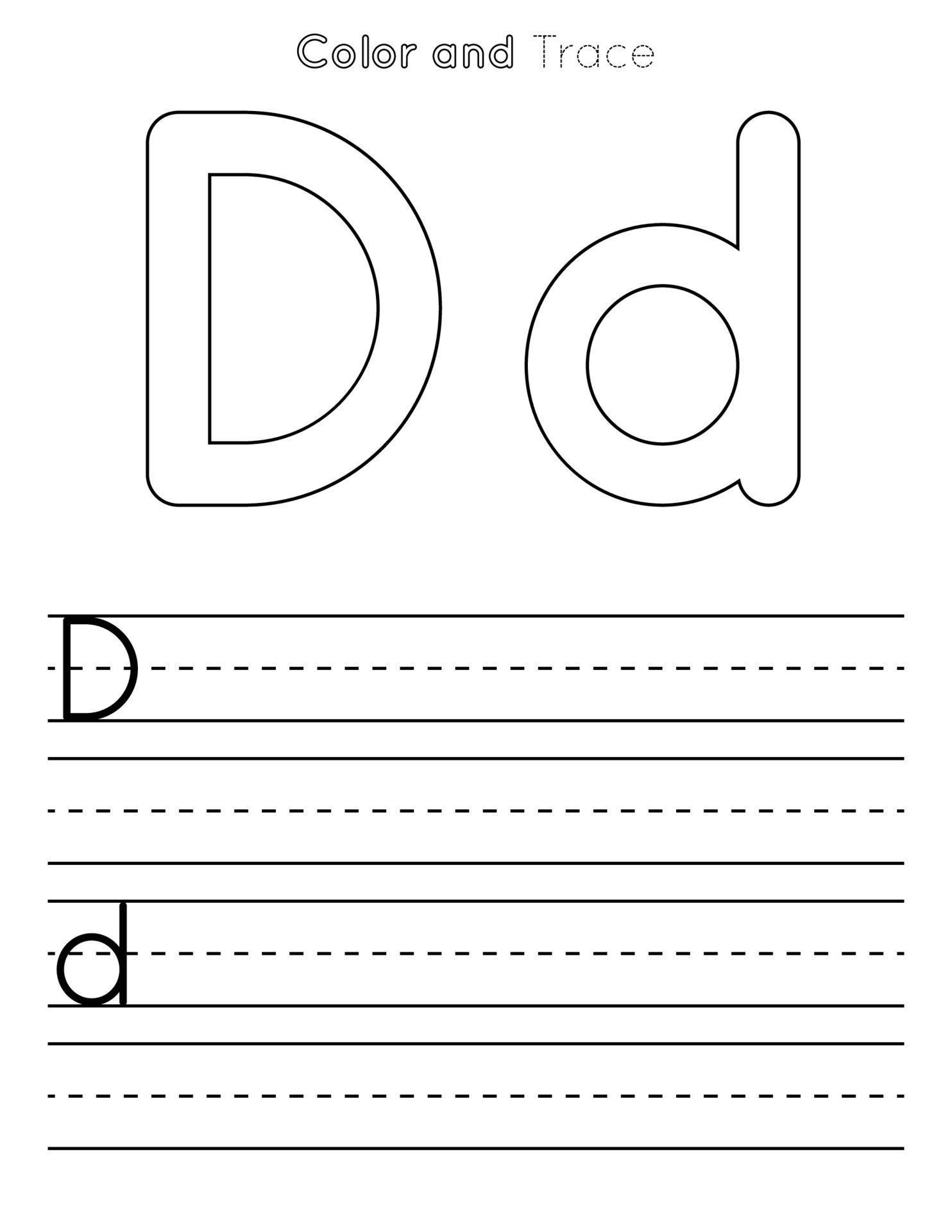
Letter d formation requires a two-stroke sequence that begins with a curved motion followed by a vertical line, demanding precise fine-motor control from developing hands. Proper instructional design relies on structural progression, moving from large-scale air-tracing to structured tracing worksheets that establish muscle memory. Educators utilize preschool worksheets to isolate the specific curved stroke of the lowercase ‘d’, ensuring learners do not lift the writing utensil prematurely during the initial anticlockwise rotation. Understanding the precise anatomical demands of this letter prevents long-term habituation of awkward pencil grips or incorrect stroke directions.
Key Specifications and Breakdown
| Skill Level / Grade | Target Stroke / Mechanical Focus | Pedagogical / Coaching Cue |
|---|---|---|
| Preschool / Pre-K | Magic C curve transitioning into a tall vertical stem. | Start at two o’clock, curve back around, close the circle, and push straight up and down. |
| Kindergarten | Proportional alignment within standard baseline and midline bounds. | Ensure the round belly sits flat on the bottom line while the tall stick reaches the top line. |
| 1st Grade | Fluency, automaticity, and spacing consistency during word integration. | Maintain steady rhythm without lifting the pencil between the curved body and the vertical stem. |
Explicit instruction in stroke sequence and directional placement significantly reduces letter reversal rates and improves overall writing legibility in early childhood education. — American Occupational Therapy Association (AOTA). Related guide: Free Letter Print Printable Stencils.
Step-by-Step Practical Application and Guidelines
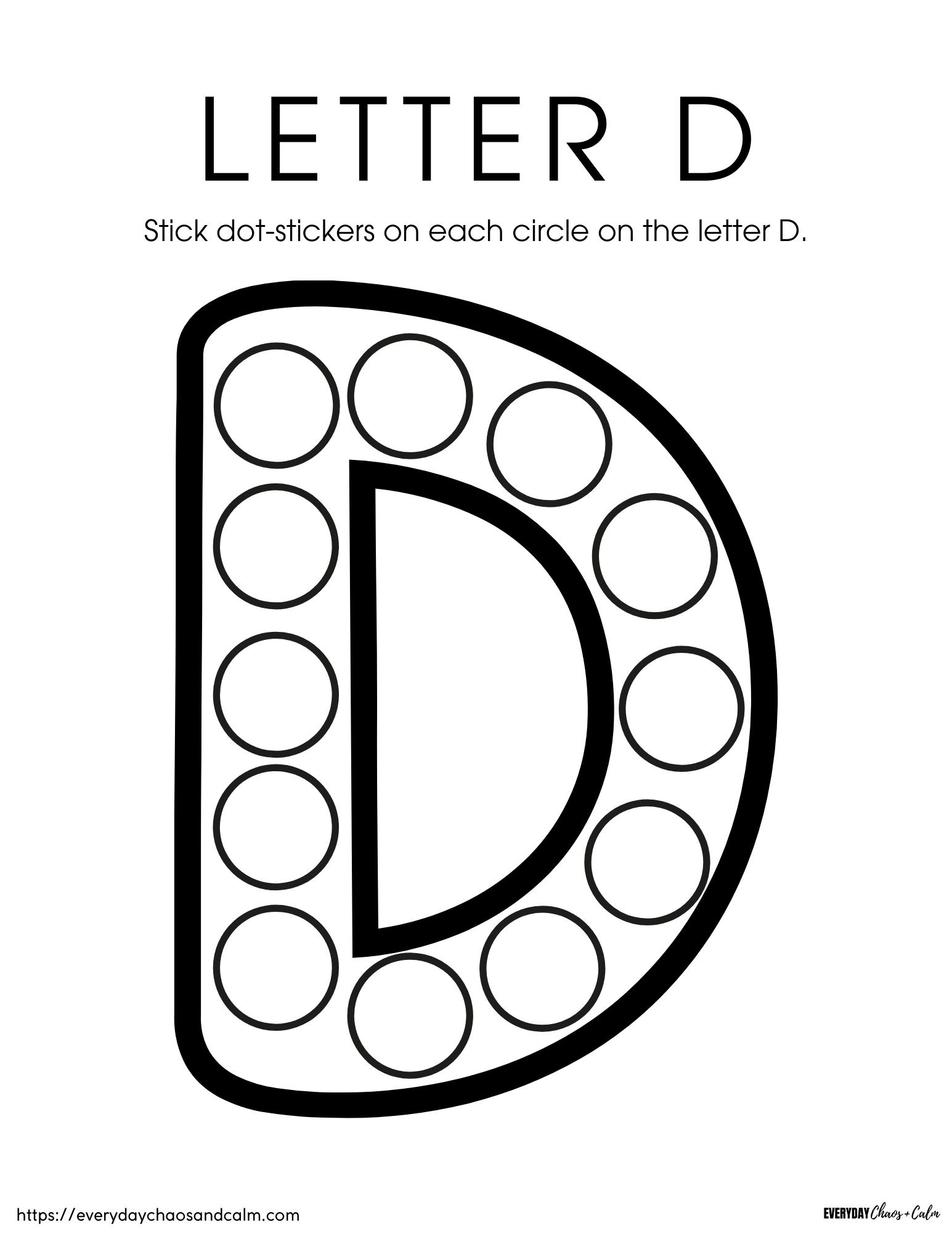
Effective execution of a worksheet letter d session begins with multi-sensory warm-ups before transitioning to graphite on paper. Instructors should first have learners trace the letter models using an index finger to map the physical trajectory. Next, learners complete guided dots on worksheets that reinforce starting points at the two o’clock position on the clock face analogy. Supervision during the primary strokes ensures that children do not reverse the sequence by drawing the vertical line first, which often leads to poor hand fatigue and structural instability in letter height.
Common Challenges and How to Avoid Them
The most frequent obstacle encountered with the letter ‘d’ is directional confusion with the letter ‘b’, often driven by insufficient spatial anchoring. Educators mitigate this error by implementing consistent verbal cues, such as teaching that the letter ‘c’ comes first to form the ‘d’ belly, or by pairing letter exercises with complementary coloring worksheets that engage visual-spatial processing. Additionally, monitoring grip pressure prevents hand cramping during the sustained vertical stroke descent required for lowercase formation.
💬 Frequently Asked Questions
Explore More Free Handwriting and Character Worksheets
Accessing a comprehensive library of educational materials empowers parents and educators to support continuous student growth across all developmental stages. Explore targeted exercises, seasonal activities, and specialized handwriting tools by visiting the main directory at CharacterWritingWorksheets.com for unlimited printable classroom and home resources.
Worksheet Previews & Reference Materials