Introduction
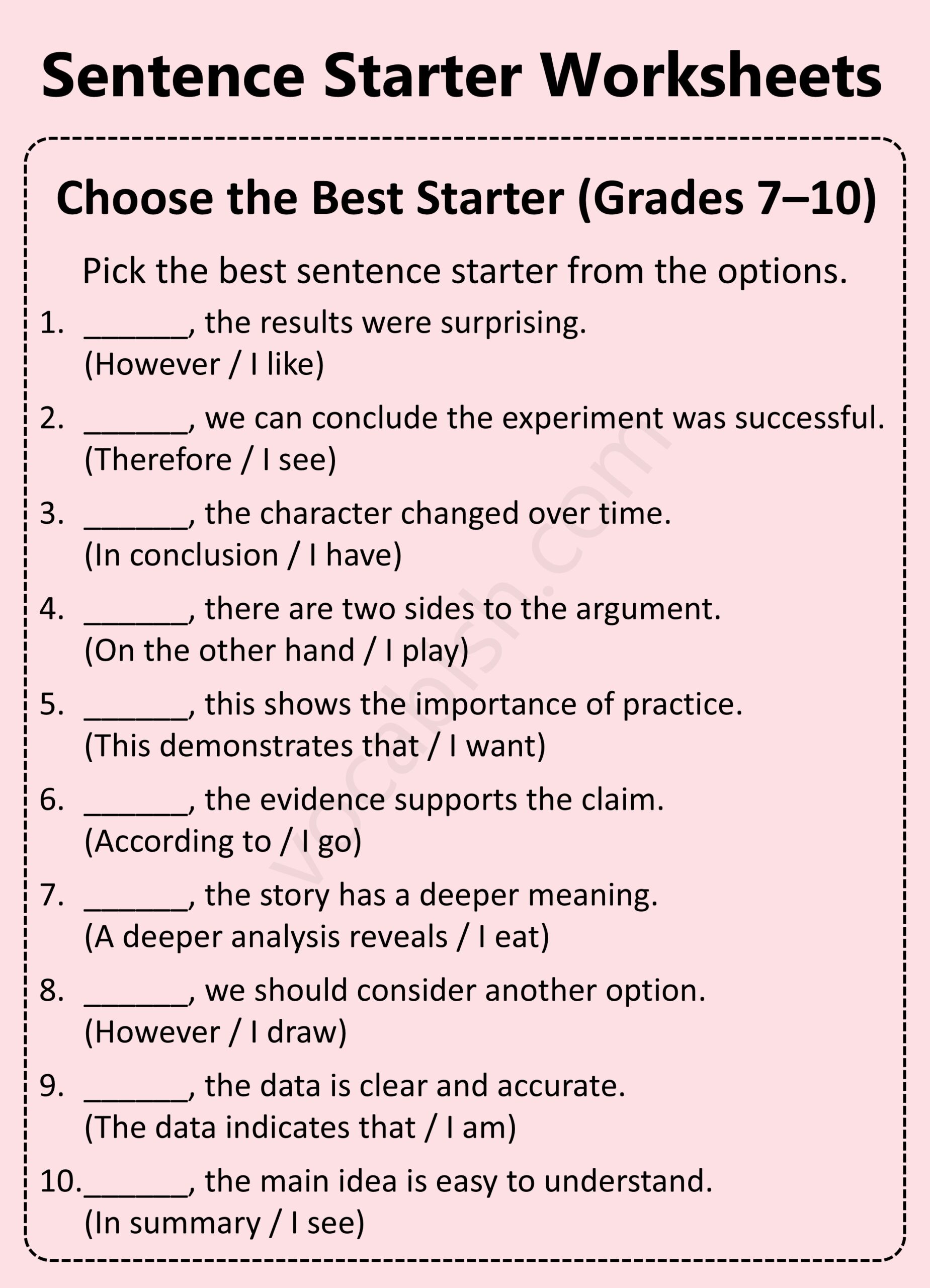
Bridging the gap between spoken thoughts and written words remains one of the most demanding cognitive leaps in early childhood development. Children often harbor rich, complex ideas about the world, yet translating those internal narratives onto physical paper stalls when faced with a blank page. The free printable worksheet reasoning starter sentences acts as a vital scaffolding tool, bridging oral language capabilities with early writing mechanics. It sounds simple, and that’s the point. By providing the initial linguistic framework, these prompts alleviate the paralyzing fear of the blank page, allowing young learners to channel their cognitive energy directly into pencil control, letter formation, and logical thought processes. Occupational therapy clinics and kindergarten classrooms alike frequently witness young minds freeze simply because the physical initiation of a sentence feels overwhelmingly abstract. Offering structured prompts transforms writing from an intimidating chore into an accessible, engaging puzzle of logic and expression.
💡 Educational Key Takeaways:
- Core Skill: Structured Reasoning Starter Sentences focused on developing pencil grip, stroke control, and early literacy/math confidence.
- Target Scope: Suited for homeschoolers, preschool, kindergarten, and elementary learners.
- Best Recommendation: Practice 10–15 minutes daily with ergonomic writing tools to reinforce muscle memory without hand fatigue.
What This Worksheet Covers
This specific resource focuses heavily on developing the foundational cognitive structures required for persuasive and explanatory writing in young children ages five through eight. Rather than demanding full independent generation of syntax, the layout provides partial sentences containing causal connectors like “because,” “therefore,” or “if.” Children must complete the physical act of writing while simultaneously exercising executive functioning, critical thinking, and fine motor precision. Hand fatigue frequently derails early writing sessions, which is why balancing cognitive load with manageable writing stamina is essential. Incorporating this material alongside dedicated tracing worksheets ensures that hand muscles remain flexible and pre-writing stroke execution stays fluid. Children learn not only how to construct logical arguments on paper, but also how to regulate pencil pressure, maintain appropriate letter sizing, and honor baseline boundaries while expressing a coherent thought.
Key Learning Outcomes
Working through these structured prompts yields measurable advancements in both literacy and physical dexterity. According to Reading Rockets, teaching young children explicit comprehension and reasoning strategies directly enhances their ability to decode complex text and articulate structured thoughts independently. Learners build critical causal vocabulary, moving past simple descriptive statements into analytical territory. Physically, the continuous practice refines palmar arches, improves dynamic tripod grasps, and encourages proper wrist extension. Teachers often notice that when children no longer have to invent the entire sentence structure from scratch, their letter formation becomes cleaner, spacing grows more consistent, and overall frustration drops significantly. This success directly feeds self-efficacy, encouraging hesitant writers to tackle longer literacy tasks with genuine enthusiasm and restored confidence.
How to Use This Worksheet
Successful implementation relies heavily on pairing the cognitive task with multisensory preparation before the pencil touches the paper. Adults should begin by having the child verbalize the reasoning prompt aloud, talking through potential conclusions before demanding any physical writing. This oral rehearsal solidifies the neural pathway between spoken language and written symbols. Once the verbal idea is clear, children transition to writing the missing conclusion, paying close attention to pencil grip and posture. For classrooms or homeschool environments requiring broader foundational practice, integrating these targeted exercises alongside specialized preschool worksheets helps diversify the fine motor routine. Alternating between structured logic prompts and open-ended creative tasks prevents hand fatigue while keeping student engagement consistently high throughout the learning session.
Practical Tips for Parents and Teachers
Environmental setups dictate physical writing success more than most adults realize. Ensuring that chairs allow feet to rest flat on the floor and tables sit roughly two inches above bent elbows provides the core stability necessary for distal hand control. When children slump or dangle their legs, fine motor precision drops rapidly as the core works overtime just to maintain posture. Adults should encourage a relaxed tripod grasp, gently intervening only when a tight fist threatens endurance. Breaking the worksheet into manageable chunks—completing two sentences rather than a full page at once—protects against hand cramps and mental exhaustion. Pair these writing sessions with fun gross motor games that involve squeezing, pushing, or hanging to naturally tone the intrinsic muscles of the hand before writing begins.
Age-Appropriate Recommendations
Aligning expectations with established developmental milestones prevents burnout and fosters genuine skill acquisition. Following the Common Core ELA standard W.K.1, children in kindergarten should begin using a combination of drawing, dictating, and writing to compose opinion pieces that supply some sort of reasoning for the chosen topic. For five-year-olds, adults may need to act as scribes for the physical writing while the child focuses purely on the verbal reasoning component. By first and second grade, children transition toward independent execution, writing complete sentences that link opinions to reasons using transitional words. Expanding this literacy progression further with tools like Letter Writing Worksheets guarantees that stroke accuracy and alphabetical fluency evolve smoothly alongside critical thinking skills.
Explicit instruction in causal reasoning and text structure significantly improves young children’s written expression and reading comprehension abilities. — Reading Rockets
Frequently Asked Questions
Navigating early literacy tools becomes much simpler when common questions are addressed directly. The structured layout of these reasoning prompts ensures that children spend their energy on critical thought and pencil control rather than wondering what to write next. Review the answers below to maximize the educational impact of these resources at home or inside the classroom environment.
Explore More Free Printable Worksheets
A well-rounded early childhood curriculum requires a diverse mix of physical and cognitive challenges. To ensure comprehensive development across all developmental domains, educators and parents are encouraged to browse the wider library of resources available on the main directory of Worksheets. Building a robust foundation of fine motor strength, pencil control, and cognitive reasoning sets the stage for a lifetime of confident, articulate academic achievement. Additional targeted practice can also be found by exploring customized Name Practice Worksheets.
Developmental Milestone & Activity Table
| Development Stage | Recommended Daily Duration | Primary Learning Objective |
|---|---|---|
| Preschool & Pre-K | 10 – 15 Minutes | Pencil grip development & basic pre-stroke lines |
| Kindergarten | 15 – 20 Minutes | Letter/number formation & spatial line awareness |
| Early Elementary (Grade 1–2) | 20 – 30 Minutes | Fluency, sentence construction & neatness |
Images References