Introduction
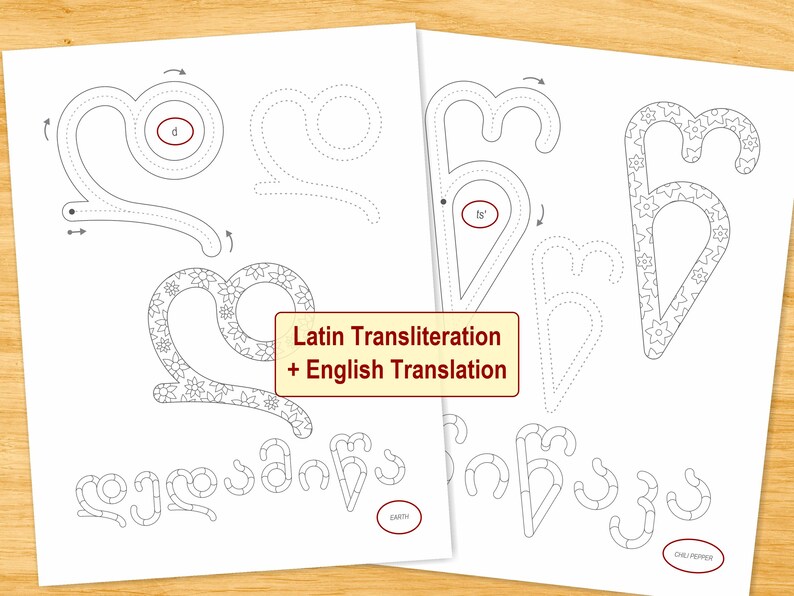
Introducing young learners to unique writing systems opens doors to global linguistic awareness and cognitive flexibility. The free printable georgian alphabet tracing worksheet provides a structured, engaging path for children to explore the distinct loops, curves, and vertical alignments of the Mkhedruli script. Watching a five-year-old attempt to replicate these intricate characters reveals immediate insights into their current level of neuromuscular control. It sounds simple, and that’s the point. Beneath the novelty of foreign letterforms lies rigorous physical preparation for foundational writing.
💡 Educational Key Takeaways:
- Core Skill: Structured Georgian Alphabet Tracing Worksheet focused on developing pencil grip, stroke control, and early literacy/math confidence.
- Target Scope: Suited for homeschoolers, preschool, kindergarten, and elementary learners.
- Best Recommendation: Practice 10–15 minutes daily with ergonomic writing tools to reinforce muscle memory without hand fatigue.
What This Worksheet Covers
Mastering non-Latin scripts requires precise pencil control and line accuracy that goes far beyond standard alphabet practice. This resource focuses heavily on pre-writing strokes, directional consistency, and spatial awareness as children navigate unfamiliar visual patterns. Educators frequently observe that introducing foreign alphabets helps break bad habits regarding stroke order, since learners must slow down and pay close attention to spatial orientation rather than relying on automatic muscle memory. Careful attention to curved ascenders and precise descenders trains the hand to execute controlled movements that transfer directly to everyday writing tasks found across Tracing Worksheets.
Key Learning Outcomes
Engaging with this specific script strengthens intrinsic hand muscles while building visual-motor integration. Children develop superior finger dexterity required to manipulate writing tools with an efficient tripod grasp. Furthermore, tracing intricate letter shapes reinforces cognitive stamina, helping students sustain visual attention over extended periods. According to the American Occupational Therapy Association, engaging in purposeful fine motor activities significantly enhances a child’s ability to participate successfully in classroom routines and academic tasks.
How to Use This Worksheet
Beginning with oversized air-writing or finger-tracing directly on the page helps establish the correct physical trajectory before the pencil touches paper. Adults should encourage children to verbalize the direction of the strokes, such as starting at the top loop and sweeping downward. Transitioning from tactile tracing to structured pencil practice ensures the hand learns the proper rhythm and flow. For broader developmental preparation, combining these exercises with complementary materials found in Preschool Worksheets builds comprehensive hand strength.
Practical Tips for Parents and Teachers
Here’s what makes this worksheet different: it treats unfamiliar letterforms as an exciting puzzle rather than a tedious chore. Positioning the paper at a slight slant matching the child’s forearm angle promotes a natural wrist posture and prevents fatigue. Short, five-minute sessions yield far better retention and engagement than long, frustrating blocks of forced writing. If a child begins fatiguing or losing focus, transition temporarily to broader kinetic activities before returning to the desk.
Age-Appropriate Recommendations
Aligning motor expectations with developmental stages prevents unnecessary frustration for young learners. According to the National Association for the Education of Young Children Developmentally Appropriate Practice guidelines, instructional materials must match the physical and cognitive capacities of the child. Four-year-olds benefit most from large-format finger tracing and pre-stroke exploration, while children ages six to eight can successfully tackle the fine motor precision required for exact Mkhedruli letter formation. Exploring additional resources within Letter Writing Worksheets allows educators to scaffold these multi-step writing challenges effectively.
According to the American Occupational Therapy Association, fine motor proficiency is a critical predictor of academic success and self-esteem in early childhood education. — AOTA
Frequently Asked Questions
How do users download and print this resource? Accessing the file requires simply clicking the download button on the main page, saving the PDF to a local device, and printing it out on standard letter-sized paper using any home or school printer. Does this worksheet improve general writing skills? Yes, practicing unfamiliar scripts refines pencil control, stroke precision, and visual tracking, which directly translates to cleaner handwriting in any language. What do developmental experts say about early writing practice? According to the National Association for the Education of Young Children, purposeful fine motor experiences help children build the physical endurance and coordination needed for lifelong literacy.
Explore More Free Printable Worksheets
Expanding a child’s writing toolkit involves varying practice materials to maintain high engagement and continuous skill progression. Integrating specialized practice sheets ensures comprehensive development across all domains of early childhood motor control. Educators can easily discover additional resources by browsing through the complete library of Worksheets to support diverse learning objectives.
Developmental Milestone & Activity Table
| Development Stage | Recommended Daily Duration | Primary Learning Objective |
|---|---|---|
| Preschool & Pre-K | 10 – 15 Minutes | Pencil grip development & basic pre-stroke lines |
| Kindergarten | 15 – 20 Minutes | Letter/number formation & spatial line awareness |
| Early Elementary (Grade 1–2) | 20 – 30 Minutes | Fluency, sentence construction & neatness |
Images References