Introduction
Mastering the lowercase and uppercase letter f represents a pivotal milestone in early literacy and motor control. Young children frequently encounter a unique physical hurdle when attempting this specific consonant, as it demands a precise combination of curved strokes and horizontal intersecting lines. Clinical observations in pediatric occupational therapy consistently reveal that children often rush the top hook of the letter f, leading to malformed stems or improper baseline placement. Integrating targeted practice pages helps bridge the gap between abstract alphabet knowledge and fluid mechanical execution. Adults guiding early learners need reliable resources that isolate these specific biomechanical challenges without overwhelming developing hands. Utilizing structured printables allows children to build muscle memory systematically while reinforcing letter-sound correspondence during crucial formative years. This comprehensive guide explores the physical and cognitive layers embedded within the free printable worksheet “f in handwriting” available on characterwritingworksheets.com, offering actionable strategies for home and classroom environments.
💡 Educational Key Takeaways:
- Core Skill: Structured F In Handwriting focused on developing pencil grip, stroke control, and early literacy/math confidence.
- Target Scope: Suited for homeschoolers, preschool, kindergarten, and elementary learners.
- Best Recommendation: Practice 10–15 minutes daily with ergonomic writing tools to reinforce muscle memory without hand fatigue.
What This Worksheet Covers
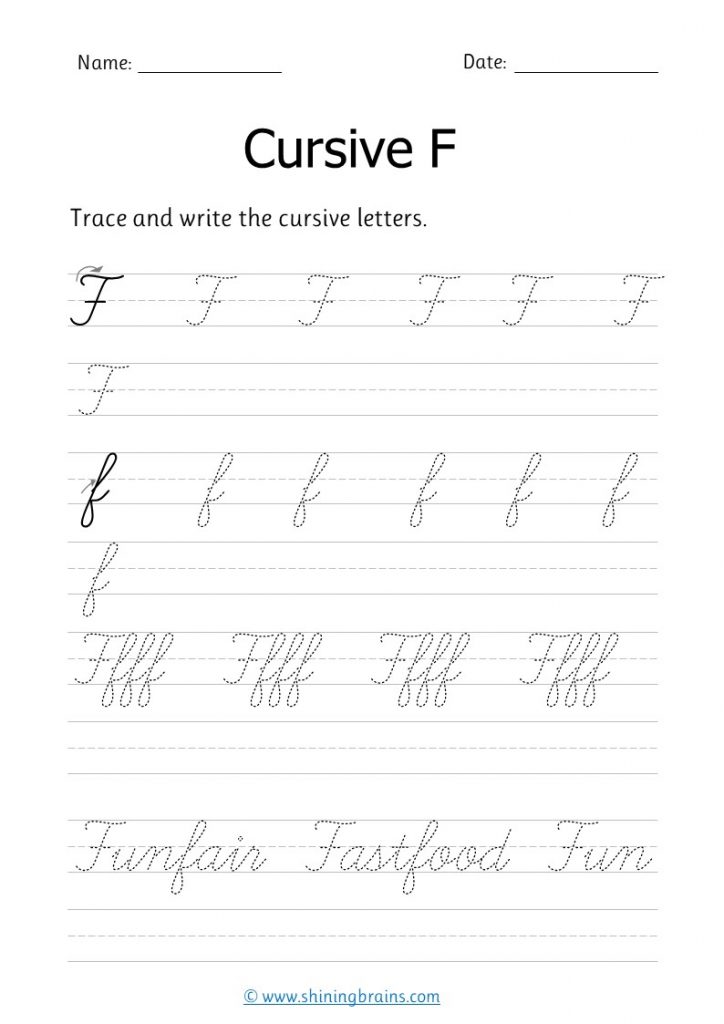
Targeted letter sheets focus heavily on letter formation, stroke order, and spatial orientation on lined paper. The printable guides young learners through tracing the curved top of the lowercase f, pulling a straight vertical line downward, and crossing it accurately along the midline. It sounds simple, and that’s the point; however, the cognitive load required to coordinate visual perception with fine motor output is substantial. When children engage with these specific Letter Writing Worksheets, they simultaneously process phonics sounds, directional tracking from left to right, and pencil pressure management. Educators often notice that children press down with excessive force when executing the horizontal crossbar, indicating a temporary fatigue in the intrinsic hand muscles. Systematic repetition on structured lines alleviates this tension, teaching little hands to apply measured pressure throughout multi-stroke letter creation. Exploring foundational Tracing Worksheets beforehand can further prepare children for the complex directional changes required by the letter f.
Key Learning Outcomes
Executing the letter f builds refined pencil control, improves visual-motor integration, and reinforces proper top-to-bottom stroke sequencing. Children learn to anchor their writing utensils securely, preventing the pencil from slipping during the transition from the curved top hook to the vertical stem. According to Reading Rockets, explicit and systematic instruction in letter formation is essential for developing automaticity, which frees up cognitive space for higher-order composition and reading comprehension. As children repeatedly trace and independently write the target letter, they internalize its spatial boundaries relative to the baseline and midline. This repetitive exposure directly supports broader early writing goals found across various Preschool Worksheets designed for kindergarten readiness. Confidence blooms naturally as children watch their shaky, uncoordinated attempts transform into legible, neatly proportioned letterforms.
How to Use This Worksheet
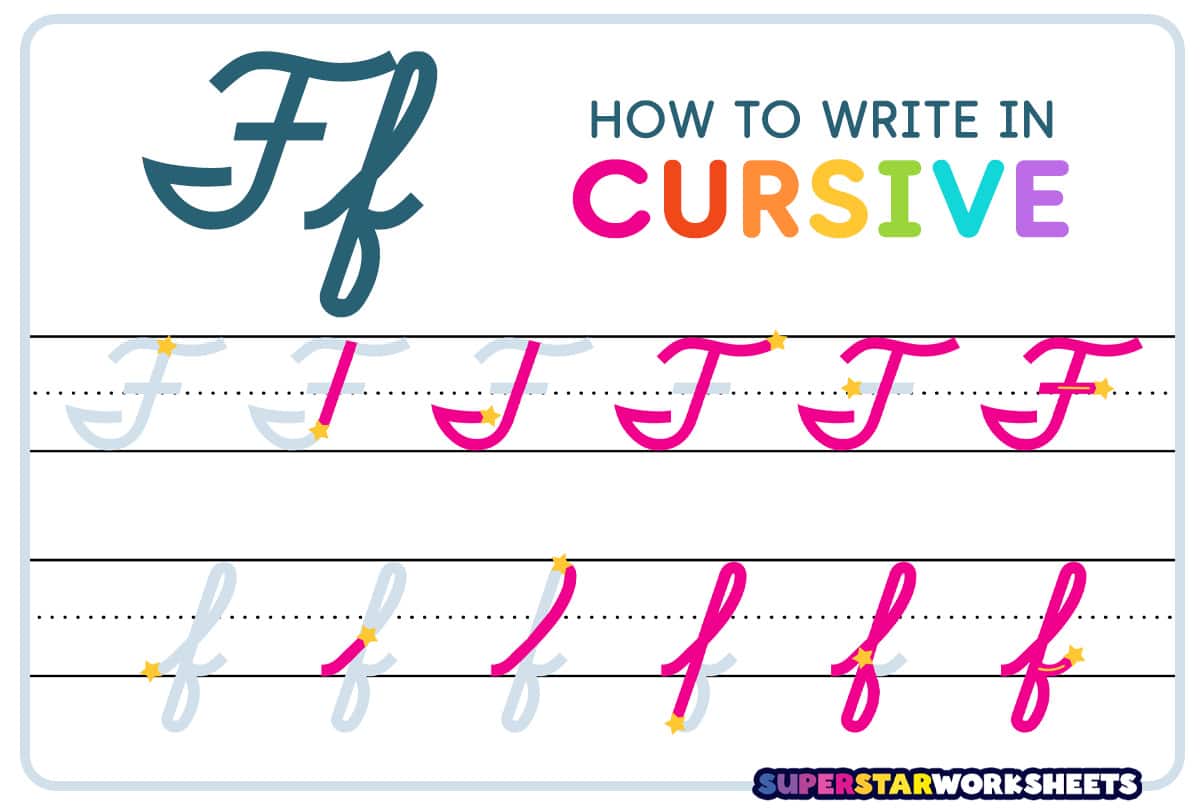
Adults should introduce the printable during calm, focused periods of the daily routine rather than rushing through practice at the end of a tiring day. Begin by demonstrating the correct stroke sequence in the air or on a textured surface before touching a pencil to paper. Watch closely to ensure the child starts the top curve just below the headline, sweeps upward and right, pulls straight down to the baseline, and finally lifts the pencil to draw the crossbar across the midline. Incorporating multisensory elements, such as tracing a textured sample of the letter with an index finger, enhances neural pathway activation. Integrating related Name Practice Worksheets alongside this letter study helps children connect individual graphemes to meaningful personal contexts. Patience remains paramount, as hand fatigue can set in rapidly for children aged four through six who are still developing hand arches.
Practical Tips for Parents and Teachers
Modifying the writing environment creates an immediate physical advantage for young learners struggling with hand control. Ensure the child sits with feet flat on the floor and hips, knees, and ankles positioned at ninety-degree angles to promote core stability. Shortening standard writing utensils to half-length naturally encourages a functional tripod grasp by discouraging awkward fist grips. If a child resists traditional writing implements, sliding the printable inside a heavy-duty plastic sleeve and using dry-erase markers adds a playful, low-stakes element to the exercise. Pausing frequently to stretch hand muscles prevents cramping and maintains a positive attitude toward handwriting practice. Building these healthy ergonomic habits early prevents long-term joint strain and ensures sustained writing endurance as academic demands increase.
Age-Appropriate Recommendations
Developmental expectations for handwriting vary significantly across early childhood, requiring adults to tailor their approach to each child’s current motor maturity. According to NAEYC Developmentally Appropriate Practice, learning experiences must align with children’s social, emotional, and physical maturation stages rather than enforcing rigid, uniform timelines. Four-year-olds typically benefit from oversized tracing models and vertical surface writing, which encourages proximal shoulder stability and gross motor control. Five and six-year-olds transition effectively to standard three-lined handwriting paper, focusing on proportional sizing and proper placement of ascenders like the letter f. According to the American Occupational Therapy Association, foundational fine motor competence directly correlates with classroom participation and academic success. Educators should regularly browse comprehensive collections of Worksheets to source age-appropriate activities that match evolving developmental plateaus.
Explicit instruction in letter formation and fine motor control significantly accelerates early literacy development and writing automaticity — Reading Rockets & AOTA
Frequently Asked Questions
Answers to common inquiries regarding handwriting instruction and printable materials are detailed below to assist caregivers and educators.
Explore More Free Printable Worksheets
Discovering additional resources to support early childhood development is straightforward when utilizing structured online directories. Caregivers seeking to build foundational grip strength can explore specialized Coloring Worksheets designed to enhance hand endurance. Expanding a child’s skill set across multiple developmental domains ensures a well-rounded foundation for future academic success.
Developmental Milestone & Activity Table
| Development Stage | Recommended Daily Duration | Primary Learning Objective |
|---|---|---|
| Preschool & Pre-K | 10 – 15 Minutes | Pencil grip development & basic pre-stroke lines |
| Kindergarten | 15 – 20 Minutes | Letter/number formation & spatial line awareness |
| Early Elementary (Grade 1–2) | 20 – 30 Minutes | Fluency, sentence construction & neatness |
Images References