Introduction
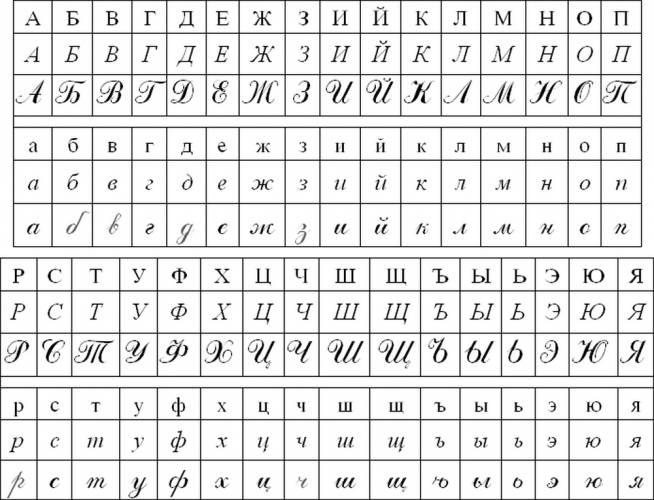
Mastering cursive script in a second alphabet requires a distinct neurological bridge between visual perception and physical execution. When children transition into connected letterforms within the Cyrillic writing system, spatial planning becomes just as vital as pencil pressure. Many young learners initially struggle with the fluid loops of letters like ‘т’, ‘и’, and ‘ш’ because traditional print relies on isolated strokes rather than continuous motion. Providing a structured cyrillic joined writing resource helps bridge this gap by offering guided pathways that encourage smooth transitions and rhythmic hand movements. Children often squeeze writing tools too tightly when attempting unfamiliar shapes, which leads to early hand fatigue. Integrating targeted practice pages helps cultivate the muscle memory necessary for effortless, legible script across multiple languages.
💡 Educational Key Takeaways:
- Core Skill: Structured Cyrillic Joined Writing focused on developing pencil grip, stroke control, and early literacy/math confidence.
- Target Scope: Suited for homeschoolers, preschool, kindergarten, and elementary learners.
- Best Recommendation: Practice 10–15 minutes daily with ergonomic writing tools to reinforce muscle memory without hand fatigue.
What This Worksheet Covers
The primary focus centers on letter formation, continuous stroke order, and consistent spacing within cursive Cyrillic text. Navigating slanted lines and connecting connectors demands precise visual-motor integration. According to the American Occupational Therapy Association, foundational handwriting skills depend heavily on proximal stability and refined distal control, both of which are heavily taxed during connected script acquisition. Young writers must learn to modulate their grip force dynamically as they shift from ascending loops to baseline hooks. This printable sheet breaks down complex cursive connections into manageable segments, ensuring students understand where each stroke begins and ends without getting overwhelmed by long, unbroken words.
Key Learning Outcomes
Students engaging with these exercises systematically improve their directional awareness and line orientation. It sounds simple, and that’s the point: consistent repetition builds automaticity, freeing up cognitive space for actual composition and content generation. As children trace and replicate connected letter combinations, they develop the fluid rhythmic cadence required for efficient writing speeds. Educators frequently notice that structured cursive practice also spills over into cleaner manuscript printing, as hand control and spatial judgment improve simultaneously. Exploring additional resources such as Letter Writing Worksheets allows learners to reinforce parallel mechanics across different alphabets and writing styles.
How to Use This Worksheet
Successful implementation begins with observation rather than immediate correction. Adults should watch how a child approaches the page, noting posture, paper tilt, and the exact placement of fingers on the writing instrument. Begin with a thorough demonstration of the initial stroke, emphasizing the continuous flow required for Cyrillic cursive connectors. Children benefit immensely from air-writing the shape before touching pencil to paper, utilizing large muscle groups to internalize the movement pattern. Setting realistic time limits prevents frustration; short, frequent sessions yield far better physiological adaptations than exhaustive marathon writing blocks.
Practical Tips for Parents and Teachers
Classroom observations reveal that elevated writing surfaces, achieved by placing clipboards at a twenty-degree angle, naturally promote better wrist extension and posture. Encourage a relaxed tripod grasp, ensuring the web space between thumb and index finger remains open and flexible. If a child begins pressing aggressively into the page, pause the activity for hand-stretching exercises to release intrinsic muscle tension. Pairing these writing routines with foundational resources like Tracing Worksheets further supports pre-writing accuracy and steady line control. Celebrating small victories in letter connectivity builds intrinsic motivation and keeps learners engaged through challenging transitions.
Age-Appropriate Recommendations
Introducing connected Cyrillic script aligns best with the developmental milestones outlined in the NAEYC guidelines for developmentally appropriate practice, typically around the third or fourth grade when children possess the requisite fine motor maturity. At this stage, hand bones are ossifying sufficiently to handle sustained writing tasks without undue strain. According to Reading Rockets, explicit instruction in handwriting mechanics directly supports overall literacy development by reducing the cognitive load associated with text production. Educators should tailor expectations based on individual student progress, ensuring that physical stamina matches cognitive readiness before advancing to full-page compositions.
Foundational handwriting skills depend on proximal stability and refined distal control — American Occupational Therapy Association
Frequently Asked Questions
Answers to common inquiries regarding the implementation and technical aspects of handwriting practice resources.
Explicit instruction in handwriting mechanics supports overall literacy development by reducing cognitive load — Reading Rockets
Explore More Free Printable Worksheets
Expanding a child’s writing toolkit requires diverse, targeted practice materials tailored to every developmental stage. Reviewing comprehensive collections like Preschool Worksheets provides early learners with essential pre-writing foundations. For students focusing on personal identity and unique letter sequences, utilizing Name Practice Worksheets offers meaningful context. Ultimately, a balanced approach incorporating varied Worksheets ensures lifelong writing confidence and physical comfort.
Developmental Milestone & Activity Table
| Development Stage | Recommended Daily Duration | Primary Learning Objective |
|---|---|---|
| Preschool & Pre-K | 10 – 15 Minutes | Pencil grip development & basic pre-stroke lines |
| Kindergarten | 15 – 20 Minutes | Letter/number formation & spatial line awareness |
| Early Elementary (Grade 1–2) | 20 – 30 Minutes | Fluency, sentence construction & neatness |
Images References