Introduction
Mastering cursive uppercase y requires a specific blend of fluid motion, directional changes, and steady pencil control. Children often pause when approaching complex letterforms, uncertain of how the initial undercurve transitions into the descending loop. Educators frequently observe young learners gripping their writing utensils too tightly during these diagonal descents, which quickly leads to hand fatigue. Bridging the gap between printed text and flowing script demands targeted practice tools that isolate difficult formations. The free printable worksheet “cursive uppercase y” provides a structured environment for developing this exact coordination. Thoughtfully designed pages allow students to repeat the required stroke sequences until muscle memory takes over. Exploring related Letter Writing Worksheets offers further reinforcement for adjacent alphabet characters. Ultimately, transforming hesitant pencil strokes into confident, connected handwriting relies on consistent exposure to high-quality guided templates.
💡 Educational Key Takeaways:
- Core Skill: Structured Cursive Uppercase Y focused on developing pencil grip, stroke control, and early literacy/math confidence.
- Target Scope: Suited for homeschoolers, preschool, kindergarten, and elementary learners.
- Best Recommendation: Practice 10–15 minutes daily with ergonomic writing tools to reinforce muscle memory without hand fatigue.
What This Worksheet Covers
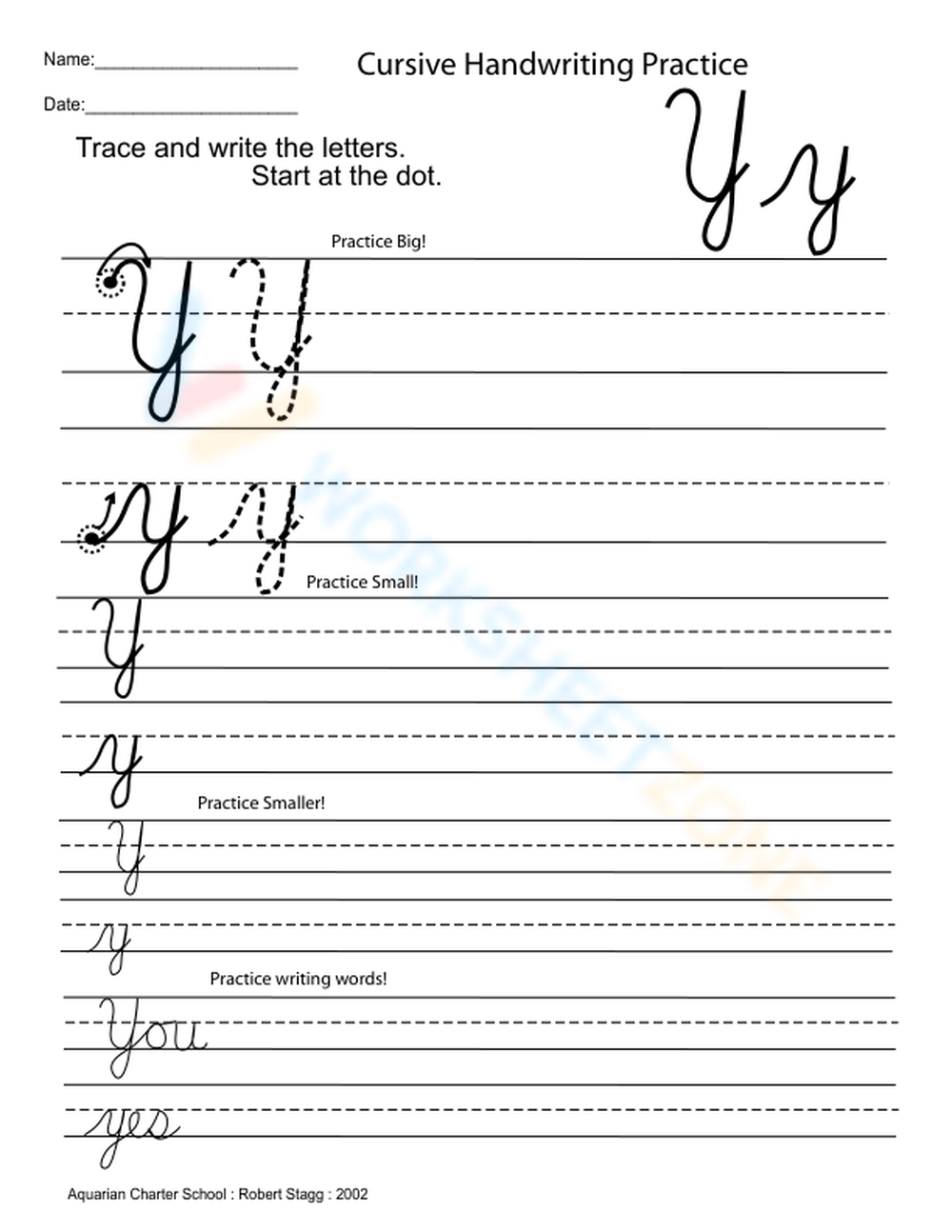
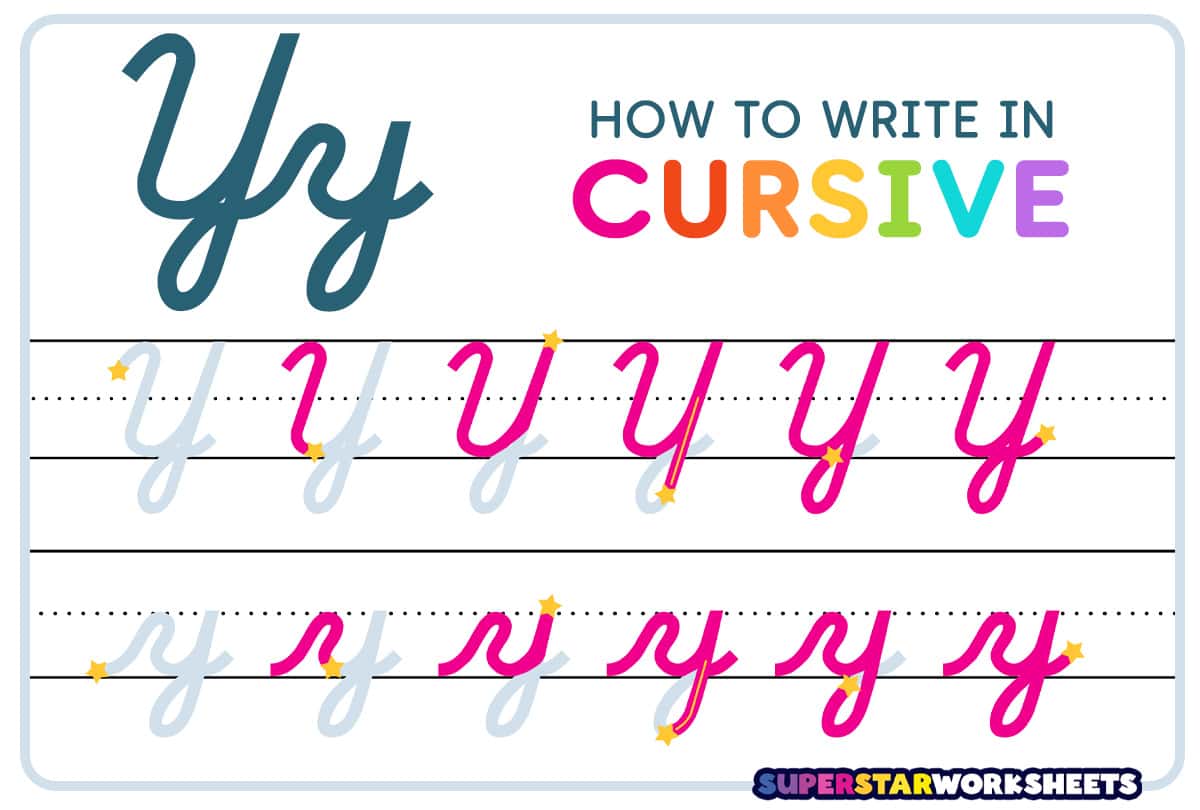
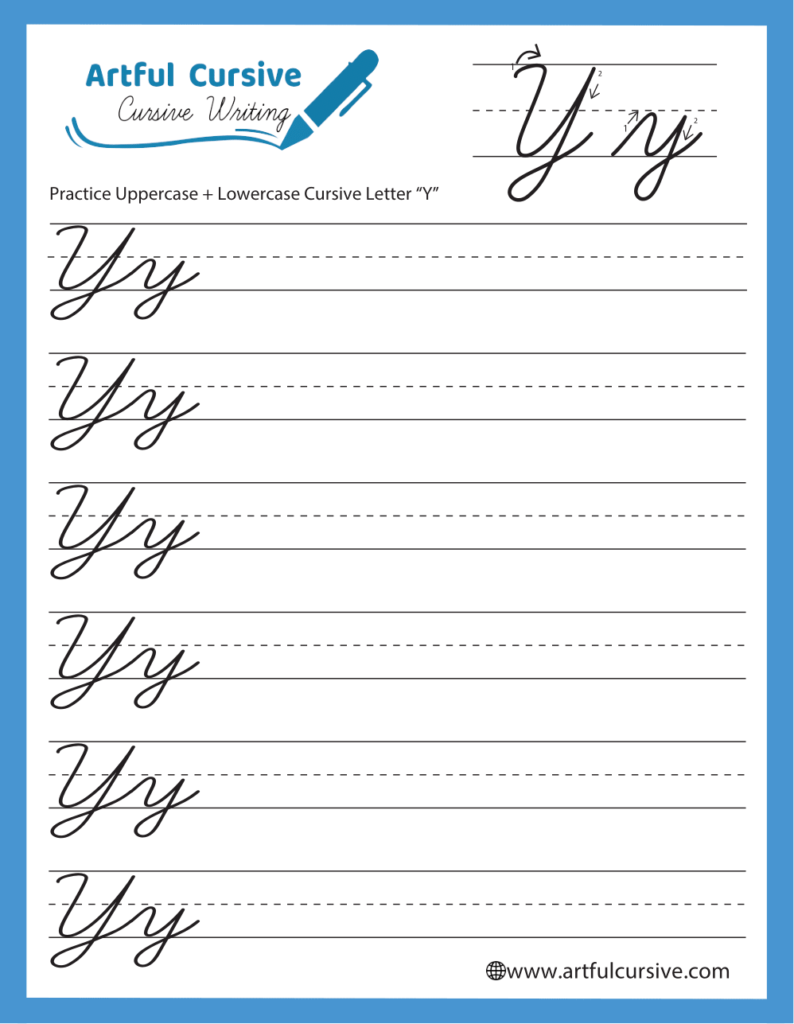
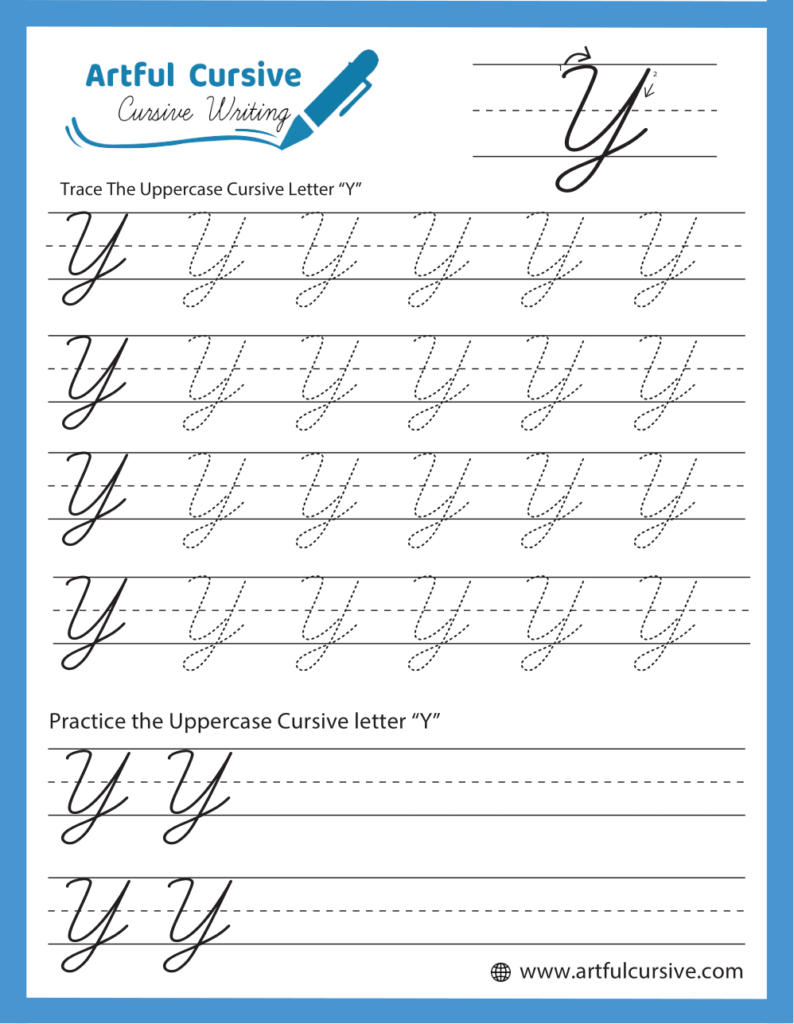
The primary focus centers on accurate letter formation, proper stroke order, and maintaining consistent spacing across the writing line. Children learn to begin the uppercase y below the top baseline, sweeping upward to the top line before executing a sharp downward stroke. This specific path requires precise visual-motor integration and sustained attention to spatial boundaries. According to the American Occupational Therapy Association, foundational fine motor skills developed through structured handwriting tasks directly support academic engagement and self-expression in early elementary grades. Learners also practice connecting the descending tail into subsequent lowercase letters, a crucial milestone in fluent script. Integrating resources from Tracing Worksheets beforehand helps build the necessary wrist stability for these sweeping motions. Every section of the printout targets a specific mechanic of hand control, ensuring comprehensive skill acquisition.
Key Learning Outcomes
Students engaging with this resource refine their pencil pressure regulation while navigating the unique angles of the letter y. Consistent repetition trains the intrinsic muscles of the hand to execute smooth loops below the baseline without losing alignment. Spatial awareness improves as learners judge the proportional height of the upper portion relative to the descending tail. Occupational therapy sessions often reveal that children who master these diagonal transitions experience significantly less frustration during longer writing assignments. Success on the page translates directly to increased legibility in daily classroom journals and note-taking activities. Careful attention to stroke sequencing prevents the formation of inefficient habits that are notoriously difficult to correct later. Building proficiency here lays the groundwork for advanced connected writing across all subject areas.
How to Use This Worksheet
Adults should begin by demonstrating the stroke on a large whiteboard or overhead surface, narrating each movement out loud. Children trace oversized examples with an index finger first to internalize the kinetic flow before picking up a writing tool. Observing the student during the initial attempts allows mentors to correct improper grips or awkward wrist positioning immediately. Breaking the practice session into short, five-minute intervals prevents mental fatigue and preserves fine motor precision. Educators can pair these exercises with various Preschool Worksheets to build a comprehensive daily writing routine. Patience remains essential as developing hands gradually adapt to the fluid demands of cursive script.
Practical Tips for Parents and Teachers
Ergonomics matter immensely when introducing complex script letters to young learners. Ensure the chair and desk height allow the feet to rest flat on the floor and the forearms to rest comfortably. Tilting the paper slightly to match the natural angle of the child’s writing hand promotes a more relaxed posture. Using broken crayons or short pencils can naturally encourage a functional tripod grasp by limiting the space available for improper finger crowding. Positive reinforcement focused on effort rather than perfection keeps motivation high during challenging practice sessions. Regular, low-pressure exposure yields far better results than marathon writing drills that induce anxiety and fatigue.
Age-Appropriate Recommendations
Introducing cursive uppercase y typically aligns with second grade curriculum standards, specifically adhering to Common Core ELA standard CCSS.ELA-LITERACY.L.2.1.astating that students should demonstrate command of the conventions of standard English capitalization and writing. Children around seven to eight years old possess the necessary visual-motor integration and hand-eye coordination to manage intersecting lines and descending loops. Younger children in preschool or kindergarten are better served focusing on pre-writing strokes and foundational grip strength. For those learners, exploring alternative materials like Coloring Worksheets builds essential hand endurance without the pressure of formal script. Matching the instructional level to the developmental stage ensures steady progress and prevents unnecessary frustration.
Foundational fine motor control directly influences academic success and writing fluency in early elementary education. — American Occupational Therapy Association (AOTA)
Frequently Asked Questions
Finding clear answers regarding handwriting instruction helps caregivers optimize practice time at home or in the classroom. The curated responses below address common logistical and developmental questions surrounding script instruction. Reviewing these guidelines ensures that children receive targeted, effective support throughout their writing journey. Utilizing comprehensive collections of Worksheets further expands the available options for skill practice.
Mastering complex letterforms contributes to long-term literacy and expressive communication skills. — National Center for Learning Disabilities (NCLD)
Explore More Free Printable Worksheets
Expanding a child’s writing repertoire requires access to a diverse library of practice materials tailored to different skill levels. Exploring additional categories ensures that learners remain engaged through fresh designs and varied challenges. Consistent practice across multiple formats solidifies pencil control and letter recognition. Caregivers can easily find targeted resources to support every stage of early childhood development.
Developmental Milestone & Activity Table
| Development Stage | Recommended Daily Duration | Primary Learning Objective |
|---|---|---|
| Preschool & Pre-K | 10 – 15 Minutes | Pencil grip development & basic pre-stroke lines |
| Kindergarten | 15 – 20 Minutes | Letter/number formation & spatial line awareness |
| Early Elementary (Grade 1–2) | 20 – 30 Minutes | Fluency, sentence construction & neatness |
Images References