Introduction
Mastering cursive uppercase letters often brings a unique set of hurdles for young learners transitioning from print. The capital letter R, with its sweeping entrance stroke and rounded loops, demands a high degree of bilateral coordination and spatial awareness. When children sit down to practice, therapists frequently observe tight white-knuckle grips or excessive paper shifting as the hand attempts to navigate the fluid curves. Bridging the gap between rigid manuscript printing and flowing cursive script requires targeted practice materials that isolate these complex movements. Free printable resources, specifically designed around the cursive r uppercase, offer a structured pathway to build pencil control without overwhelming the developing hand.
💡 Educational Key Takeaways:
- Core Skill: Structured Cursive R Uppercase focused on developing pencil grip, stroke control, and early literacy/math confidence.
- Target Scope: Suited for homeschoolers, preschool, kindergarten, and elementary learners.
- Best Recommendation: Practice 10–15 minutes daily with ergonomic writing tools to reinforce muscle memory without hand fatigue.
What This Worksheet Covers
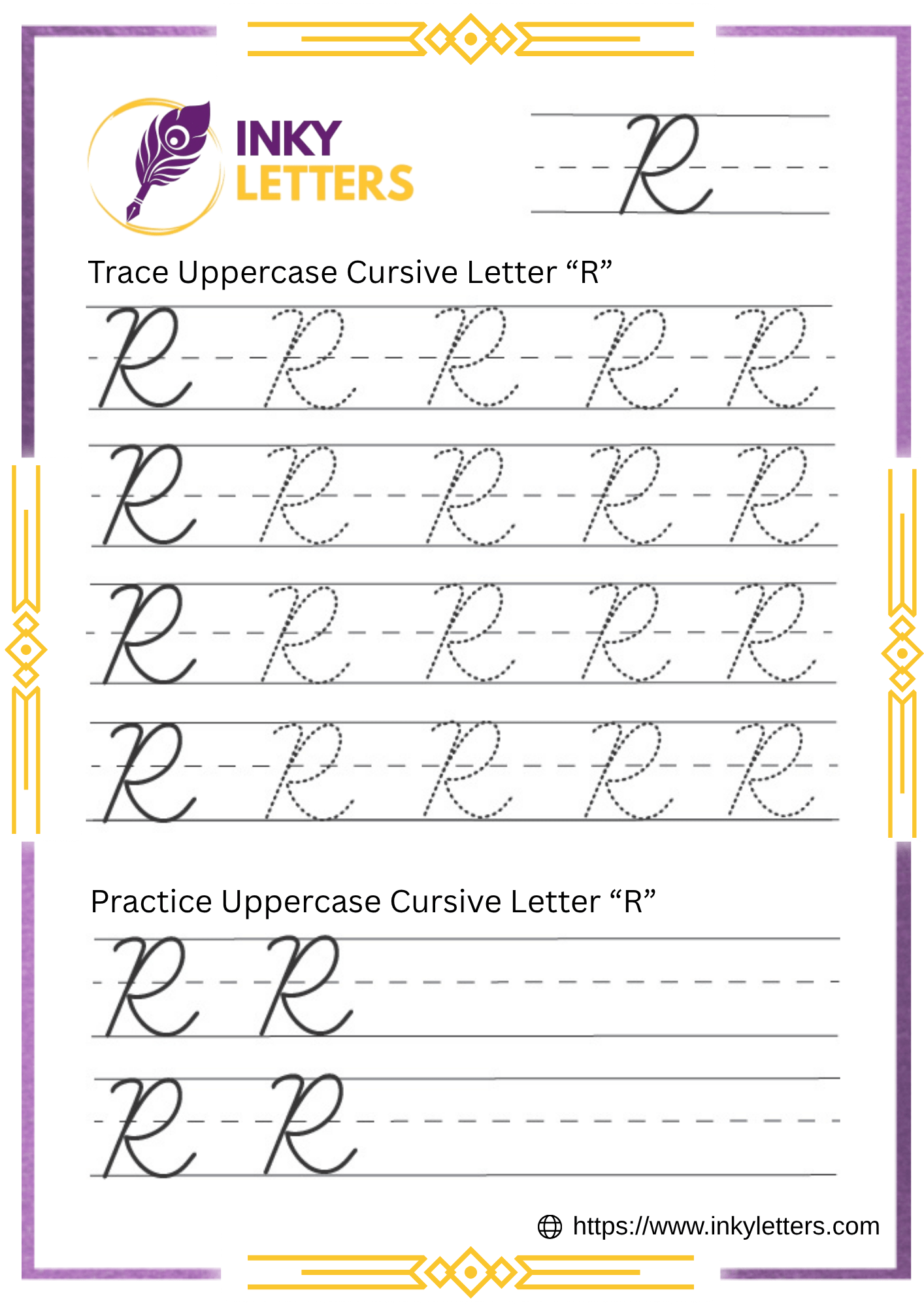
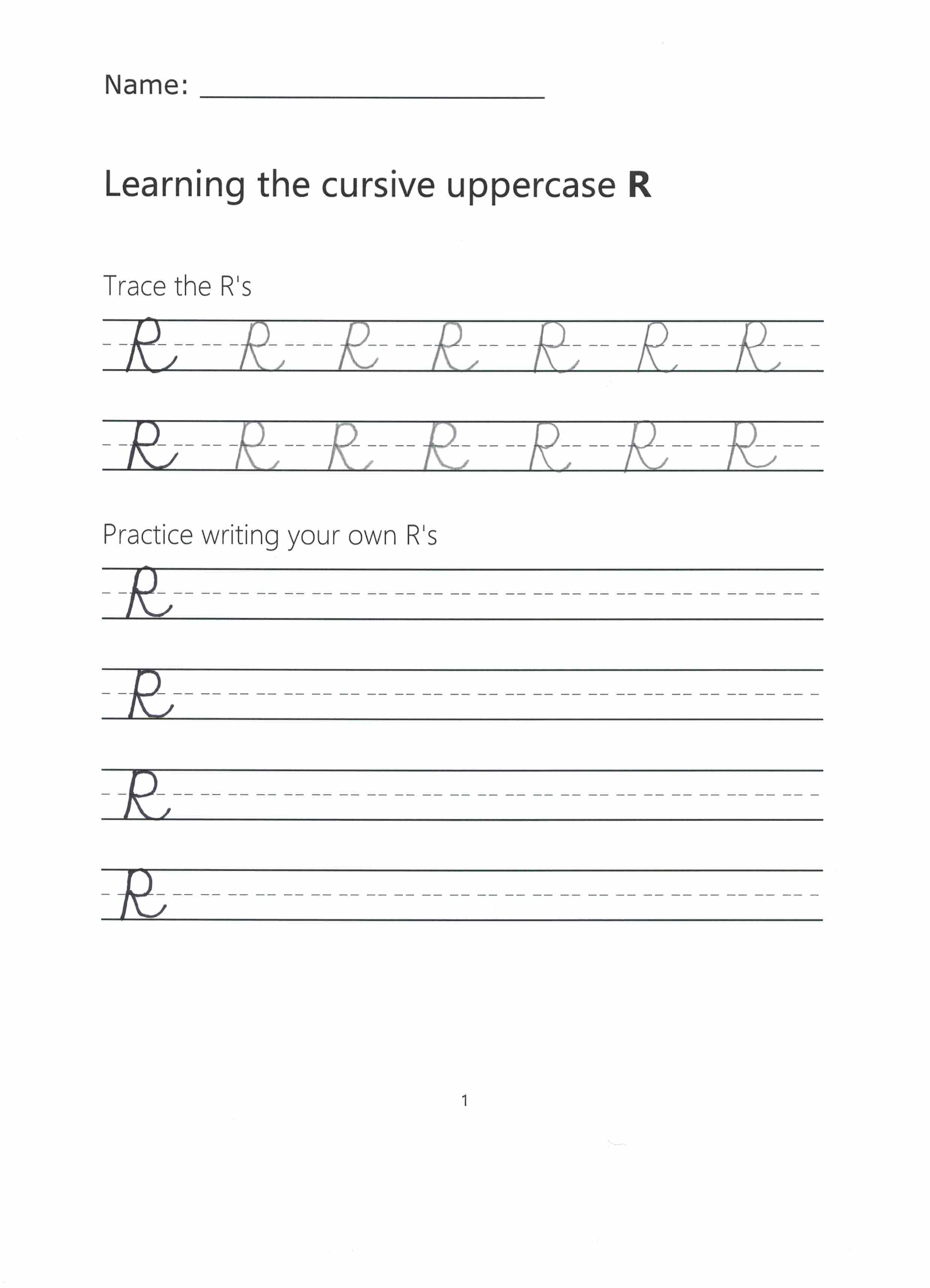
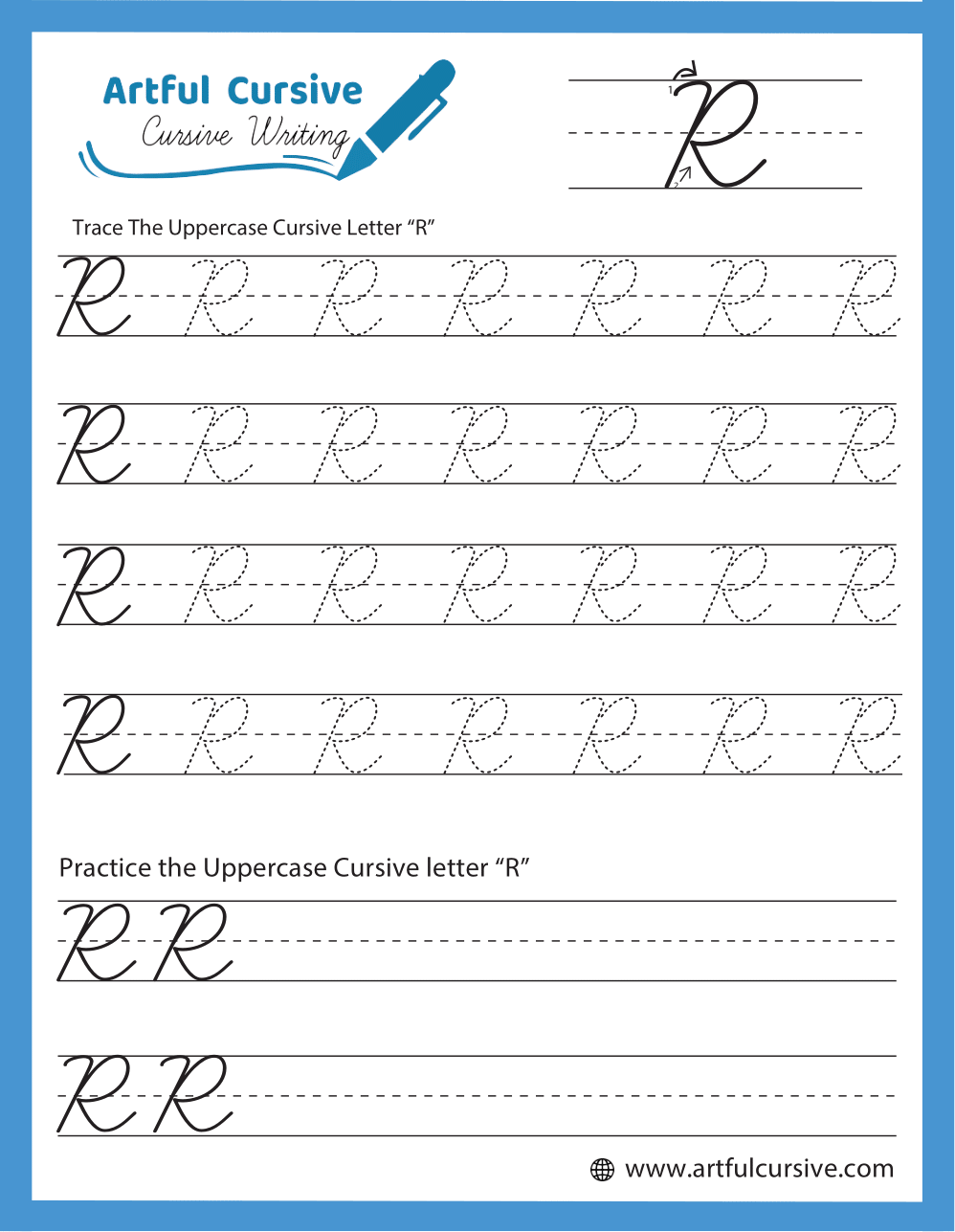
Targeted letter formation pages focus heavily on stroke order, directional arrows, and appropriate spatial alignment on standard writing lines. Learners begin by tracing oversized models to map the physical gesture into muscle memory before scaling down to standard line heights. Furthermore, these foundational pages integrate seamlessly into broader Letter Writing Worksheets collections designed to build long-term writing stamina. Educators often notice that children tend to rush the initial loop of the capital R, causing the entire letter to lean awkwardly. This printable template combats that tendency by providing distinct starting dots and directional cues that encourage deliberate, measured pacing.
Key Learning Outcomes
Consistent engagement with this specific script exercise yields measurable improvements in motor planning and visual-spatial processing. According to the American Occupational Therapy Association, foundational fine motor tasks directly support a child’s ability to participate meaningfully in daily academic environments. Children learn to regulate the pressure exerted on the writing instrument, transitioning from a heavy, fatiguing grab to a dynamic tripod grasp. Additionally, mastery of capital letters reinforces the smooth connections required when eventually linking lowercase letters within words and sentences.
How to Use This Worksheet
Adults should introduce the printable by first modeling the stroke in the air or on a textured surface like a salt tray. It sounds simple, and that is the point; tactile preparation primes the neural pathways before pencil ever touches paper. Learners trace the faded outlines multiple times using different colored pencils to transform repetitive drill work into an engaging visual exercise. Following the guided tracing phase, independent practice boxes allow the writer to apply those exact motor patterns without visual scaffolding. For children needing broader foundational skill reinforcement before tackling advanced script, pairing these drills with comprehensive Tracing Worksheets establishes reliable pencil habits.
Practical Tips for Parents and Teachers
Environment plays a monumental role in successful handwriting sessions, starting with the physical seating arrangement and paper angle. Slanting the paper to match the natural angle of the child’s forearm prevents wrist strain and awkward hand contortions. Here is what makes this worksheet different: it emphasizes quality over quantity, purposefully limiting repetition to prevent hand fatigue and frustration. Adults must monitor for signs of physical tension, encouraging frequent brain breaks and hand stretches whenever the writing begins to look cramped or erratic.
Age-Appropriate Recommendations
Introducing cursive capital letters typically aligns with late second grade or early third grade, depending on overall fine motor maturity and manuscript fluency. According to the National Association for the Education of Young Children guidelines on developmentally appropriate practice, educators should tailor expectations to individual motor milestones rather than strict chronological age. Aligning with Common Core ELA standards for writing, specifically CCSS.ELA-LITERACY.L.2.1.A regarding the creation of legible documents, cursive instruction reinforces fine motor endurance. For younger siblings or learners still developing basic pencil control, exploring introductory Preschool Worksheets provides the necessary precursor skills for future script success.
Foundational fine motor interventions in early education significantly improve spatial organization and letter legibility — American Occupational Therapy Association
Frequently Asked Questions
Navigating cursive instruction can prompt many questions regarding timing, technique, and resource utilization. The following answers address common inquiries from educators and caregivers seeking to optimize fine motor development.
Explore More Free Printable Worksheets
Expanding a child’s writing toolkit requires access to a diverse array of targeted practice materials that grow alongside their developing abilities. Beyond standard script practice, incorporating engaging Coloring Worksheets builds essential hand strength and finger dexterity in a playful format. Caregivers can also explore personalized Name Practice Worksheets to foster early literacy and authentic letter recognition. Exploring the complete library of available Worksheets ensures every learner has the right tools for lifelong academic confidence.
Developmental Milestone & Activity Table
| Development Stage | Recommended Daily Duration | Primary Learning Objective |
|---|---|---|
| Preschool & Pre-K | 10 – 15 Minutes | Pencil grip development & basic pre-stroke lines |
| Kindergarten | 15 – 20 Minutes | Letter/number formation & spatial line awareness |
| Early Elementary (Grade 1–2) | 20 – 30 Minutes | Fluency, sentence construction & neatness |
Images References