Introduction
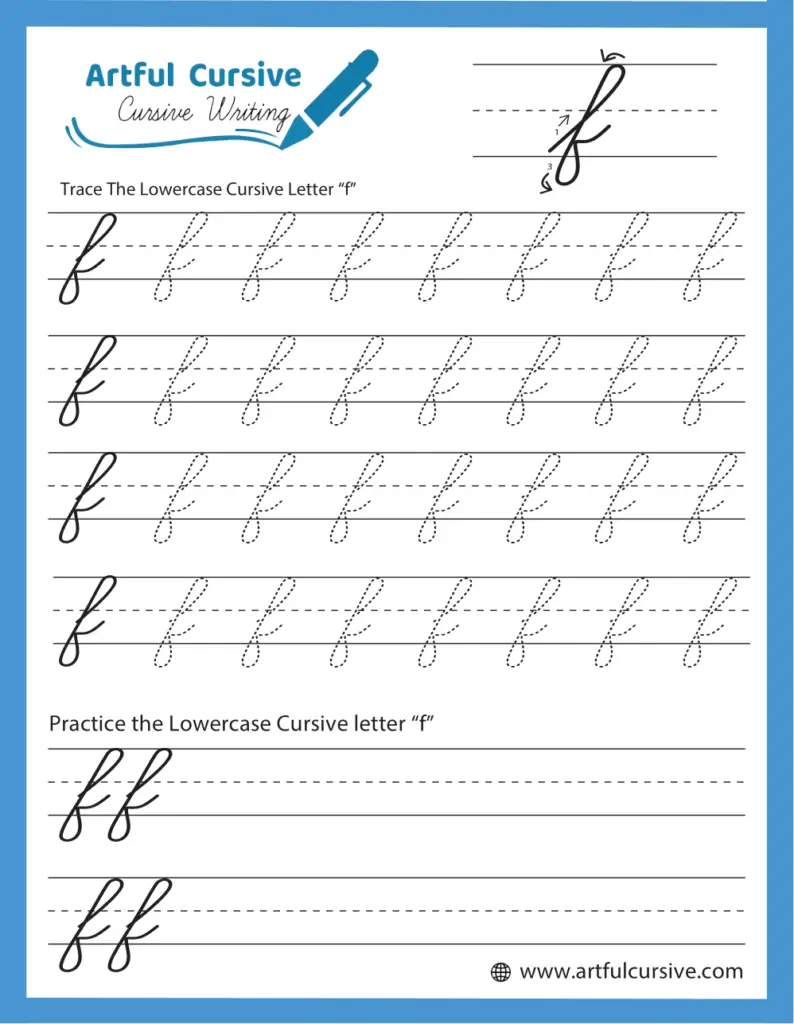
Most children can recognize the shape of a letter long before the fine‑motor muscles needed to reproduce it are fully coordinated. According to the National Center for Learning Disabilities, students who receive systematic handwriting instruction are 2.5 times more likely to achieve grade‑level reading proficiency. The printable “cursive f” worksheet steps into that research‑backed gap, offering a focused, hands‑on opportunity to practice the looping stroke that defines the lowercase “f” in cursive. Printable resources remain a cornerstone in early‑literacy rooms because they provide consistent visual models, tactile tracing paths, and a low‑stakes environment for repeated practice. This sheet was designed with the same reliability teachers expect from classroom‑tested materials, delivering clear guidance for both home and school settings.
💡 Educational Key Takeaways:
- Core Skill: Structured Cursive F focused on developing pencil grip, stroke control, and early literacy/math confidence.
- Target Scope: Suited for homeschoolers, preschool, kindergarten, and elementary learners.
- Best Recommendation: Practice 10–15 minutes daily with ergonomic writing tools to reinforce muscle memory without hand fatigue.
What This Worksheet Covers
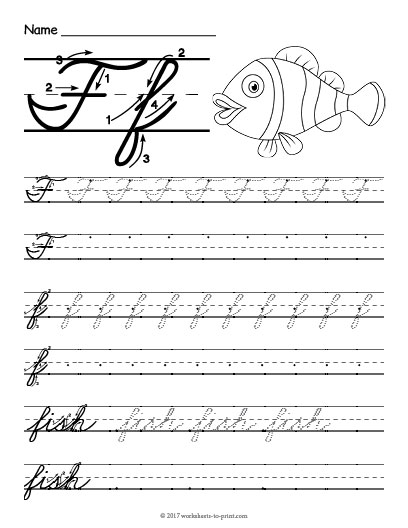
Here’s what makes this worksheet different: it isolates the lowercase cursive “f” and presents a series of progressive tracing lines that move from oversized guide strokes to size‑appropriate practice rows. The activity aligns with the Handwriting Without Tears emphasis on starting each letter with a clear, connected motion, ensuring that the loop, stem, and cross‑stroke are formed in the correct sequence. By concentrating on a single character, the sheet reduces cognitive overload, allowing young learners to internalize the rhythm of cursive writing without distraction from neighboring letters. That’s exactly what this resource addresses, bridging the gap between visual recognition and kinetic execution for early writers.
Key Learning Outcomes
Through repeated engagement with the “cursive f” sheet, children develop a smoother pencil grip that supports controlled strokes, a milestone noted by the NAEYC as essential for fine‑motor refinement. The repeated loop‑and‑stem motion reinforces the muscle memory needed to transition from tracing to independent writing, a skill that underpins later fluency in cursive composition. Additionally, learners gain confidence in recognizing the visual cue of the “f” within text, which strengthens letter‑sound correspondence and prepares them for phonics activities that pair the letter with its corresponding sound. Finally, the worksheet’s gradual reduction of guide lines nurtures self‑regulation, encouraging students to monitor their own accuracy without constant adult prompting.
How to Use This Worksheet
Educators can introduce the sheet during a morning work routine, allowing each child to trace the model rows while the teacher demonstrates the proper pencil grip and stroke order. The format includes three distinct sections: an oversized starter line that shows the full shape, a medium‑size row that invites guided practice, and a smaller row for independent tracing. The worksheet can also serve as a take‑home reinforcement tool; parents may print a copy for a brief evening writing session, linking the activity to a story that features the letter “f” in key vocabulary. It sounds simple — and that’s the point, because simplicity enables frequent, short bursts of practice that align with research on spaced repetition.
Practical Tips for Parents and Teachers
Modeling the correct grip before the child begins to trace sets a solid foundation; a tripod hold with the thumb and index finger gently resting on the pencil promotes the fine‑motor control needed for smooth curves. After the worksheet is completed, use the finished “f” as a launch point for conversation, asking children to identify objects that start with the same sound, thereby reinforcing phonemic awareness. Pairing the sheet with a read‑aloud such as “Frog and Toad Are Friends” creates a meaningful context that deepens letter relevance. Displaying the completed page on a classroom wall or a home bulletin board provides a visual reminder that encourages repeated review. For learners who finish quickly, extend the activity by prompting them to write the letter in a short word list or to create a decorative border that incorporates the “f” shape.
Age-Appropriate Recommendations
For preschoolers ages 3–5, the focus should be on gross‑motor familiarity; a thick‑cored crayon or chunky pencil reduces pressure and allows the child to feel the motion of the loop without fatigue. Adult scaffolding is essential at this stage—demonstrate the stroke, then let the child imitate on the oversized guide line before moving to smaller rows. The NAEYC Developmentally Appropriate Practice framework recommends integrating sensory experiences, so incorporating a textured tracing surface can heighten engagement. For early elementary learners ages 6–10, the same worksheet becomes a tool for refining speed and legibility. A standard #2 pencil paired with a lined notebook encourages proper spacing, while the Common Core State Standards for ELA (CCSS.ELA-LITERACY.RF.1.3) support linking letter formation to phonemic decoding. At this level, teachers can incorporate the “cursive f” into cursive cursive cursive writing units, using the sheet as a quick warm‑up before a longer composition activity.
Frequently Asked Questions
Q: How can the “cursive f” worksheet be downloaded and printed?
A: The worksheet is available for free download from the CharacterWritingWorksheets.com library; simply click the download button, open the PDF, and print on standard 8.5 × 11‑inch paper. The file is optimized for both color and black‑and‑white printing, ensuring clear guide lines regardless of printer settings.
Q: Why does tracing support early literacy development?
A: Tracing reinforces the visual‑motor connection that underlies letter recognition, a principle highlighted by Reading Rockets. When children repeatedly follow a model, neural pathways for shape and sound are strengthened, leading to faster decoding and improved spelling.
Q: What accommodations are recommended for struggling writers?
A: Handwriting Without Tears suggests providing a textured overlay on the tracing area and allowing the use of a larger grip aid. Additional verbal cues that emphasize the start and finish points of the “f” can also help children internalize the correct motion.
Explore More Free Printable Writing Worksheets
Continuing to build a habit of daily writing practice magnifies the benefits of a single “cursive f” sheet. When incorporated into a sequence of character worksheets, learners experience progressive mastery that supports both fine‑motor development and reading confidence. Educators, homeschool families, and caregivers are invited to browse the extensive collection of free printable character writing resources at CharacterWritingWorksheets.com, where every letter, number, and special character is presented in a format that aligns with classroom standards and home learning needs.
Cursive F – Image Gallery
Developmental Milestone & Activity Table
| Development Stage | Recommended Daily Duration | Primary Learning Objective |
|---|---|---|
| Preschool & Pre-K | 10 – 15 Minutes | Pencil grip development & basic pre-stroke lines |
| Kindergarten | 15 – 20 Minutes | Letter/number formation & spatial line awareness |
| Early Elementary (Grade 1–2) | 20 – 30 Minutes | Fluency, sentence construction & neatness |
Images References