Introduction
Developing solid fine motor control requires moving beyond standard horizontal and vertical lines into the realm of complex, continuous curves. The ampersand symbol stands out as one of the most intricate characters children encounter during early literacy exploration. It demands a delicate balance of visual-motor integration, directional awareness, and steady pencil control. Children frequently freeze when attempting to replicate this glyph because the continuous loop requires an uninterrupted fluid motion from top to bottom. Integrating targeted practice pages, such as a dedicated ampersand tracing worksheet, helps bridge the gap between basic pre-writing strokes and advanced orthographic symbols.
💡 Educational Key Takeaways:
- Core Skill: Structured Ampersand Tracing Worksheet focused on developing pencil grip, stroke control, and early literacy/math confidence.
- Target Scope: Suited for homeschoolers, preschool, kindergarten, and elementary learners.
- Best Recommendation: Practice 10–15 minutes daily with ergonomic writing tools to reinforce muscle memory without hand fatigue.
What This Worksheet Covers
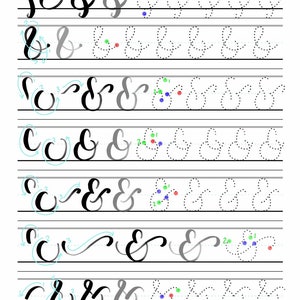
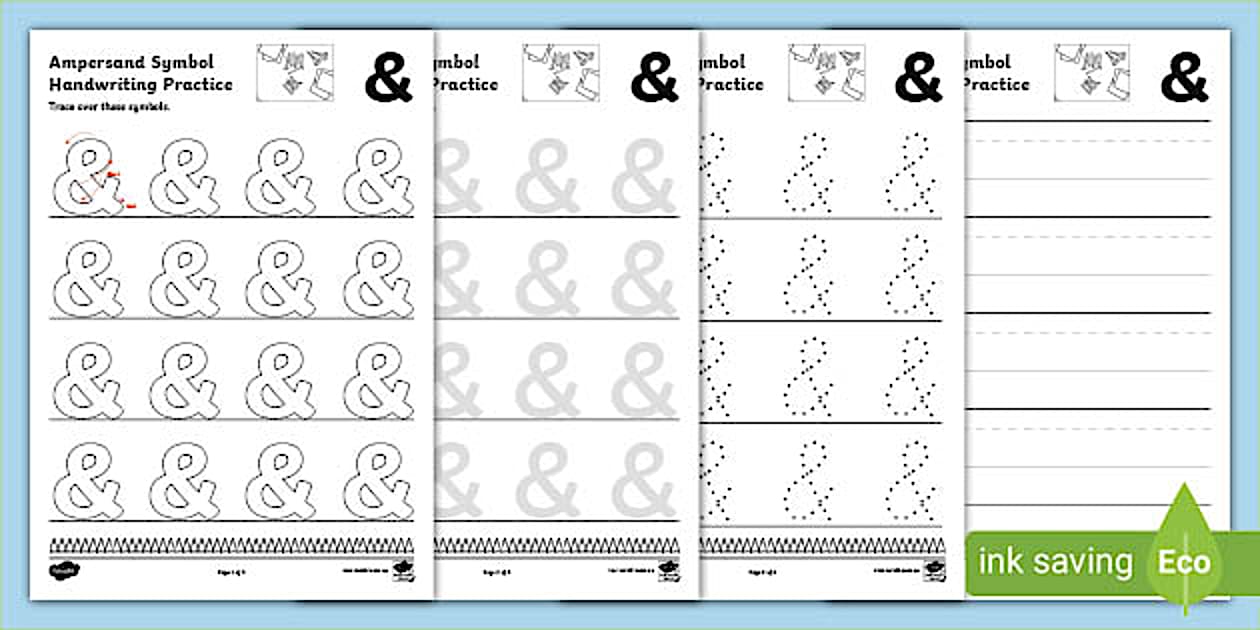
Targeted tracing pages focus heavily on pre-writing strokes, pencil control, and line accuracy. The unique anatomy of the ampersand combines a slanted top stroke, a delicate inner loop, an outward swooping curve, and a graceful finishing tail. Mastering this progression relies on foundational tools found across various tracing worksheets that train the hand to navigate sudden directional changes. Instead of forcing children straight into complex punctuation marks, these structured layout sheets break down the symbol into manageable visual segments. Young learners trace dotted lines that mimic the figure-eight motion required to build muscle memory in the fingers and wrist.
Key Learning Outcomes
Regular engagement with structured tracing materials yields measurable improvements in hand-eye coordination and spatial perception. According to the American Occupational Therapy Association, foundational fine motor tasks directly support a child’s ability to manipulate classroom tools and engage successfully in daily academic routines. When learners repeatedly trace the winding path of an ampersand, they refine their intrinsic hand muscles. This physical conditioning prevents early fatigue during longer writing sessions, allowing students to maintain proper pencil grasps without hand cramping or frustration.
How to Use This Worksheet
Facilitating successful tracing sessions requires intentional pacing and the right physical setup. Educators and caregivers often observe young children pressing down with excessive force, turning a delicate looping exercise into an arm-wrestling match with the paper. Lighter, more controlled movements yield much better results in line accuracy. To support diverse developmental needs alongside these specialized pages, adults frequently incorporate resources from broader collections of preschool worksheets that target gross spatial orientation and bilateral coordination before picking up a writing utensil.
Practical Tips for Parents and Teachers
Creating a supportive learning environment transforms a frustrating handwriting drill into an engaging activity. Adults should ensure the table height allows the child’s feet to rest flat on the floor, providing a stable core foundation for distal hand movements. It sounds simple, and that is the point, yet posture remains one of the most overlooked variables in pencil control. Short, five-minute daily sessions produce significantly better motor retention than grueling thirty-minute weekend marathons. Furthermore, utilizing dry-erase sleeves with washable markers allows children to practice the same looping path multiple times without the anxiety of making permanent mistakes.
Age-Appropriate Recommendations
Introducing complex typographic characters typically aligns with upper kindergarten and early primary grades, specifically matching standard expectations outlined in the NAEYC Developmentally Appropriate Practice framework. At ages five through seven, children have developed the visual closure skills necessary to understand how disparate curves link together to form a single cohesive symbol. Younger toddlers still benefit from gross-motor air tracing, while older primary students use these specific sheets to refine fluidity and pacing. For broader handwriting practice that extends beyond punctuation and symbols, educators frequently explore dedicated letter writing worksheets to reinforce standard alphabetic stroke sequences.
Foundational fine motor interventions in early childhood significantly enhance visual-motor integration and subsequent writing fluency. — American Occupational Therapy Association (AOTA)
Frequently Asked Questions
Navigating early childhood writing resources can raise questions regarding printing formats, developmental timing, and motor skill milestones. Clear guidance helps adults maximize the educational value of free printable materials at home and inside the classroom.
Explore More Free Printable Worksheets
Building a comprehensive writing toolkit requires access to diverse, engaging practice materials tailored to every developmental milestone. Adults can easily supplement pencil control exercises by exploring wider collections of printable worksheets designed to support holistic early childhood education. Whether focusing on orthographic symbols, letters, or early foundational strokes, consistent practice builds lifelong academic confidence.
Developmental Milestone & Activity Table
| Development Stage | Recommended Daily Duration | Primary Learning Objective |
|---|---|---|
| Preschool & Pre-K | 10 – 15 Minutes | Pencil grip development & basic pre-stroke lines |
| Kindergarten | 15 – 20 Minutes | Letter/number formation & spatial line awareness |
| Early Elementary (Grade 1–2) | 20 – 30 Minutes | Fluency, sentence construction & neatness |
Images References