Introduction
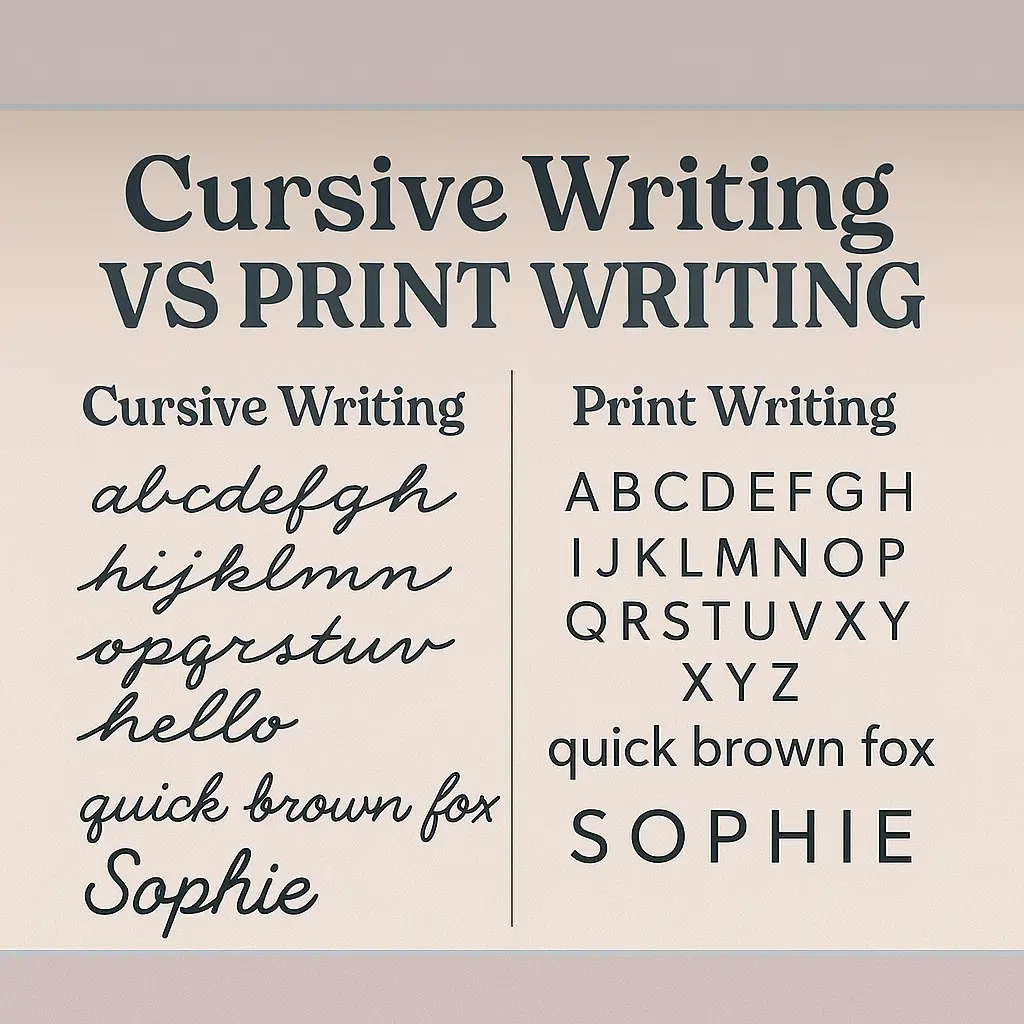
Bridging the gap between traditional print and fluid cursive requires a targeted instructional approach that honors natural neuromuscular development. Young learners often struggle when asked to transition abruptly from block letters to sweeping loops without a transitional style. A hybrid of cursive and print writing worksheet offers a practical middle ground, easing the cognitive load of letter formation while promoting continuous fluid movement across the page. Observing children in clinical and classroom settings reveals that combining these styles minimizes hand fatigue and reduces frustrating reversals of commonly confused letters like ‘b’ and ‘d’. Building this bridge early supports overall literacy by streamlining the physical act of writing so attention can remain focused on expressive thought. Exploring foundational tools like tracing worksheets helps build the baseline pencil control necessary for these nuanced letter shapes.
💡 Educational Key Takeaways:
- Core Skill: Structured Hybrid Of Cursive And Print Writing focused on developing pencil grip, stroke control, and early literacy/math confidence.
- Target Scope: Suited for homeschoolers, preschool, kindergarten, and elementary learners.
- Best Recommendation: Practice 10–15 minutes daily with ergonomic writing tools to reinforce muscle memory without hand fatigue.
What This Worksheet Covers
Mastering hybrid letter forms involves blending the straight, legible vertical lines of manuscript with the flowing, directional entries and exits of cursive writing. This specific instructional material guides learners through stroke sequences that encourage natural hand flow without requiring the complete mastery of traditional cursive loops. Children practice maintaining consistent letter slant, proportional sizing, and appropriate spacing between words. According to Reading Rockets, explicit instruction in handwriting mechanics directly supports reading fluency and spelling by solidifying the motor memory associated with letter shapes. Educators often notice that when children stop lifting their pencils between every single stroke, writing speed and rhythm improve dramatically.
Key Learning Outcomes
Engaging with this structured practice sheet yields measurable improvements in fine motor dexterity and visual-motor integration. Learners develop a firmer grasp of baseline adherence, ensuring letters neither float above the line nor sink below it. The physical act of connecting strokes enhances bilateral coordination and strengthens the intrinsic muscles of the hand, which are vital for sustained writing tasks. Furthermore, learners gain confidence as their handwriting becomes both faster and easier to read. Utilizing resources found within broader collections of worksheets can reinforce these motor patterns through varied, engaging contexts.
How to Use This Worksheet
Implementation requires more than simply handing a pencil to a child and pointing toward the top of the page. Adults should first demonstrate proper pencil grasp and posture, ensuring both feet rest flat on the floor and the non-writing hand stabilizes the paper. Begin by having the child trace the directional arrows with an index finger to internalize the kinetic flow before introducing a writing utensil. It sounds simple, and that is the point: multisensory preparation activates the neural pathways responsible for motor planning. Consistent, short practice sessions yield far superior results compared to marathon writing drills that induce hand cramps and frustration.
Practical Tips for Parents and Teachers
Creating an optimal environment for handwriting practice involves managing both physical ergonomics and emotional encouragement. Writing utensils should match the developmental stage of the child, favoring slightly shorter pencils or specialized grips to promote an efficient tripod grasp. Observing a child tilt their head excessively or wrap their thumb tightly over the shaft signals a need to pause, stretch the fingers, and adjust posture. Integrating fun, low-stakes activities such as finger-painting letter forms in a tray of salt can dramatically boost engagement before returning to paper. Pairing these targeted writing exercises with structured letter writing worksheets ensures a comprehensive approach to early literacy.
Age-Appropriate Recommendations
Introducing hybrid writing styles is most effective during late kindergarten and early second grade, a developmental window when children have established basic print foundations. According to the National Association for the Education of Young Children (NAEYC) Developmentally Appropriate Practice guidelines, instructional materials must align with a child’s physical endurance and cognitive maturity rather than rigid chronological age expectations. Seven-year-olds typically possess the visual-motor integration required to manage slight slants and connecting strokes without undue strain. For younger learners who are still developing foundational hand strength, stepping back to use specialized coloring worksheets can build essential endurance before tackling advanced hybrid letter connections.
Explicit handwriting instruction enhances spelling, reading comprehension, and overall written expression by automating the physical mechanics of letter generation — Reading Rockets
Frequently Asked Questions
Answers to common inquiries regarding the implementation and acquisition of these writing resources provide clarity for educators and families navigating early literacy development.
Explore More Free Printable Worksheets
Expanding a child’s early literacy toolkit requires access to diverse, high-quality practice materials that target specific developmental milestones. Transitioning smoothly between different writing styles benefits from continuous reinforcement across multiple categories of skill-building resources. Discovering complementary materials, such as targeted name practice worksheets, helps personalize the learning experience and keeps young learners motivated every single day.
Developmental Milestone & Activity Table
| Development Stage | Recommended Daily Duration | Primary Learning Objective |
|---|---|---|
| Preschool & Pre-K | 10 – 15 Minutes | Pencil grip development & basic pre-stroke lines |
| Kindergarten | 15 – 20 Minutes | Letter/number formation & spatial line awareness |
| Early Elementary (Grade 1–2) | 20 – 30 Minutes | Fluency, sentence construction & neatness |
Images References